Plants
bilimbi
Averrhoa bilimbi L.
Family: Oxalidaceae · Genus: Averrhoa
cucumber tree
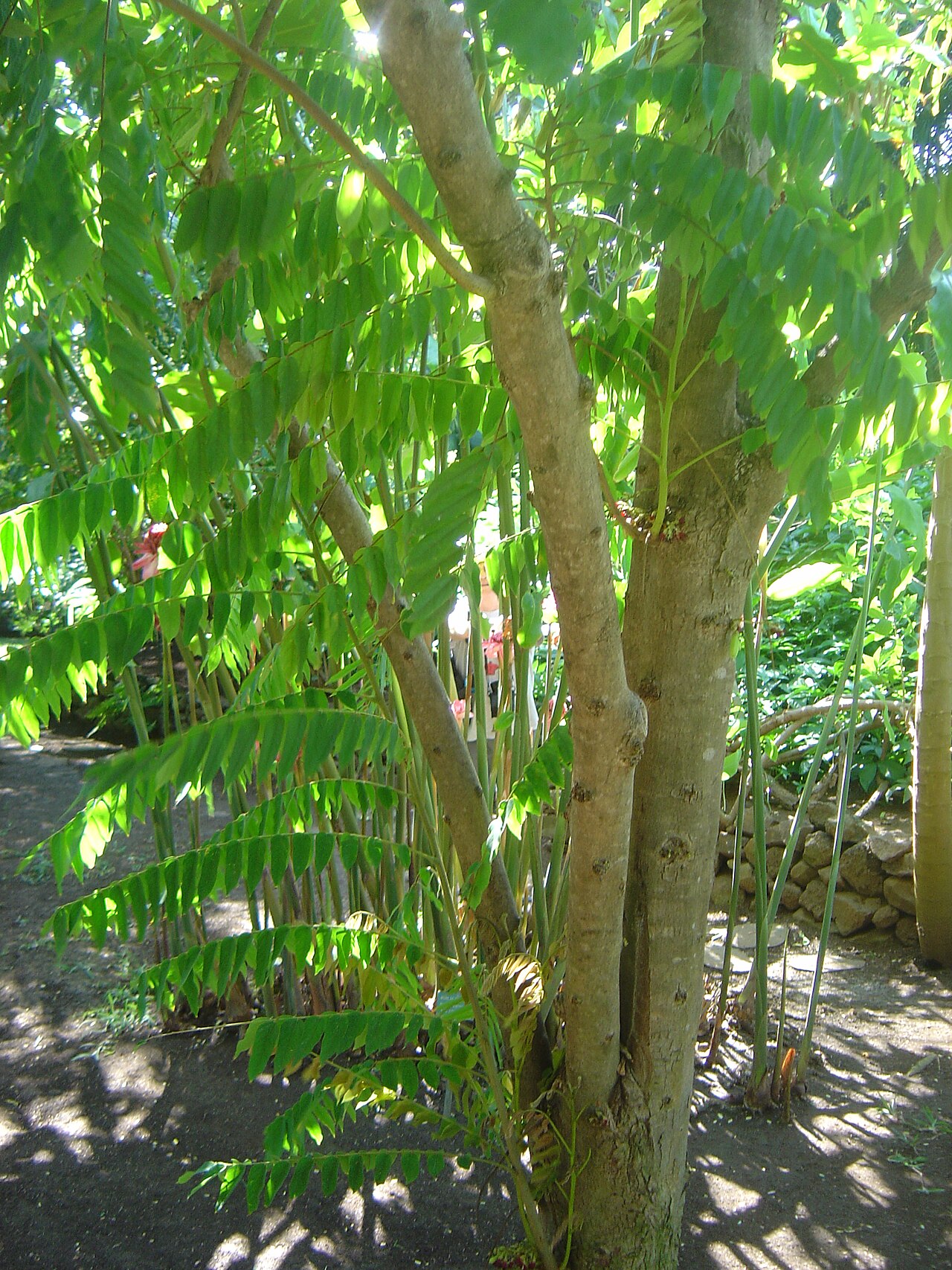
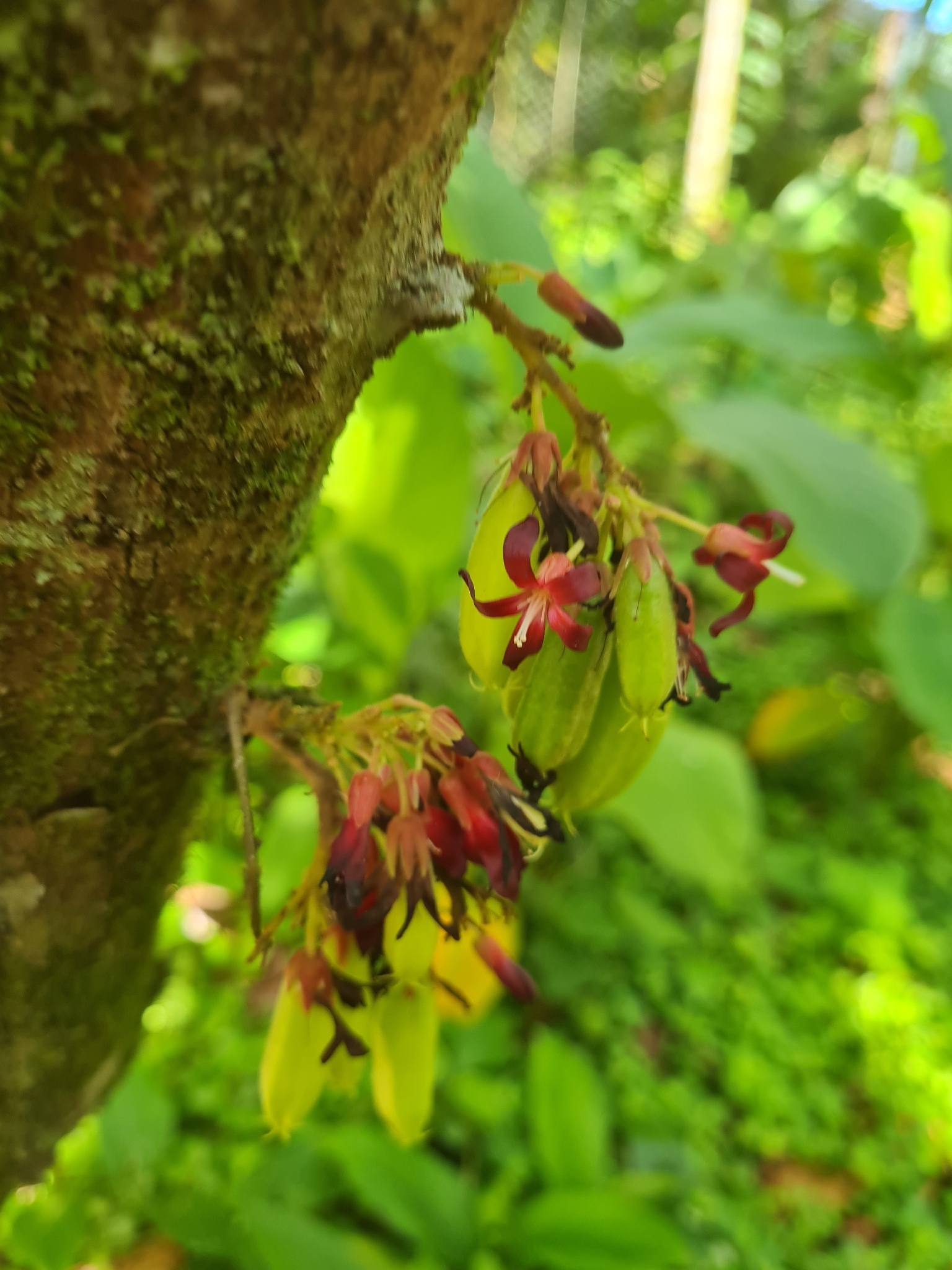
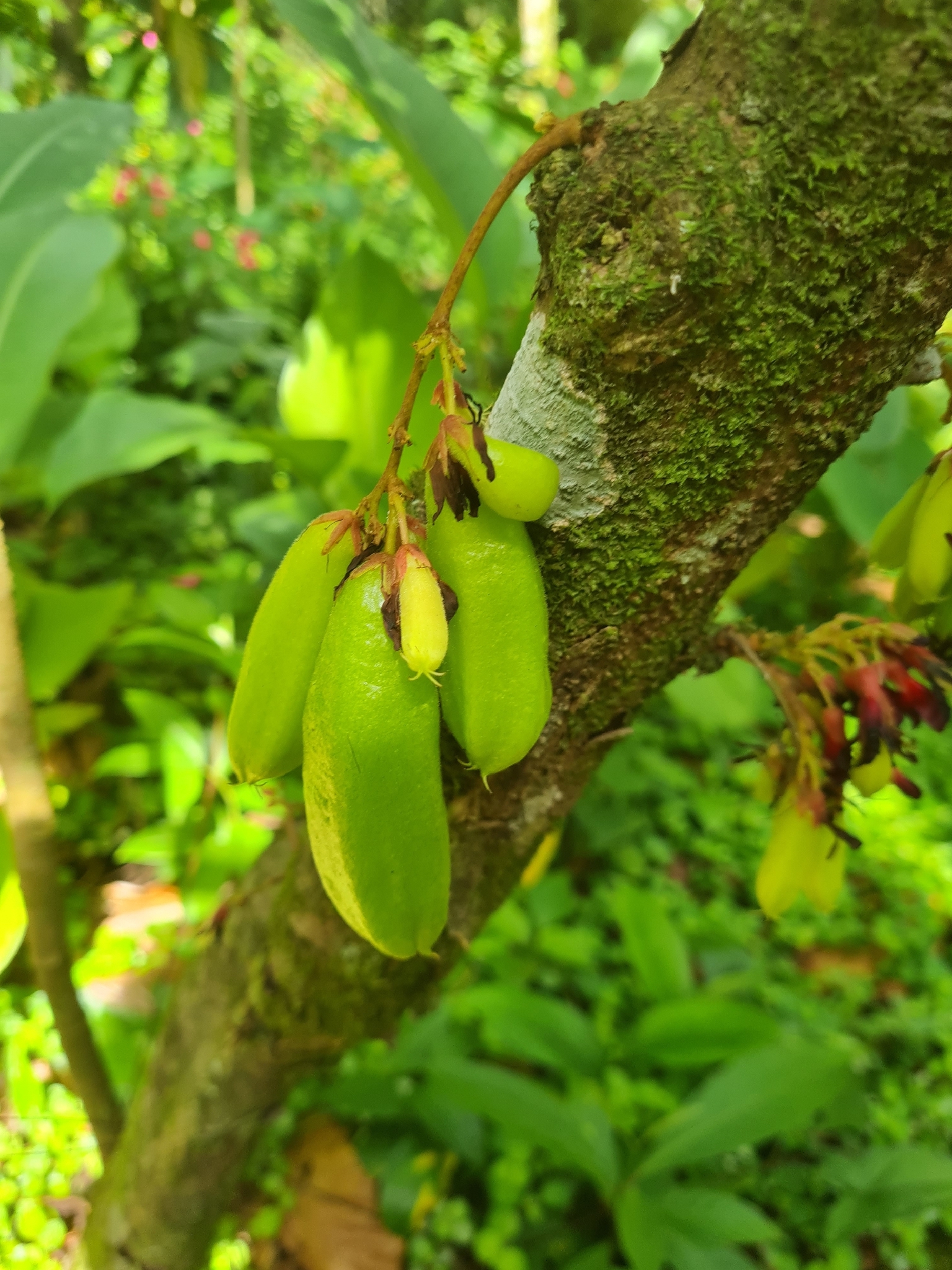
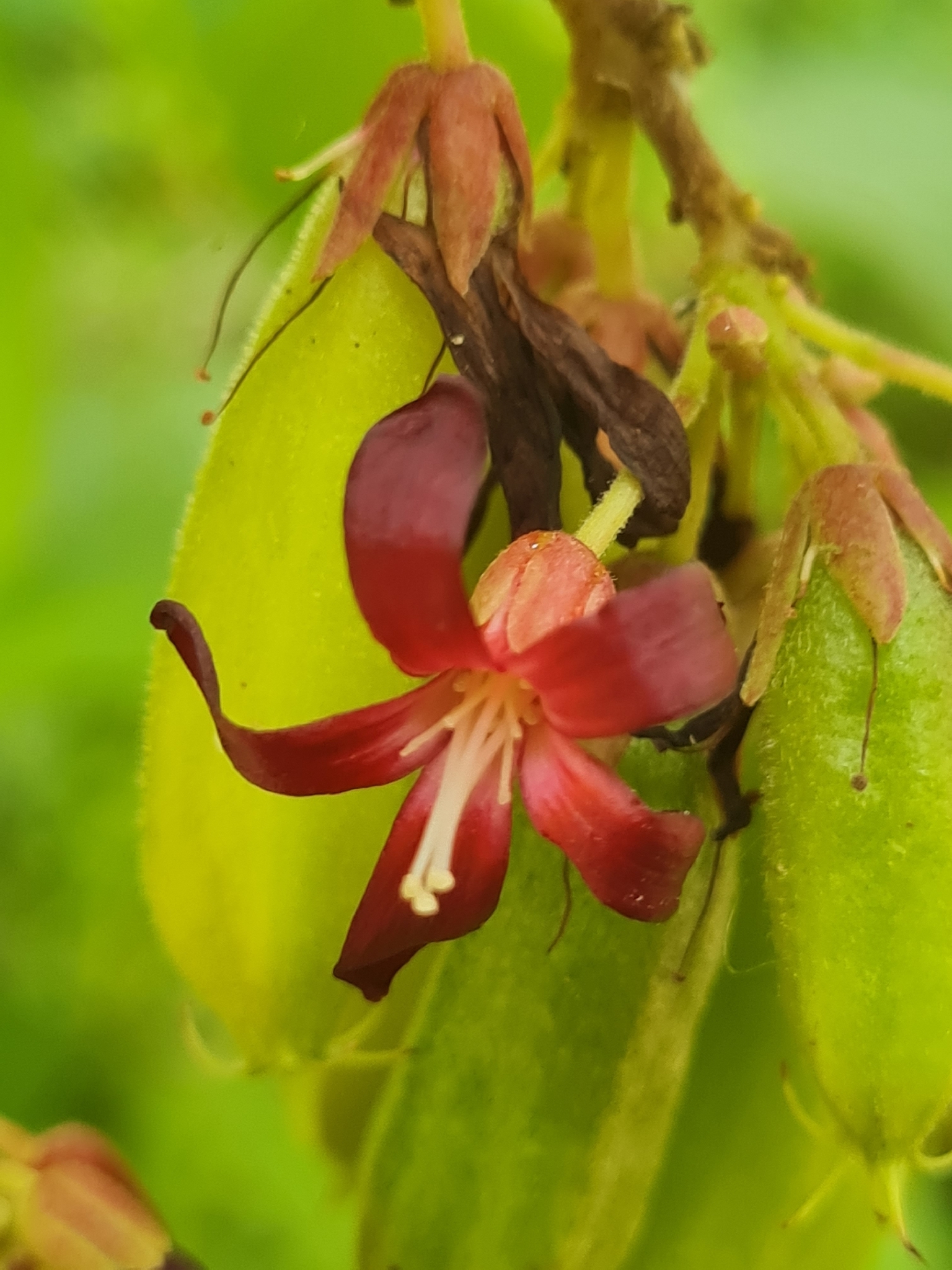
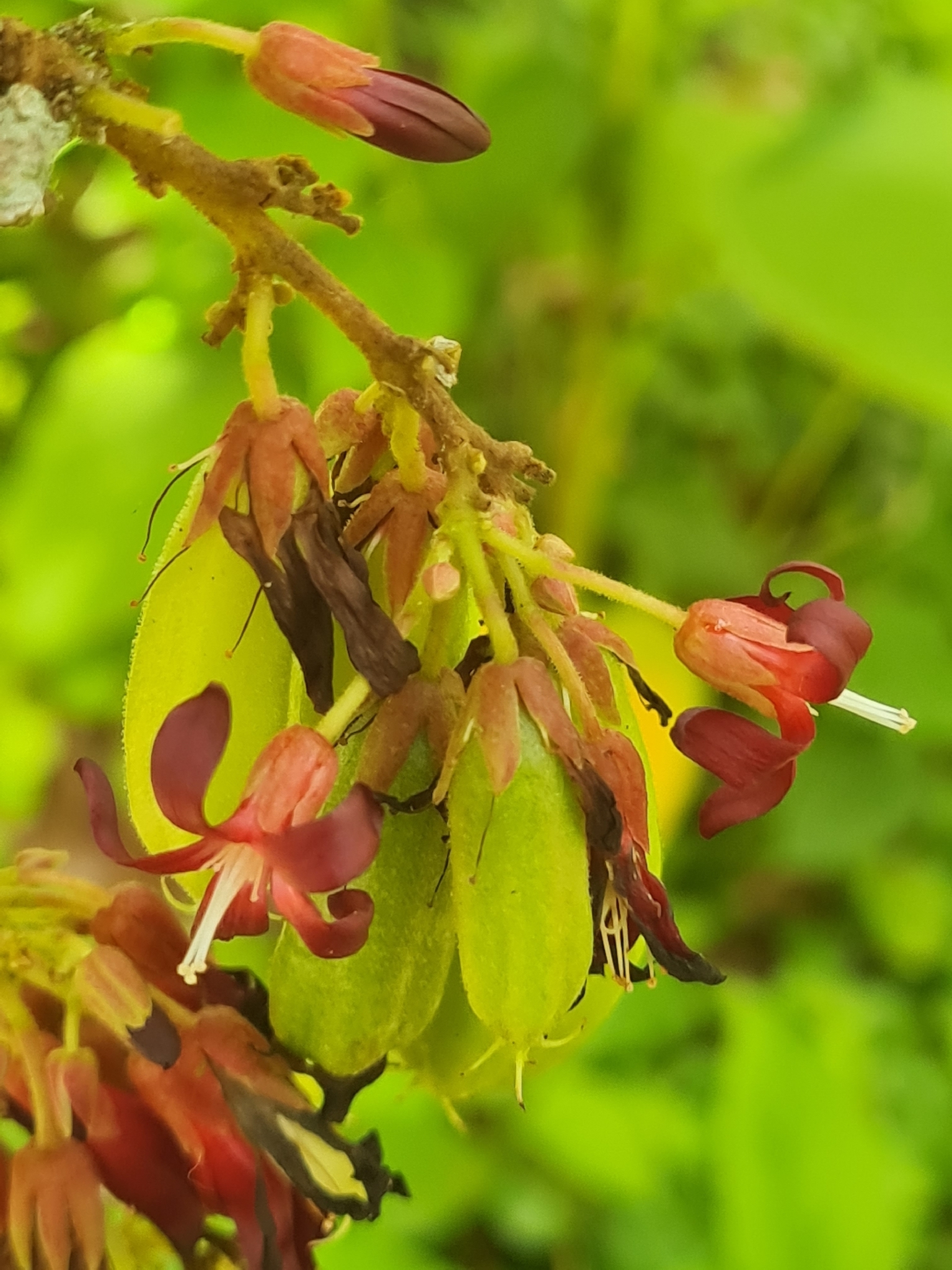
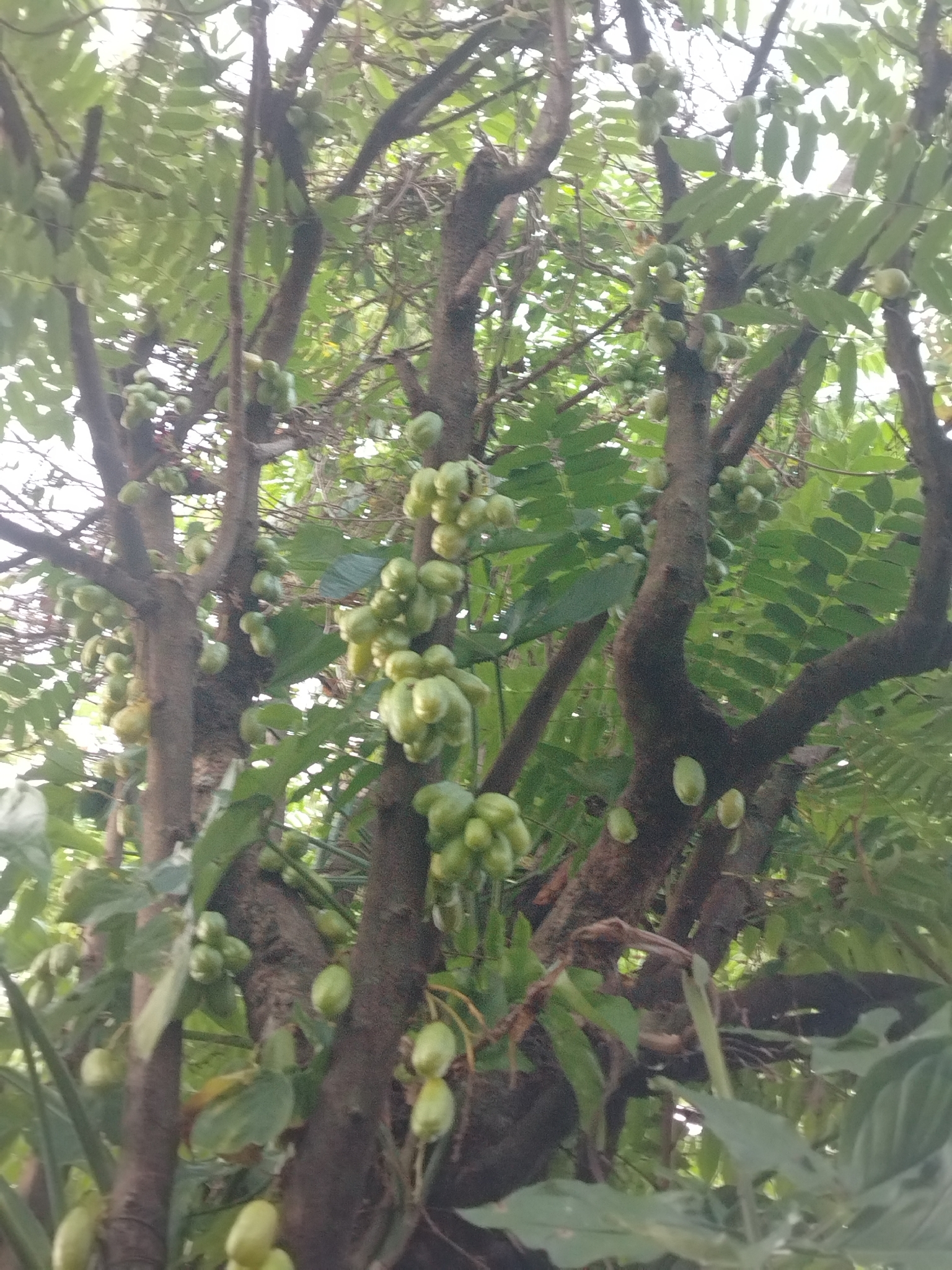
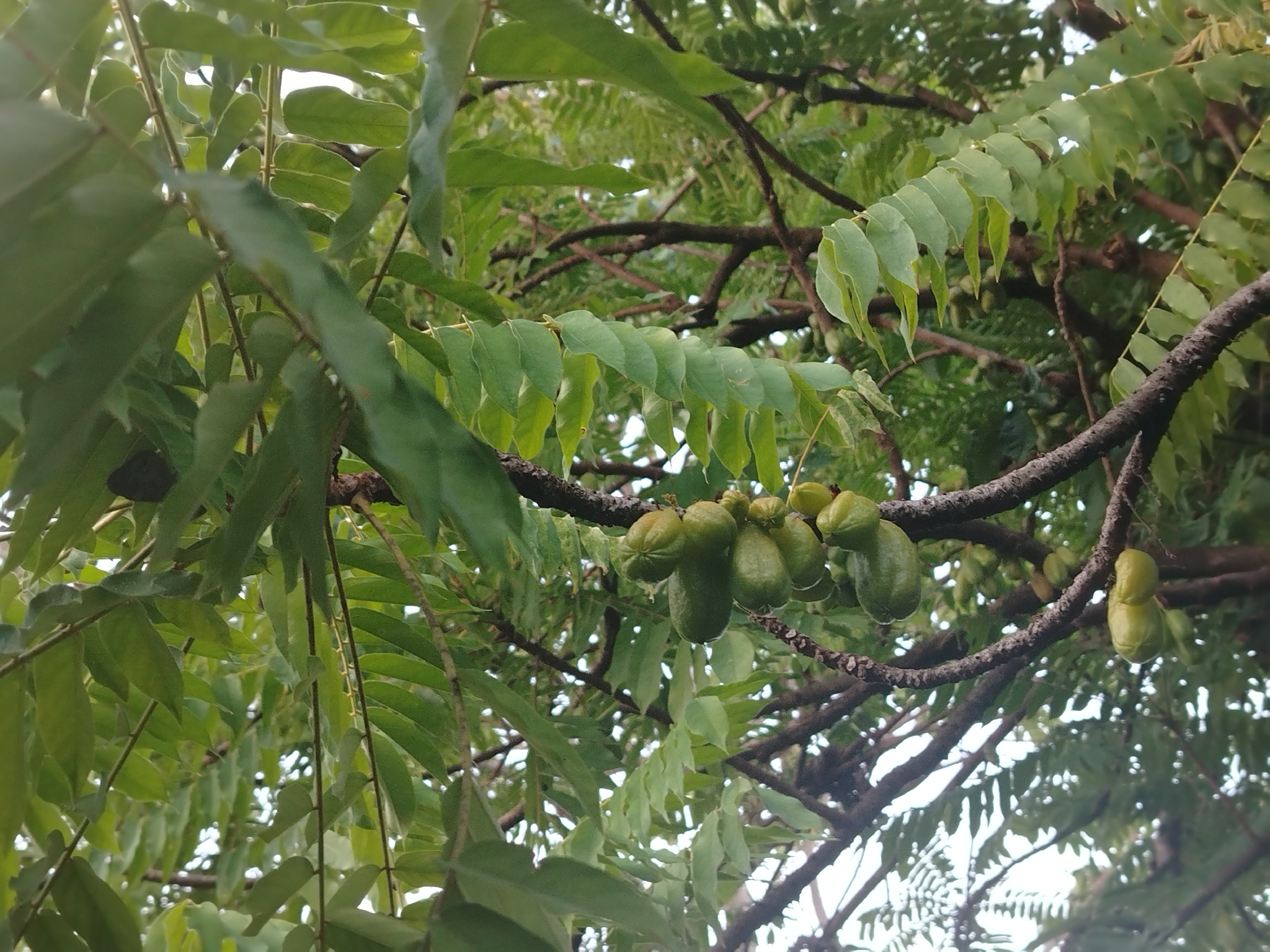
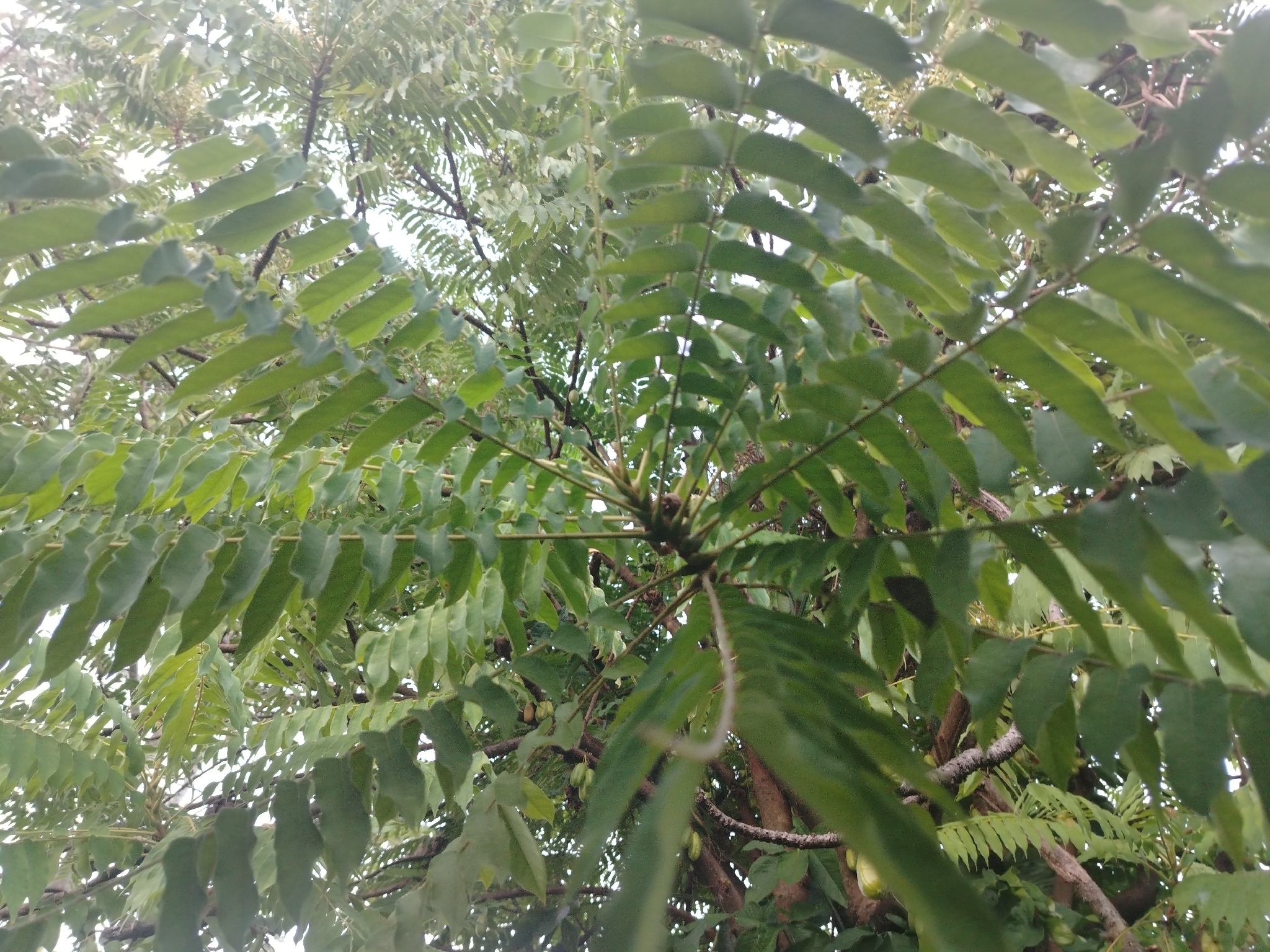
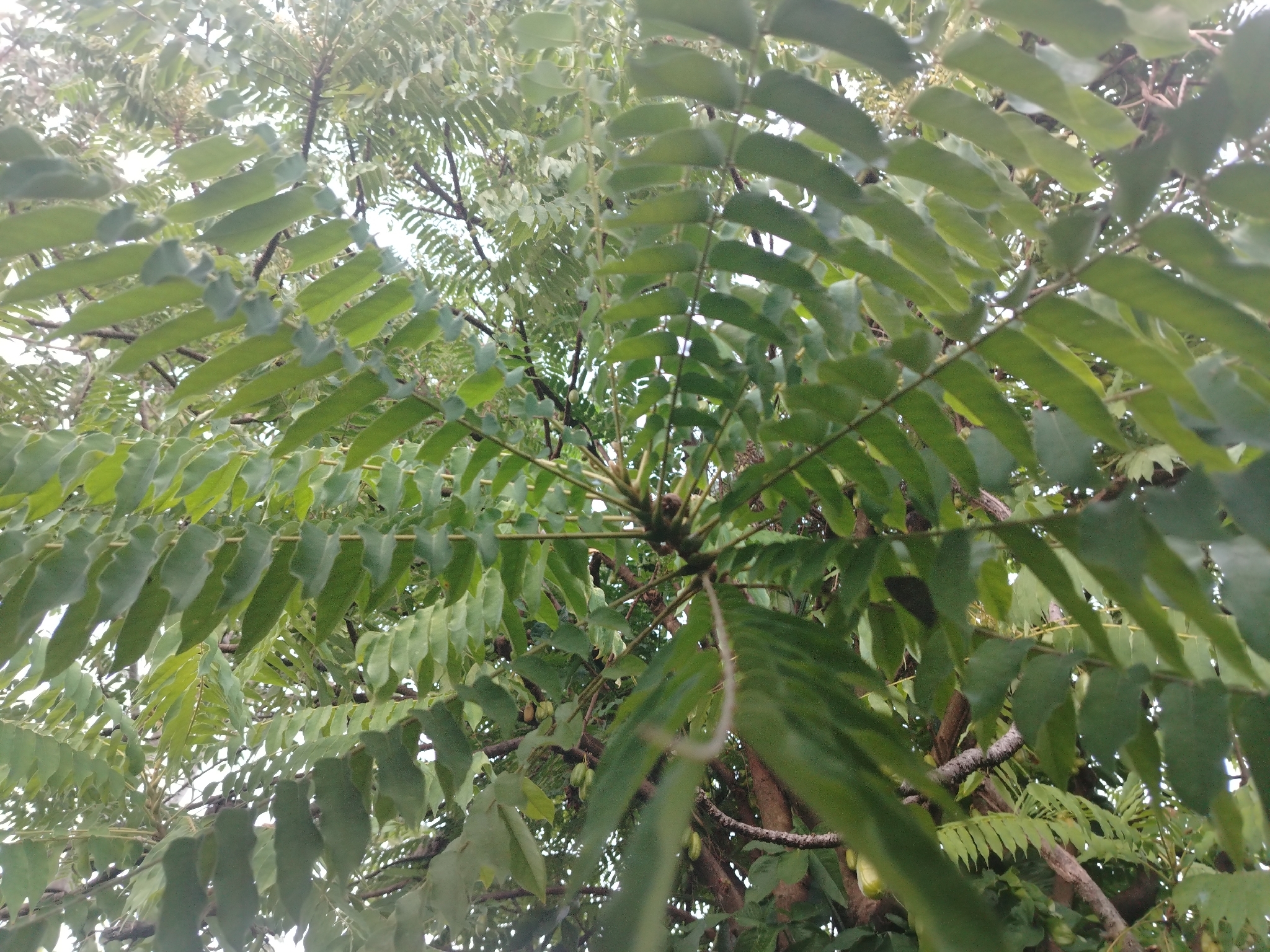
Small tropical tree (5–10 m), close relative of carambola (Averrhoa carambola, already in canon). Small green cylindrical very acidic fruits — used in pickles, juices, and chutneys. Tolerates partial shade. Plays a continuous-fruiting role in the medium stratum of Amazonian syntropic systems.
Götsch succession
- Götsch stage
- Secondary I
- Ecological role
- Early secondary
- Primary stratum
- Medium
- Strata
- Medium, Low
- Biomass class
- No biomass production
Environment
- Light requirement
- Partial sun
- Water requirement
- High
- Drought tolerance
- Low
- Waterlogging tolerance
- Low
- Soil pH range
- 5–7
- Preferred soil texture
- Loamy, Clayey, Sandy
- Hardiness zones
- 11–13
- Frost tolerance
- -1.0 °C
Morphology
- Mature height
- 5–10 m
- Recommended spacing
- 4–6 m
- Root system
- Taproot
- Root depth
- Medium
- Growth rate
- Moderate
- Lifespan
- 30–50 years
- Time to first harvest
- 36 months
- Productive lifespan
- 30 years
Biomes & climate
- Amazon Naturalized
- Atlantic Forest Suitable
Köppen classes
- Tropical rainforest (Af) Suitable
- Tropical monsoon (Am) Suitable
- Tropical savanna with dry winter (Aw) Suitable
Where it fits in a guild
Bilimbi takes the Medium stratum in the Secondary I phase of succession — in a guild it shares the line with species from the other strata, each harvesting light at its own height, in its own time.
Free account — and the catalog stays open, no sign-up needed.
🪴 Cultivation
Prefers deep, fertile, well-drained sandy-to-clay loams with pH 5.5–6.5 and organic matter; grows slowly in shade. Very frost-sensitive — young growth is damaged at −1 °C and mature plants are killed at −3 °C or below. Fruits best with a 2–3 month dry season, though it crops nearly year-round.
✂️ Management & Pruning
Grafted trees fruit in 2–3 years and seedlings in 5–6 years. Responds to formative pruning; well-pruned 10-year-old trees yield heavy crops. Cauliflorous — flowers and fruit are borne on the trunk and old branches, so avoid removing productive wood.
📅 Phenology
Flowering months: January, February, March, April, May, June, July, August, September, October, November, December
Fruiting months: January, February, March, April, May, June, July, August, September, October, November, December
❓ Frequently asked questions
How long until the first harvest of bilimbi?
The first harvest of bilimbi comes around 36 months after planting.
What spacing is recommended for bilimbi?
The recommended spacing for bilimbi is 4–6 m.
How tall does bilimbi grow?
At maturity, bilimbi reaches 5–10 m tall.
When does bilimbi fruit?
Fruiting of bilimbi occurs in January, February, March, April, May, June, July, August, September, October, November, December.
When does bilimbi flower?
Flowering of bilimbi occurs in January, February, March, April, May, June, July, August, September, October, November, December.
What stage and stratum does bilimbi occupy in a syntropic system?
In a syntropic system, bilimbi belongs to the secondary i stage, occupying the medium stratum.
Functions
Propagation
Seed, Cutting, Air layering, Grafting
Citations
- Useful Tropical Plants — Averrhoa bilimbi (height_min_m, height_max_m, ph_min, ph_max, light_need, water_need, drought_tolerance, frost_tolerance_c, time_to_first_harvest_months, propagation, cultivation_notes, pruning_notes)
- CTAHR University of Hawaii — Bilimbi (Fruits and Nuts F_N-23) (cultivation_notes, waterlogging_tolerance, propagation)
- GBIF Backbone Taxonomy — Averrhoa bilimbi L. (gbif_taxon_key, family, genus)
- Plants of the World Online (Kew) — Averrhoa bilimbi L. (powo_id, family)
External references
Continue exploring
Related plants
-
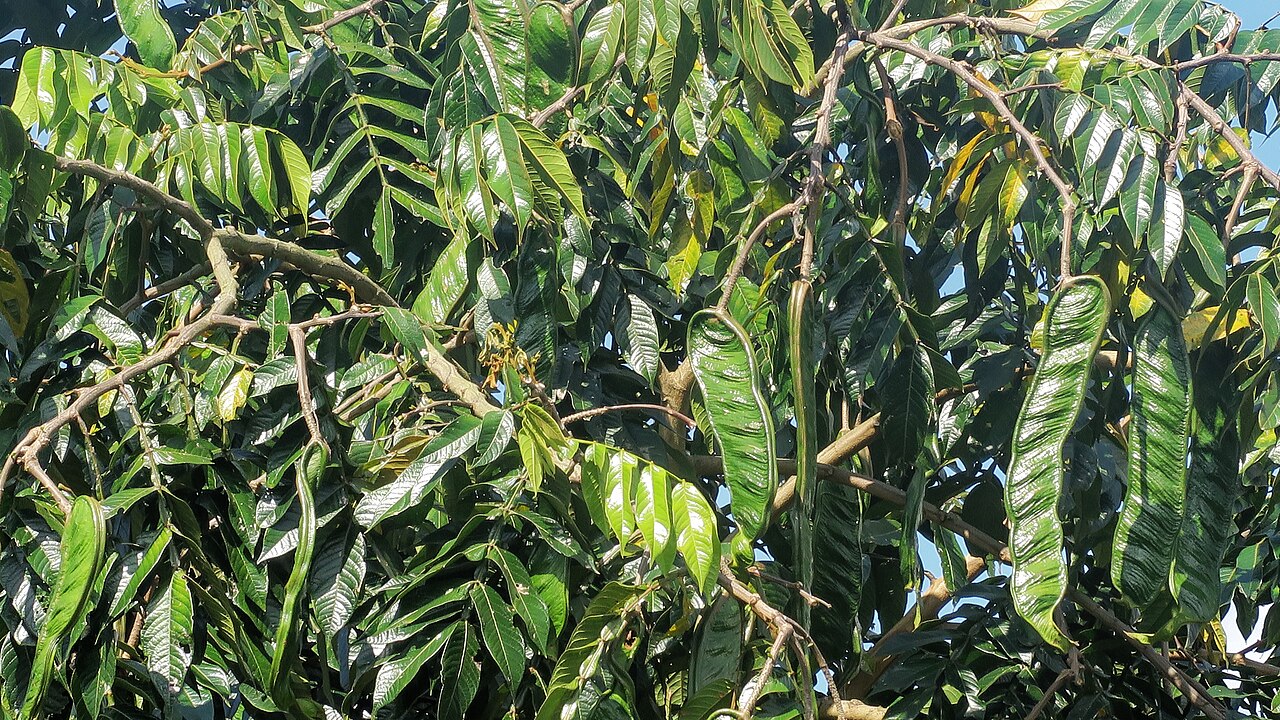
ice cream bean
Inga edulis
Secondary I High Fertilizer biomass 🌱 Nitrogen fixerEssential nitrogen fixer in syntropic systems. Coppices readily after drastic pruning and produces large volumes of fertilizer biomass.
-
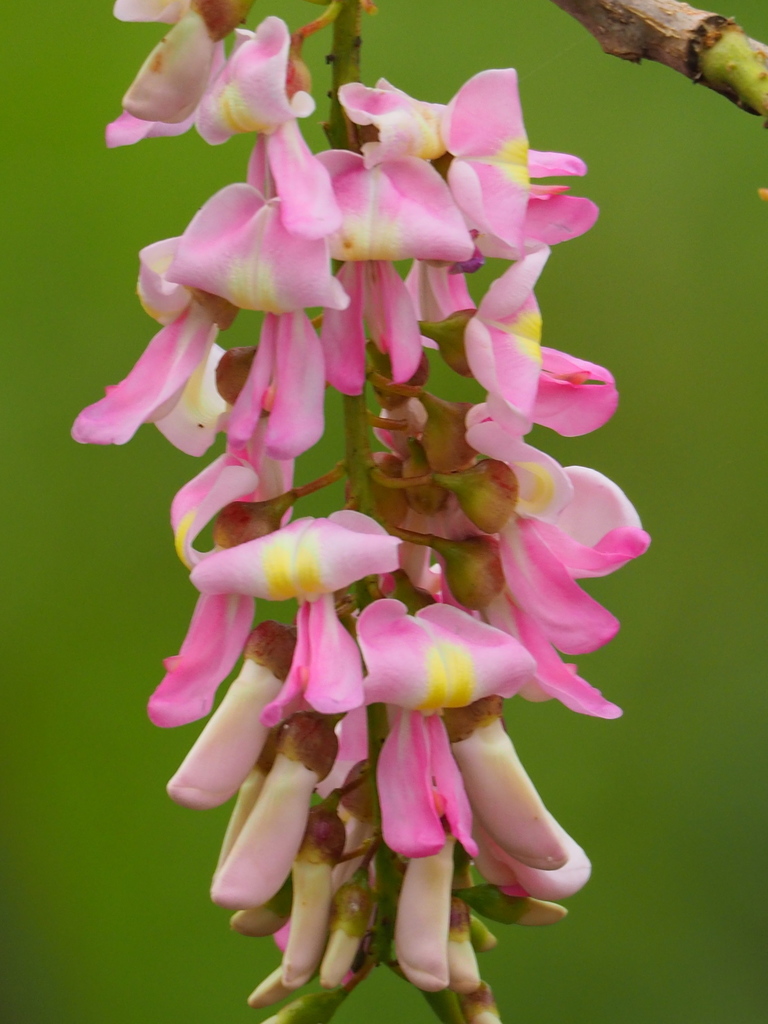
gliricidia
Gliricidia sepium
Secondary I Medium Fertilizer biomass 🌱 Nitrogen fixerNitrogen-fixing legume that tolerates drastic pruning and produces fast-decomposing fertilizer biomass. Commonly used as shade for coffee and cocoa...
-
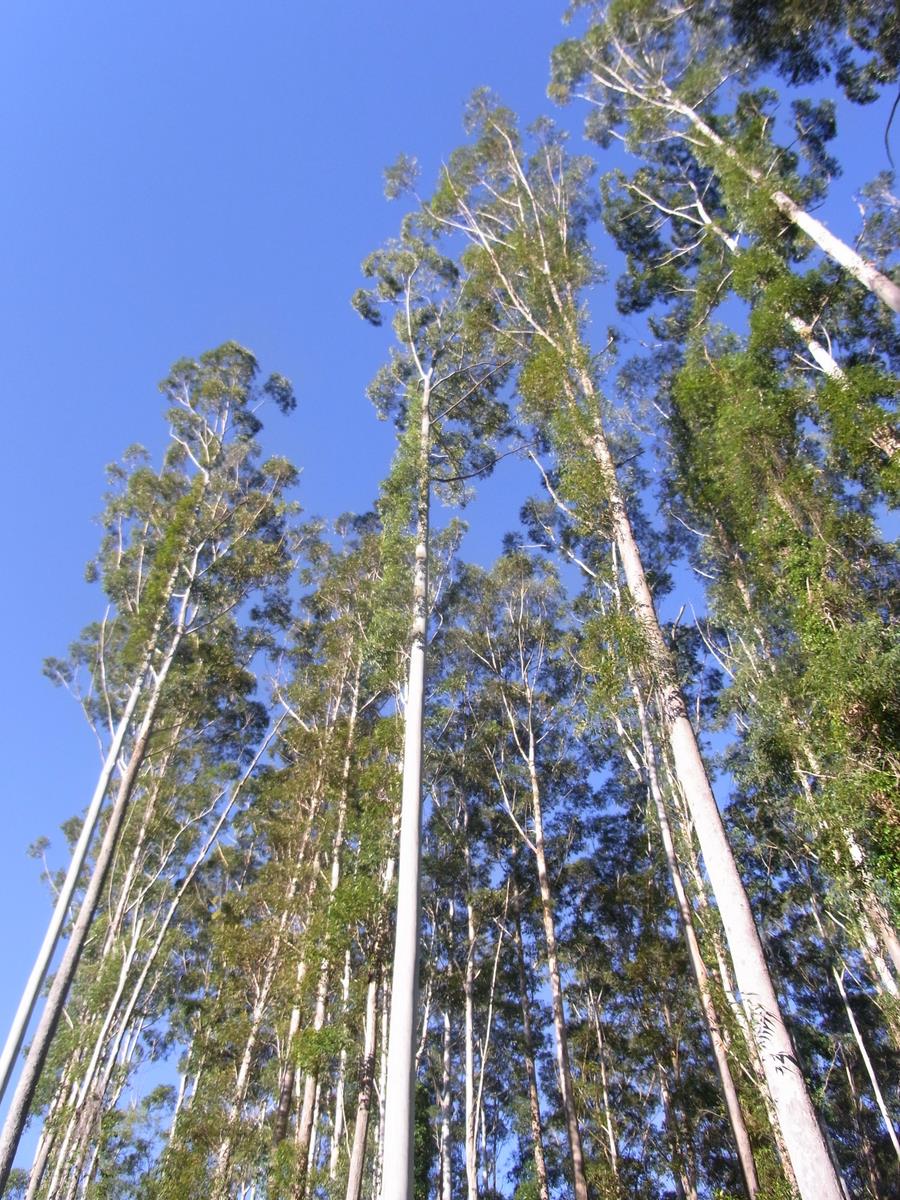
rose gum
Eucalyptus grandis
Secondary I Emergent Mulch biomassTypical accumulation species in syntropic systems: cover biomass, timber in 15 years. Non-native but widely used in Brazilian SAFs.
-
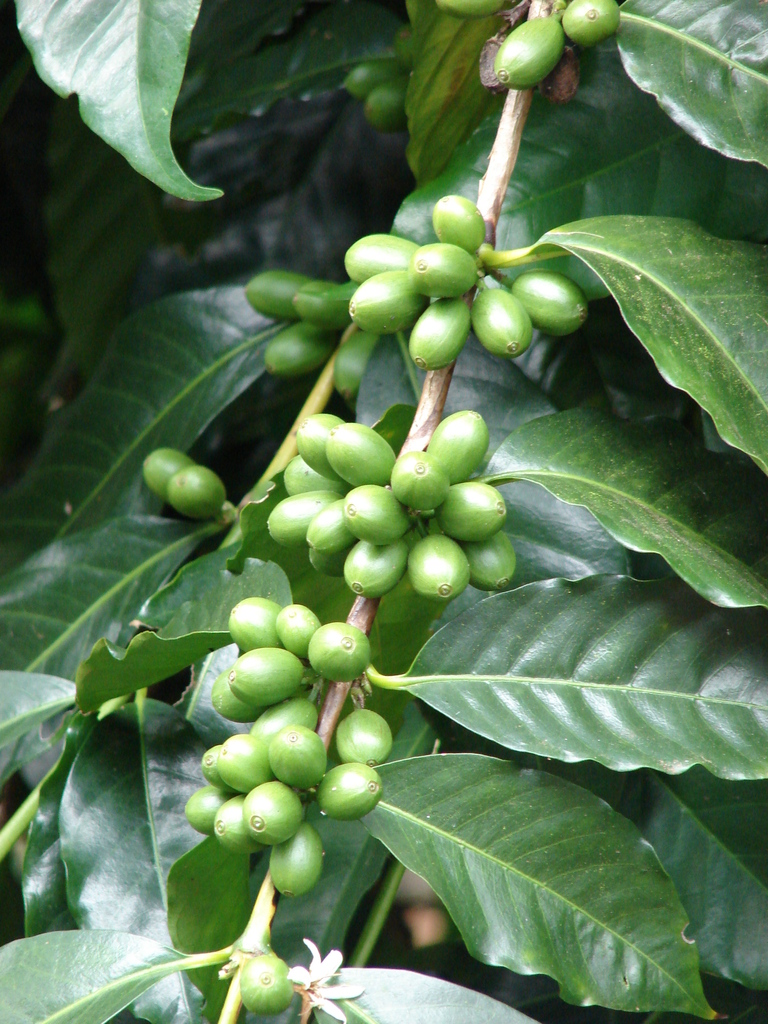
coffee
Coffea arabica
Secondary I Low No biomass productionShade-grown crop valuable in syntropic Atlantic Forest systems. Occupies the low stratum between bananas and ingás.
-
cocoa
Theobroma cacao
Secondary I Low No biomass productionLow-stratum fruit tree shaded by bananas, ingás and palms in the Bahia syntropic systems pioneered by Götsch.
-
cebil
Anadenanthera colubrina
Secondary I High Fertilizer biomass 🌱 Nitrogen fixerFast-growing pioneer legume, nitrogen fixer. Adapted to poor and degraded soils; widely used in restoration of degraded areas across Caatinga, Cerr...