Plants
camaratuba
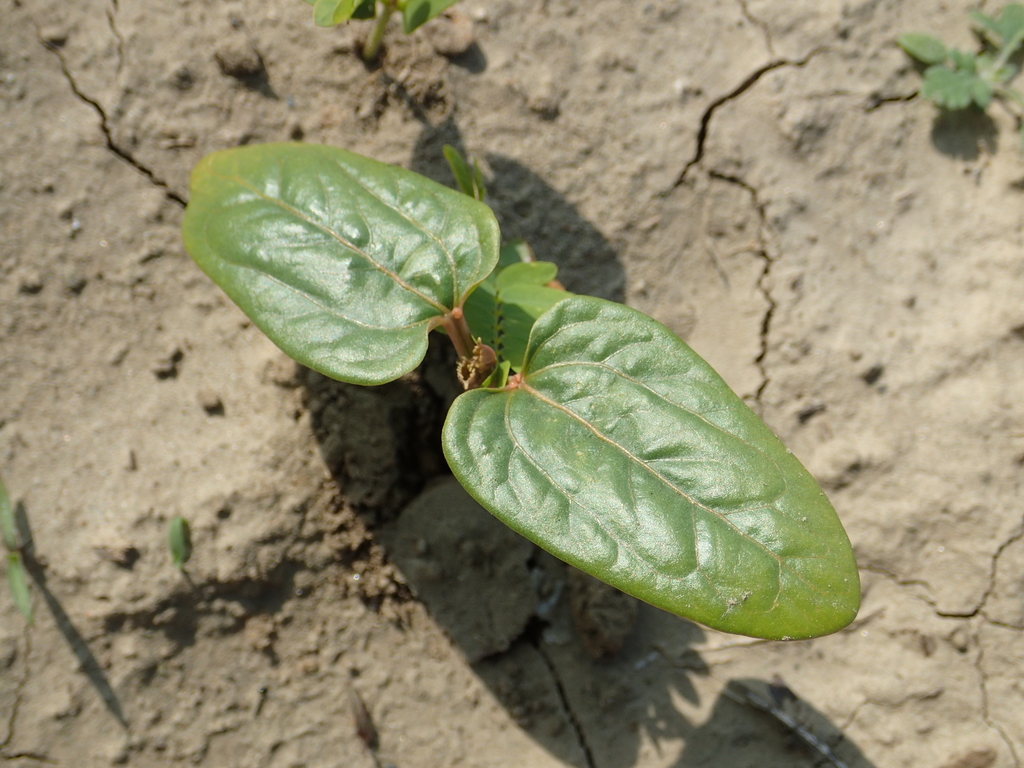
Cratylia mollis Mart. ex Benth.
Family: Fabaceae · Genus: Cratylia
velvet bean tree (Cratylia mollis)
Native shrubby legume of the Caatinga; one of the most important fodder species of the northeastern semiarid, with strong drought resistance and high nutritional value for ruminants.
Götsch succession
- Götsch stage
- Placenta II
- Ecological role
- Pioneer
- Primary stratum
- Low
- Strata
- Low, Medium
- Biomass class
- Fertilizer biomass
Environment
- Light requirement
- Full sun
- Water requirement
- Low
- Drought tolerance
- High
Morphology
- Mature height
- 1.5–3 m
- Recommended spacing
- 1 m
- Growth rate
- Moderate
Biomes & climate
- Caatinga Native
Köppen classes
- Hot semi-arid (BSh) Suitable
Where it fits in a guild
Camaratuba takes the Low stratum in the Placenta II phase of succession — in a guild it shares the line with species from the other strata, each harvesting light at its own height, in its own time. It also fixes nitrogen, feeding the soil for its line neighbors.
Free account — and the catalog stays open, no sign-up needed.
🪴 Cultivation
Sow at rain onset at 1×1 m (~4 seeds/hole, 5–10 kg/ha); nursery seedlings improve establishment. Managed as a cut-and-carry protein bank (~4–5 t DM/ha/yr), cut at 0.5–1.0 m, resprouting vigorously and staying palatable through the dry season. N-fixation is real but rainfall-dependent — nodulation collapses under dry-season water deficit.
✂️ Management & Pruning
Coppices/resprouts well, including in the dry season; managed by cutting at 0.5–1.0 m as a protein bank.
❓ Frequently asked questions
What spacing is recommended for camaratuba?
The recommended spacing for camaratuba is 1 m.
How tall does camaratuba grow?
At maturity, camaratuba reaches 1.5–3 m tall.
What stage and stratum does camaratuba occupy in a syntropic system?
In a syntropic system, camaratuba belongs to the placenta ii stage, occupying the low stratum.
Does camaratuba fix nitrogen?
Yes — camaratuba is a nitrogen-fixing species that helps fertilize the system's soil.
Functions
Propagation
Seed, Cutting
Citations
- Camaratuba — Fundação Joaquim Nabuco
- Cratylia argentea: review of a tropical shrub legume — Tropical Grasslands
- EMBRAPA Semiárido — Camaratuba (Cratylia mollis) (spacing_min_m, spacing_max_m, pruning_notes, cultivation_notes)
- Teixeira et al. 2006 — BNF em Cratylia mollis na Caatinga (15N) (nitrogen_fixer, cultivation_notes)
- IPNI / Flora do Brasil — Cratylia mollis Mart. ex Benth. (external_ids)
External references
Continue exploring
Related plants
-
Ceará rubber tree
Manihot glaziovii
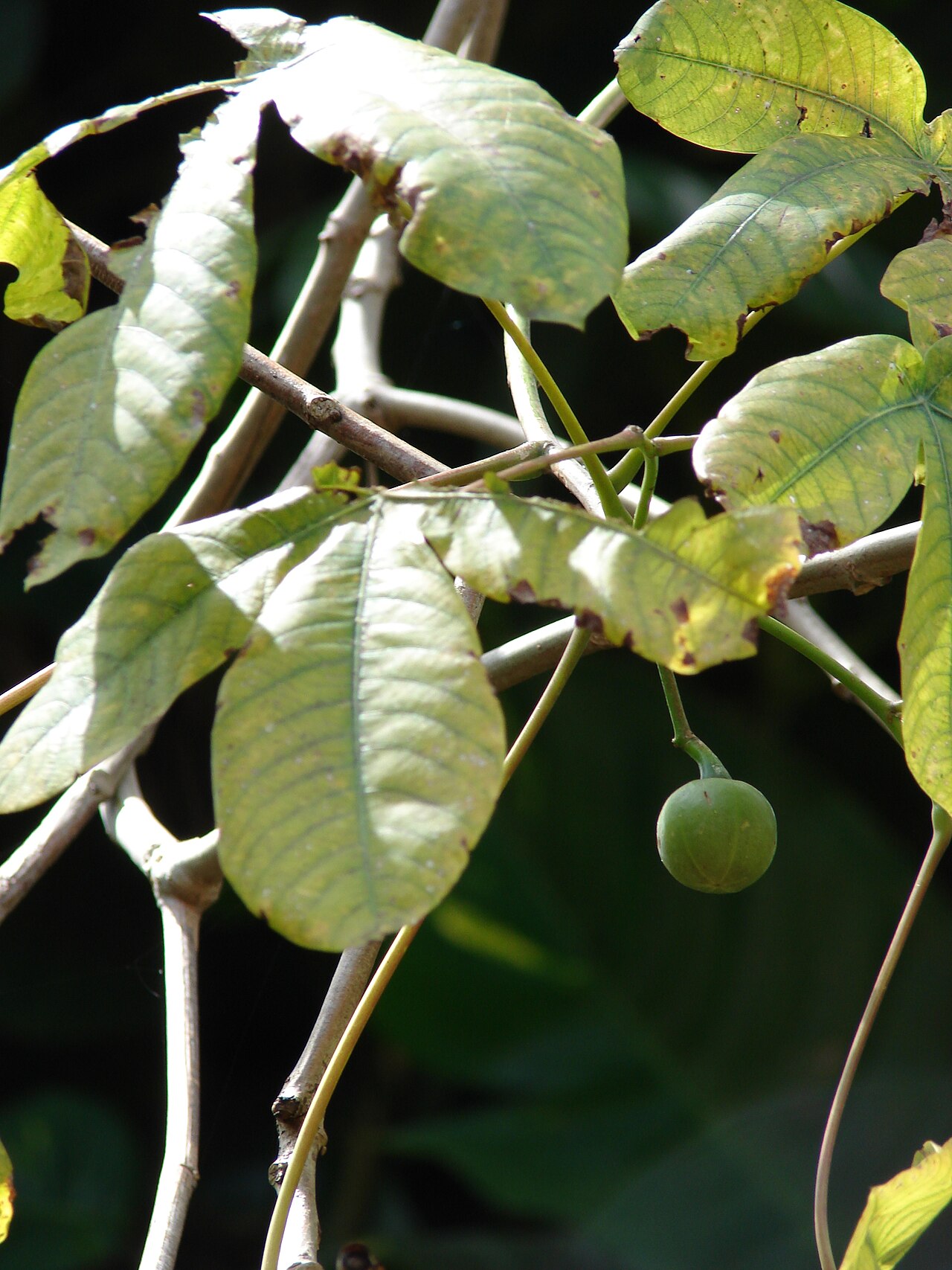
Placenta II MediumShrub/small tree native to the Caatinga; one of the first species to flush leaves at the start of the rainy season. Leaves and twigs are used as ru...
-
spineless cactus
Opuntia ficus-indica
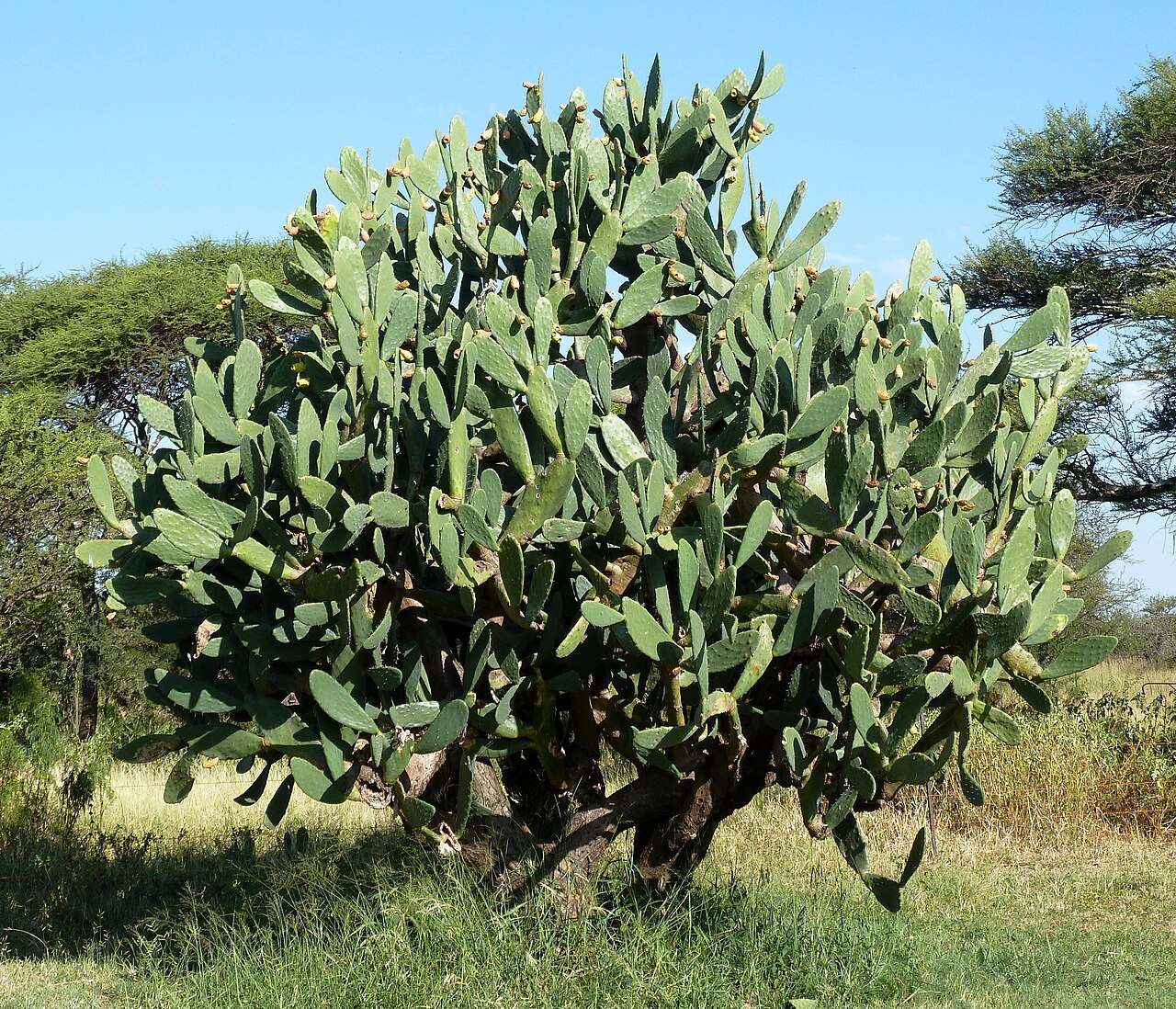
Placenta II LowIntroduced cactus widely cultivated in the Brazilian semiarid as strategic fodder reserve. CAM metabolism gives extremely high water-use efficiency...
-
trumpet tree
Cecropia pachystachya
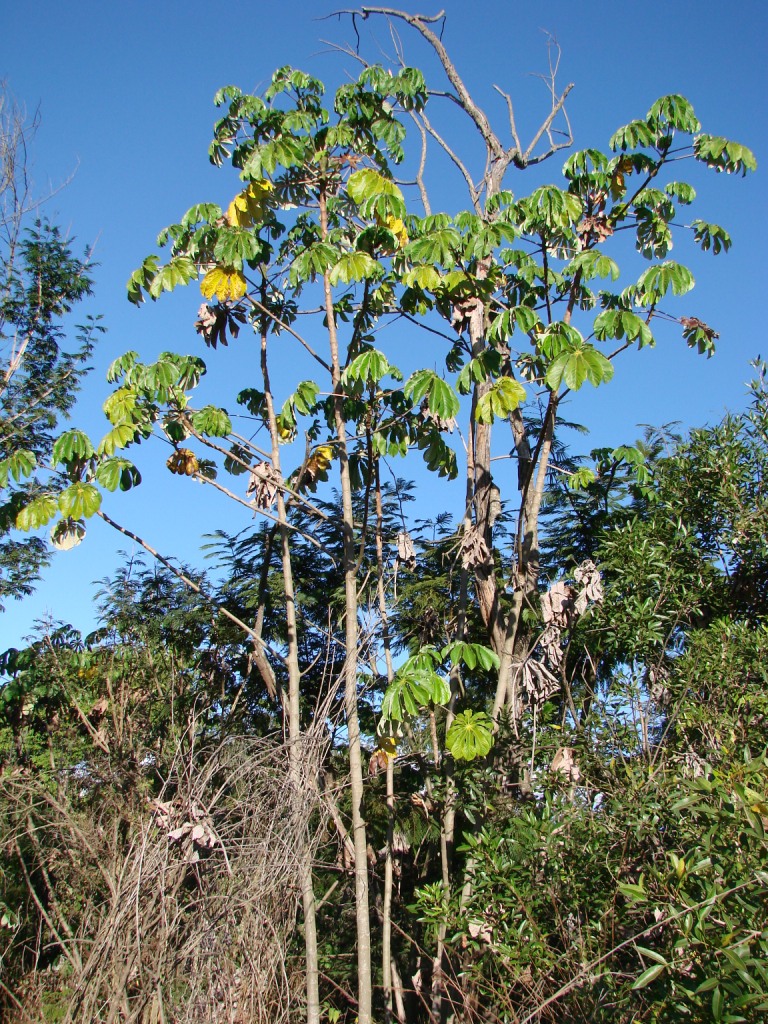
Placenta II Medium Mulch biomassFast-growing, short-lived (~20 years) pioneer tree that colonizes edges and gaps in all Brazilian biomes. Fruits eaten by birds and primates; symbi...
-
cassava
Manihot esculenta
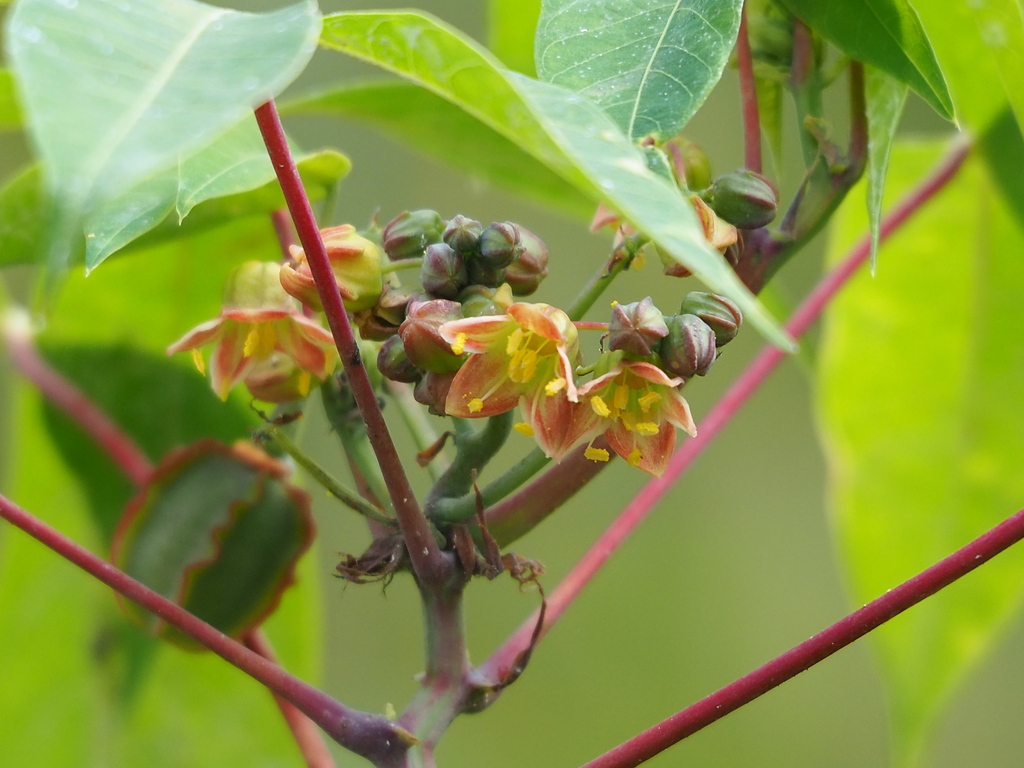
Placenta II High Mulch biomassPlacenta II tuber crop widely cultivated across Amazonia and Brazil. Pasini lists it in the high stratum of Tabela 3 and as a species of the '1 to ...
-
yellow yam
Dioscorea cayennensis
Placenta II Medium No biomass productionTuber-bearing climber cultivated in the medium stratum of syntropic systems. Pasini lists yam in the medium stratum of Tabela 3 and in the '1 to 3 ...
-
castor bean
Ricinus communis
Placenta II Emergent Mulch biomassAnnual or short-lived perennial shrub/small tree, a high-yielding oilseed crop. EcoAgri lists it in the emergent stratum of the 'up to 3 years' bin...