Plants
spineless cactus
Opuntia ficus-indica (L.) Mill.
Family: Cactaceae · Genus: Opuntia
Indian fig, prickly pear
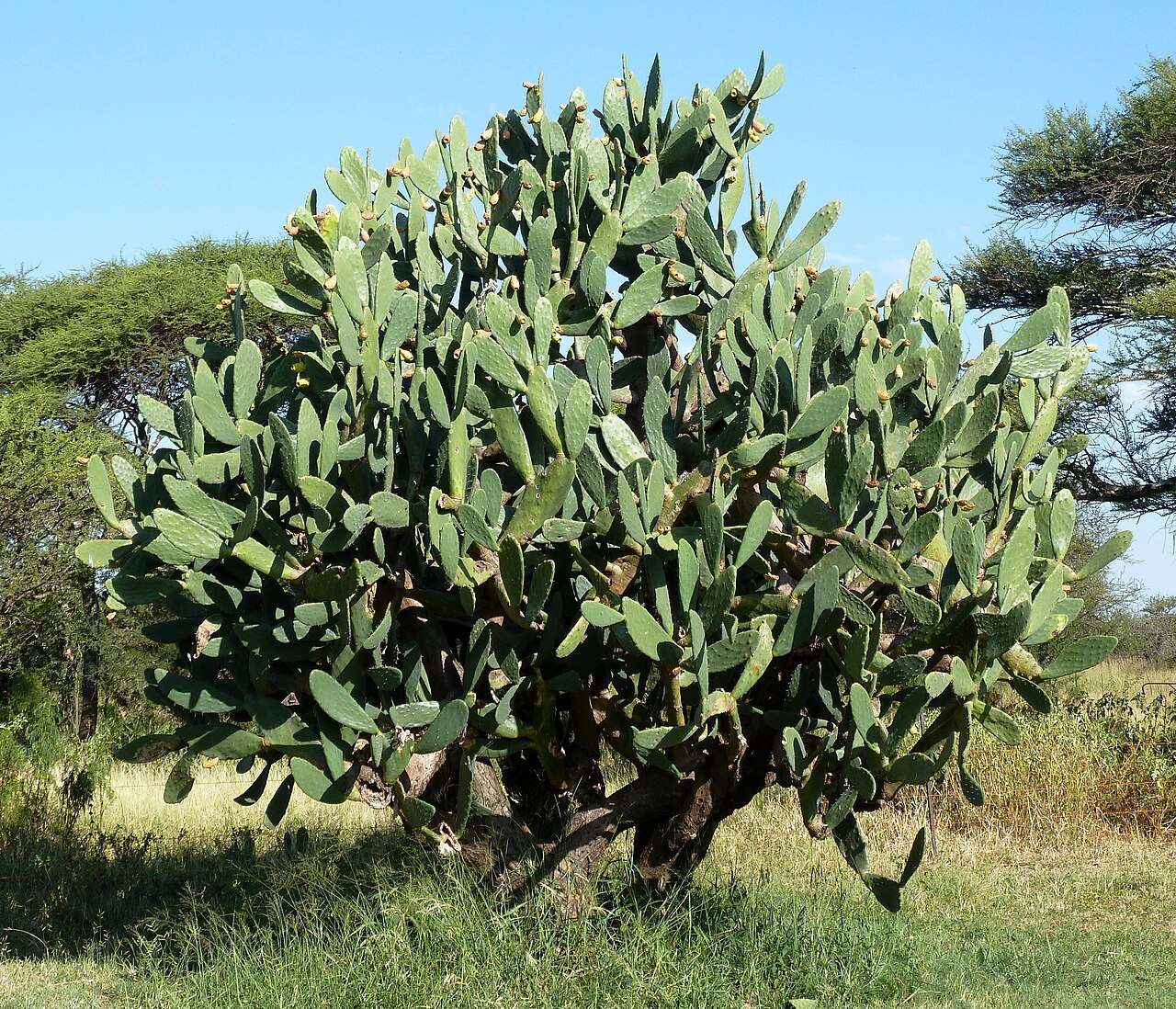
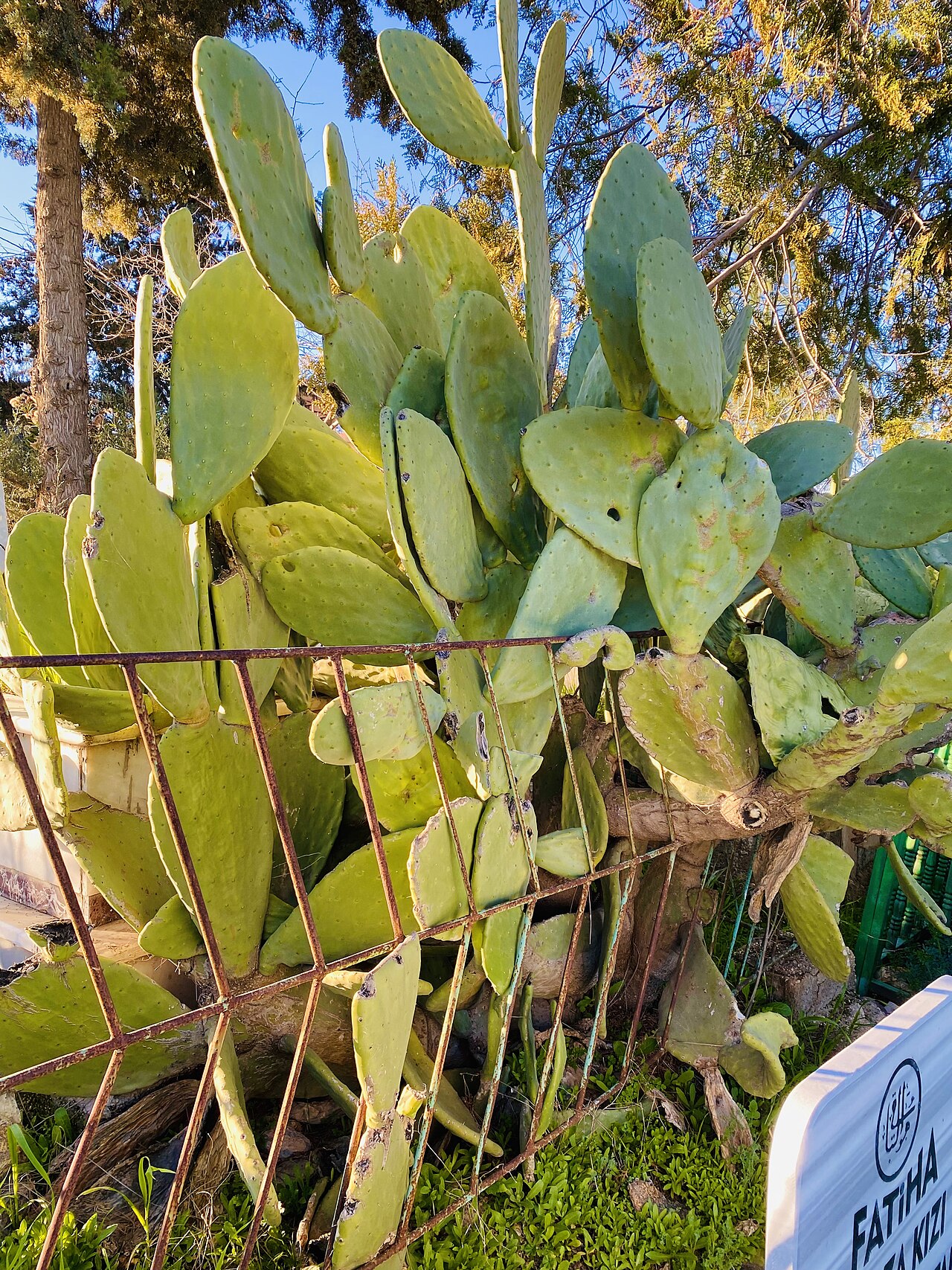
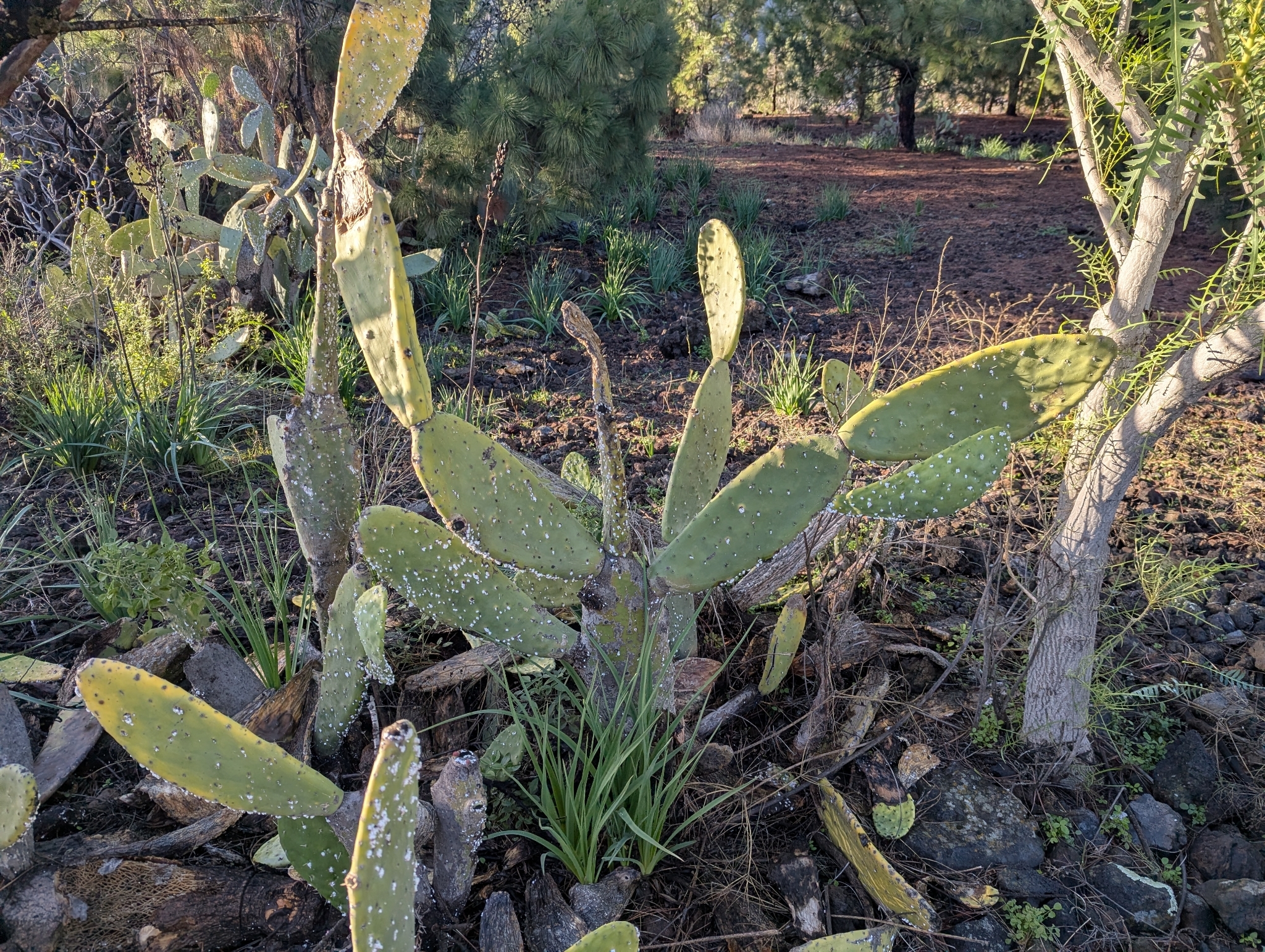
Introduced cactus widely cultivated in the Brazilian semiarid as strategic fodder reserve. CAM metabolism gives extremely high water-use efficiency, producing biomass even during prolonged droughts.
📚 Synonyms
Scientific synonyms: Cactus ficus-indica L., Opuntia megacantha Salm-Dyck, Opuntia maxima Mill., Opuntia paraguayensis K.Schum., Platyopuntia ficus-indica (L.) F.Ritter
Other common names: Barbary fig, cactus pear, nopal
Götsch succession
- Götsch stage
- Placenta II
- Ecological role
- Pioneer
- Primary stratum
- Low
- Strata
- Low, Ground cover
Environment
- Light requirement
- Full sun
- Water requirement
- Low
- Drought tolerance
- High
- Waterlogging tolerance
- None
- Soil pH range
- 6–7.5
- Preferred soil texture
- Sandy, Loamy
- Hardiness zones
- 9–11
- Frost tolerance
- -7.0 °C
Morphology
- Mature height
- 2–5 m
- Root system
- Lateral
- Root depth
- Shallow
- Growth rate
- Moderate
- Time to first harvest
- 36 months
Biomes & climate
- Caatinga Naturalized
Köppen classes
- Hot semi-arid (BSh) Suitable
- Hot desert (BWh) Suitable
Where it fits in a guild
Spineless cactus takes the Low stratum in the Placenta II phase of succession — in a guild it shares the line with species from the other strata, each harvesting light at its own height, in its own time.
Free account — and the catalog stays open, no sign-up needed.
🪴 Cultivation
Requires excellent drainage — wet cold and waterlogging rot the cladodes; withhold irrigation in autumn/winter. Propagated easily from cladodes (pads) left to callus before planting. Triple-row arrangements at 40,000 plants/ha maximize green-matter yield in the semiarid. Susceptible to cochineal scale (Dactylopius opuntiae); resistant clones (Orelha-de-elefante mexicana, Miúda/Doce) are recommended.
📅 Phenology
Flowering months: August, September, October
Fruiting months: December, January, February
❓ Frequently asked questions
How long until the first harvest of spineless cactus?
The first harvest of spineless cactus comes around 36 months after planting.
How tall does spineless cactus grow?
At maturity, spineless cactus reaches 2–5 m tall.
When does spineless cactus fruit?
Fruiting of spineless cactus occurs in December, January, February.
When does spineless cactus flower?
Flowering of spineless cactus occurs in August, September, October.
What stage and stratum does spineless cactus occupy in a syntropic system?
In a syntropic system, spineless cactus belongs to the placenta ii stage, occupying the low stratum.
Functions
Propagation
Cutting, Seed
Citations
- Manejo e utilização da palma forrageira (Opuntia e Nopalea) em Pernambuco — IPA
- Production of Spineless Cactus in Brazilian Semiarid — IntechOpen
- PFAF Plant Database — Opuntia ficus-indica (ph_min, ph_max, hardiness_zone_min, hardiness_zone_max, soil_texture_preference, light_need, propagation, phenology)
- Feedipedia — Prickly pear (Opuntia ficus-indica) (root_system, root_depth, frost_tolerance_c, drought_tolerance, height_min_m, height_max_m, time_to_first_harvest_months, nitrogen_fixer, waterlogging_tolerance)
- Plants of the World Online (POWO/Kew) — Opuntia ficus-indica (L.) Mill. (scientific_author, family, genus, synonyms)
- Cultivares de Palma Forrageira sob Diferentes Arranjos e Densidades de Plantio — Revista Brasileira de Geografia Física (UFPE) (cultivation_notes)
External references
Continue exploring
Related plants
-
Ceará rubber tree
Manihot glaziovii
Placenta II MediumShrub/small tree native to the Caatinga; one of the first species to flush leaves at the start of the rainy season. Leaves and twigs are used as ru...
-
camaratuba
Cratylia mollis
Placenta II Low Fertilizer biomass 🌱 Nitrogen fixerNative shrubby legume of the Caatinga; one of the most important fodder species of the northeastern semiarid, with strong drought resistance and hi...
-
trumpet tree
Cecropia pachystachya
Placenta II Medium Mulch biomassFast-growing, short-lived (~20 years) pioneer tree that colonizes edges and gaps in all Brazilian biomes. Fruits eaten by birds and primates; symbi...
-
cassava
Manihot esculenta
Placenta II High Mulch biomassPlacenta II tuber crop widely cultivated across Amazonia and Brazil. Pasini lists it in the high stratum of Tabela 3 and as a species of the '1 to ...
-
yellow yam
Dioscorea cayennensis
Placenta II Medium No biomass productionTuber-bearing climber cultivated in the medium stratum of syntropic systems. Pasini lists yam in the medium stratum of Tabela 3 and in the '1 to 3 ...
-
castor bean
Ricinus communis
Placenta II Emergent Mulch biomassAnnual or short-lived perennial shrub/small tree, a high-yielding oilseed crop. EcoAgri lists it in the emergent stratum of the 'up to 3 years' bin...