Plants
guaraná
Paullinia cupana Kunth
Family: Sapindaceae · Genus: Paullinia
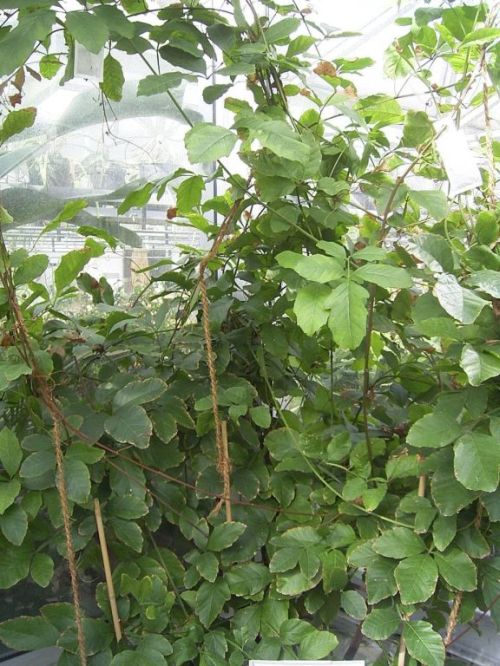
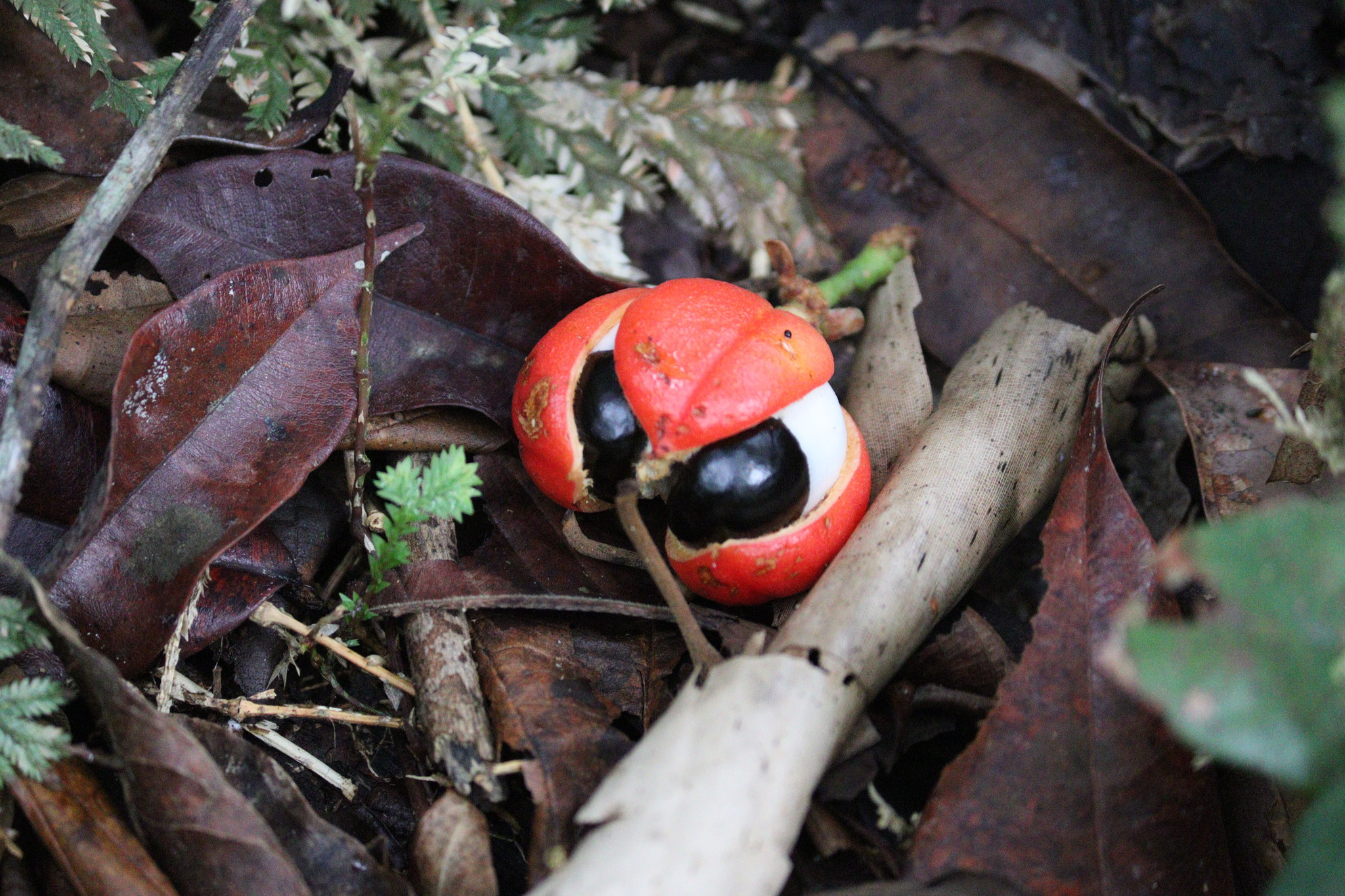
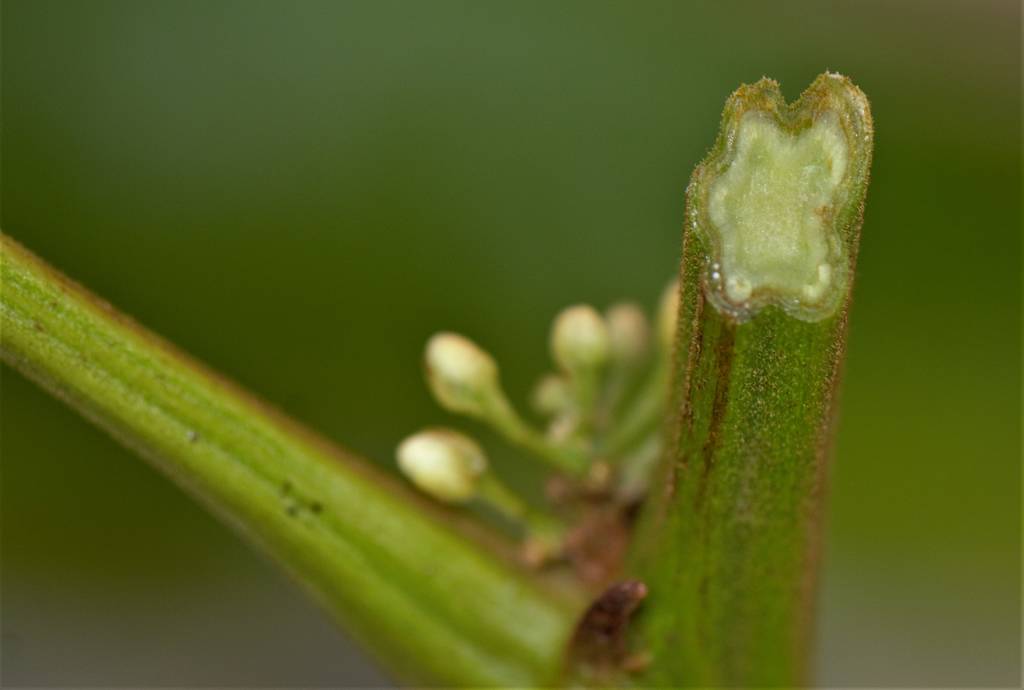
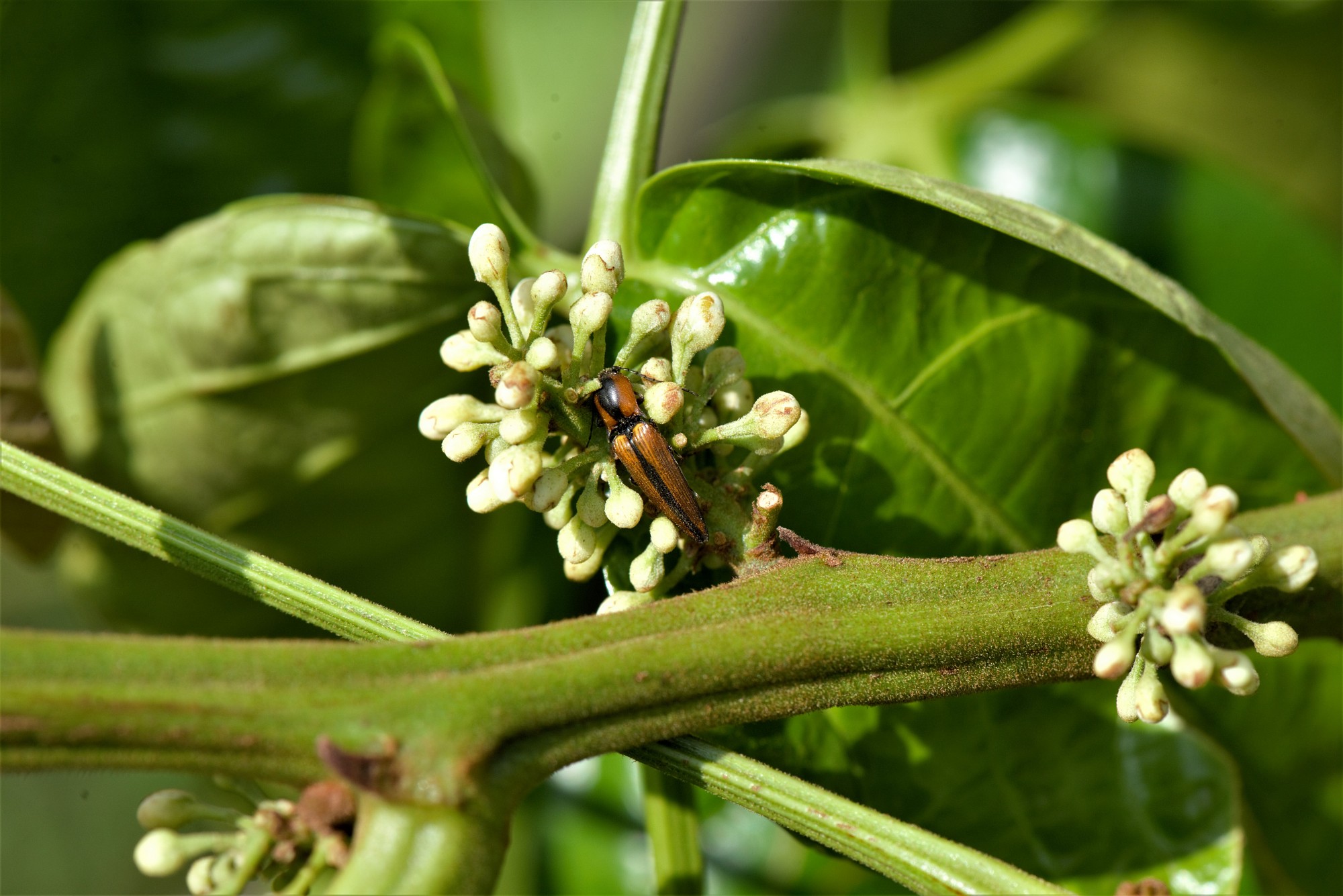
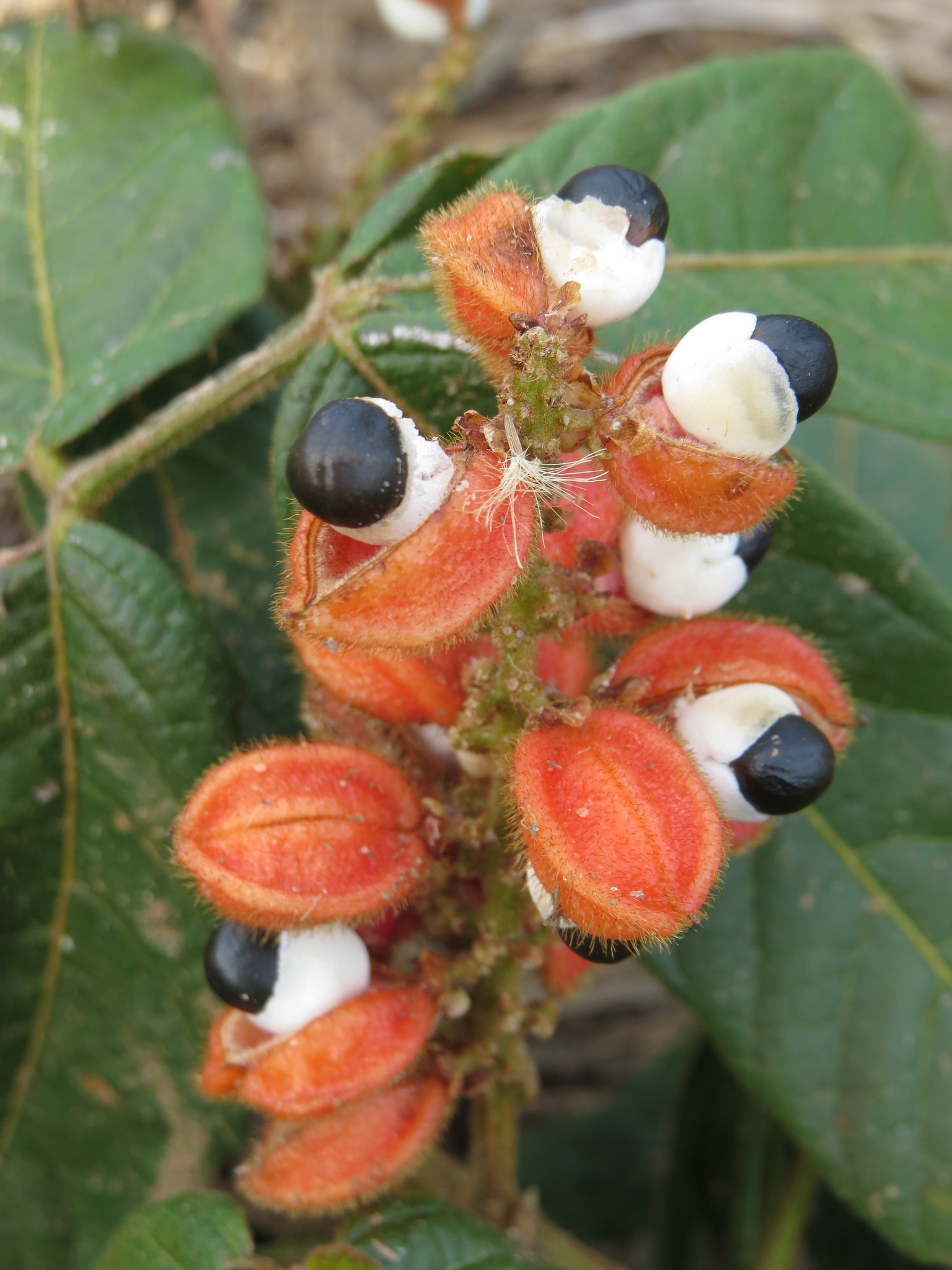
Amazonian shrubby climber, today managed as a shrub in monoculture. Embrapa lists guaraná among perennial crops in SAFs with mean yield of 100 kg/ha of dry seed and productive life up to 30 years. Caffeine-rich seeds (4–7%) — used in soft drinks and herbal medicine. Low-stratum species, prefers partial shade; consorts well with Brazil-nut, cupuaçu, and timber species.
Götsch succession
- Götsch stage
- Secondary I
- Ecological role
- Early secondary
- Primary stratum
- Low
- Strata
- Low
- Biomass class
- No biomass production
Environment
- Light requirement
- Partial shade
- Water requirement
- High
- Drought tolerance
- Low
- Waterlogging tolerance
- Low
- Soil pH range
- 5–6.5
- Preferred soil texture
- Loamy, Clayey
Morphology
- Mature height
- 2–5 m
- Recommended spacing
- 4–5 m
- Root system
- Taproot
- Root depth
- Deep
- Growth rate
- Slow
- Lifespan
- ≥ 30 years
- Time to first harvest
- 36 months
- Productive lifespan
- 30 years
Biomes & climate
- Amazon Native
Köppen classes
- Tropical rainforest (Af) Suitable
- Tropical monsoon (Am) Suitable
- Tropical savanna with dry winter (Aw) Suitable
Where it fits in a guild
Guaraná takes the Low stratum in the Secondary I phase of succession — in a guild it shares the line with species from the other strata, each harvesting light at its own height, in its own time.
Free account — and the catalog stays open, no sign-up needed.
🪴 Cultivation
Requires deep, well-drained soils rich in organic matter; does not tolerate waterlogging. Clonal propagation by cuttings is preferred over seed (slow germination and high genetic variability). Production begins around the 4th year; fruits ripen January–April in the Amazon.
❓ Frequently asked questions
How long until the first harvest of guaraná?
The first harvest of guaraná comes around 36 months after planting.
What spacing is recommended for guaraná?
The recommended spacing for guaraná is 4–5 m.
How tall does guaraná grow?
At maturity, guaraná reaches 2–5 m tall.
What stage and stratum does guaraná occupy in a syntropic system?
In a syntropic system, guaraná belongs to the secondary i stage, occupying the low stratum.
Functions
Propagation
Seed, Cutting
Citations
- Marques, L. C. T. (2007) — Cultivo de Fruteiras em Sistemas Agroflorestais, Embrapa Amazônia Oriental , p. 27 (primary_stratum, productive_lifespan_years, spacing_min_m)
- Plants of the World Online (POWO), Kew — Paullinia cupana Kunth (scientific_author, family, genus)
- IDAM — Cultivo do guaranazeiro na agricultura familiar (Paullinia cupana) (spacing_min_m, spacing_max_m, ph_min, ph_max, soil_texture_preference, time_to_first_harvest_months, cultivation_notes)
- SciELO Brazil — Guarana propagation strategies: a review (Braz. J. Biol.) (propagation, cultivation_notes)
- Embrapa Amazônia Ocidental — Cultivo do guaranazeiro (folder técnico) (root_depth, waterlogging_tolerance, soil_texture_preference, cultivation_notes)
External references
Continue exploring
Related plants
-
ice cream bean
Inga edulis
Secondary I High Fertilizer biomass 🌱 Nitrogen fixerEssential nitrogen fixer in syntropic systems. Coppices readily after drastic pruning and produces large volumes of fertilizer biomass.
-
cocoa
Theobroma cacao
Secondary I Low No biomass productionLow-stratum fruit tree shaded by bananas, ingás and palms in the Bahia syntropic systems pioneered by Götsch.
-
mangium
Acacia mangium
Secondary I Emergent Fertilizer & mulch 🌱 Nitrogen fixerExtremely fast-growing nitrogen-fixing legume, central in syntropic systems as a producer of both cover and fertilizer biomass. Pasini classifies i...
-
tannia
Xanthosoma sagittifolium
Secondary I Low No biomass productionPANC perennial leafy vegetable widely used in Brazilian syntropic systems. Pasini lists it in the low stratum of Tabela 3 and in the '3 to 10 years...
-
cupuaçu
Theobroma grandiflorum
Secondary I Medium No biomass productionAmazonian high-stratum fruit tree, cousin of cocoa. Pasini lists it in the high stratum of Tabela 3 and among Abundance-system species — middle pha...
-
guava
Psidium guajava
Secondary I High No biomass productionNative tropical American fruit tree, common in Brazilian syntropic agroforestry systems. Pasini lists it in the high stratum of Tabela 3. Tolerates...