Plants
taquarucu bamboo
Guadua tagoara
Family: Poaceae · Genus: Guadua
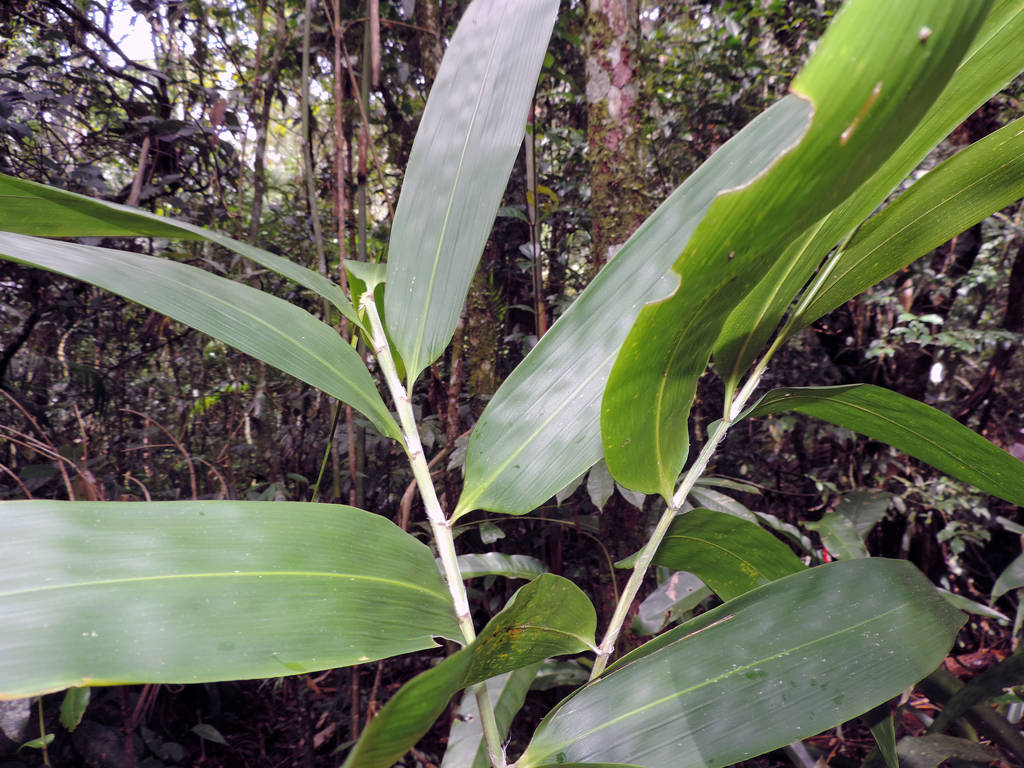
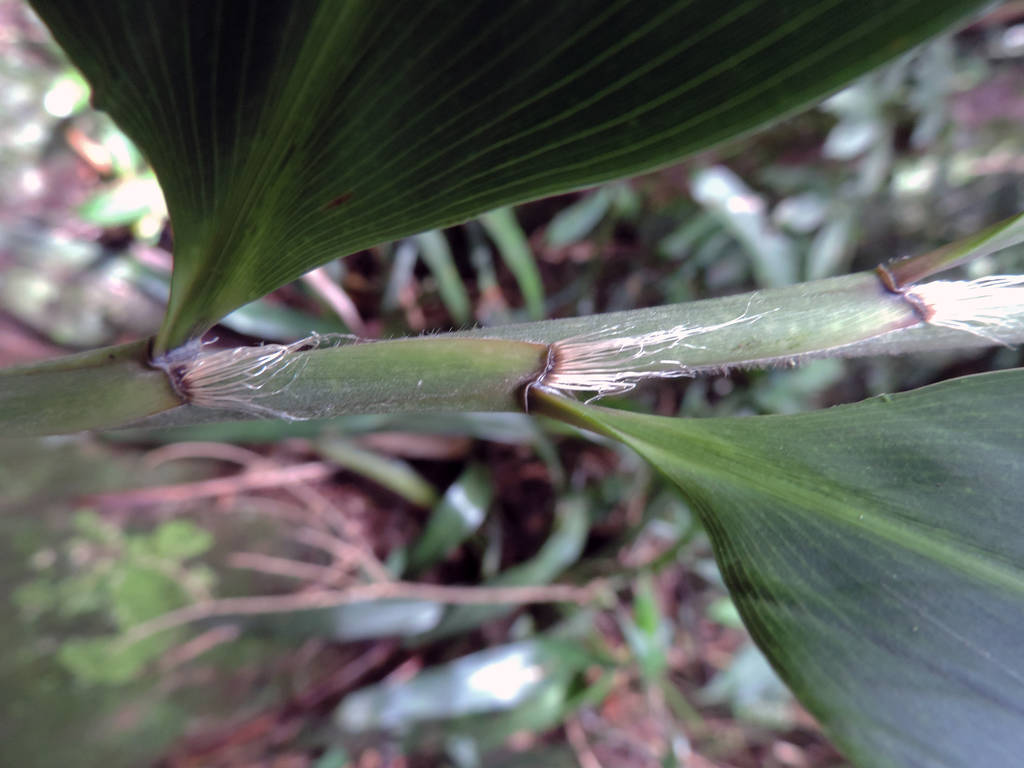
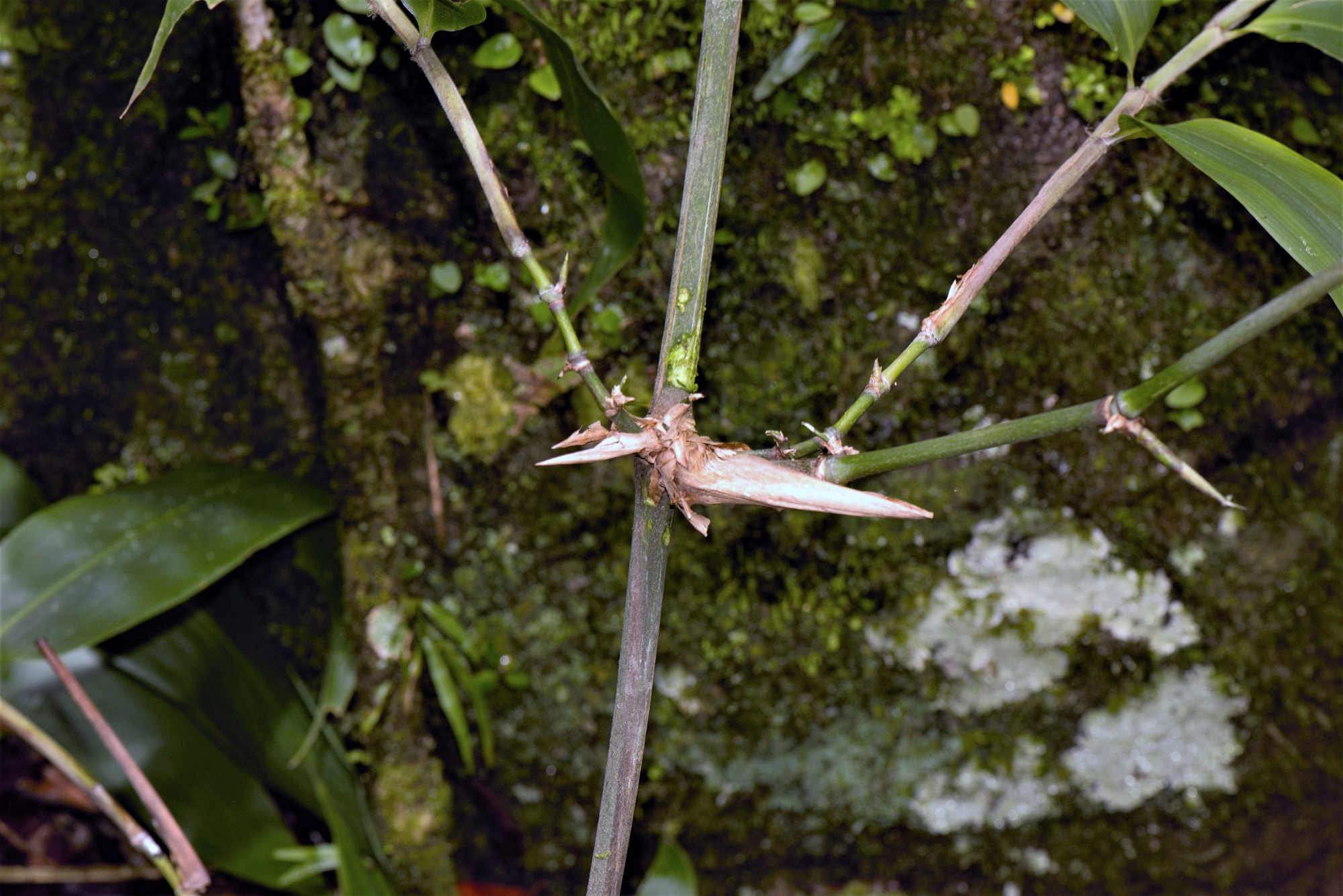
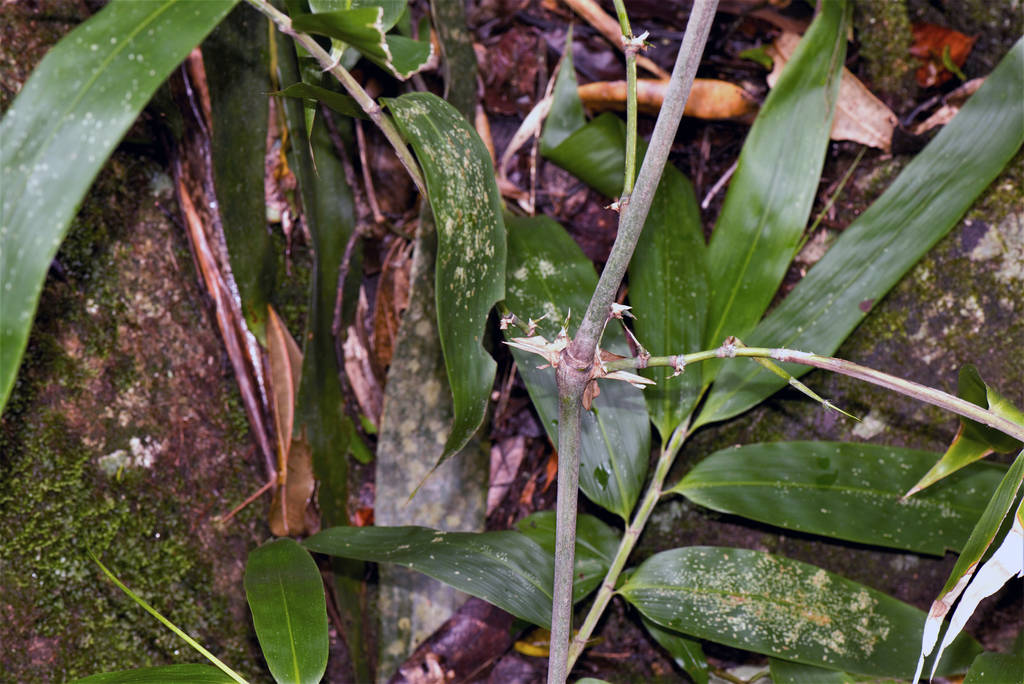
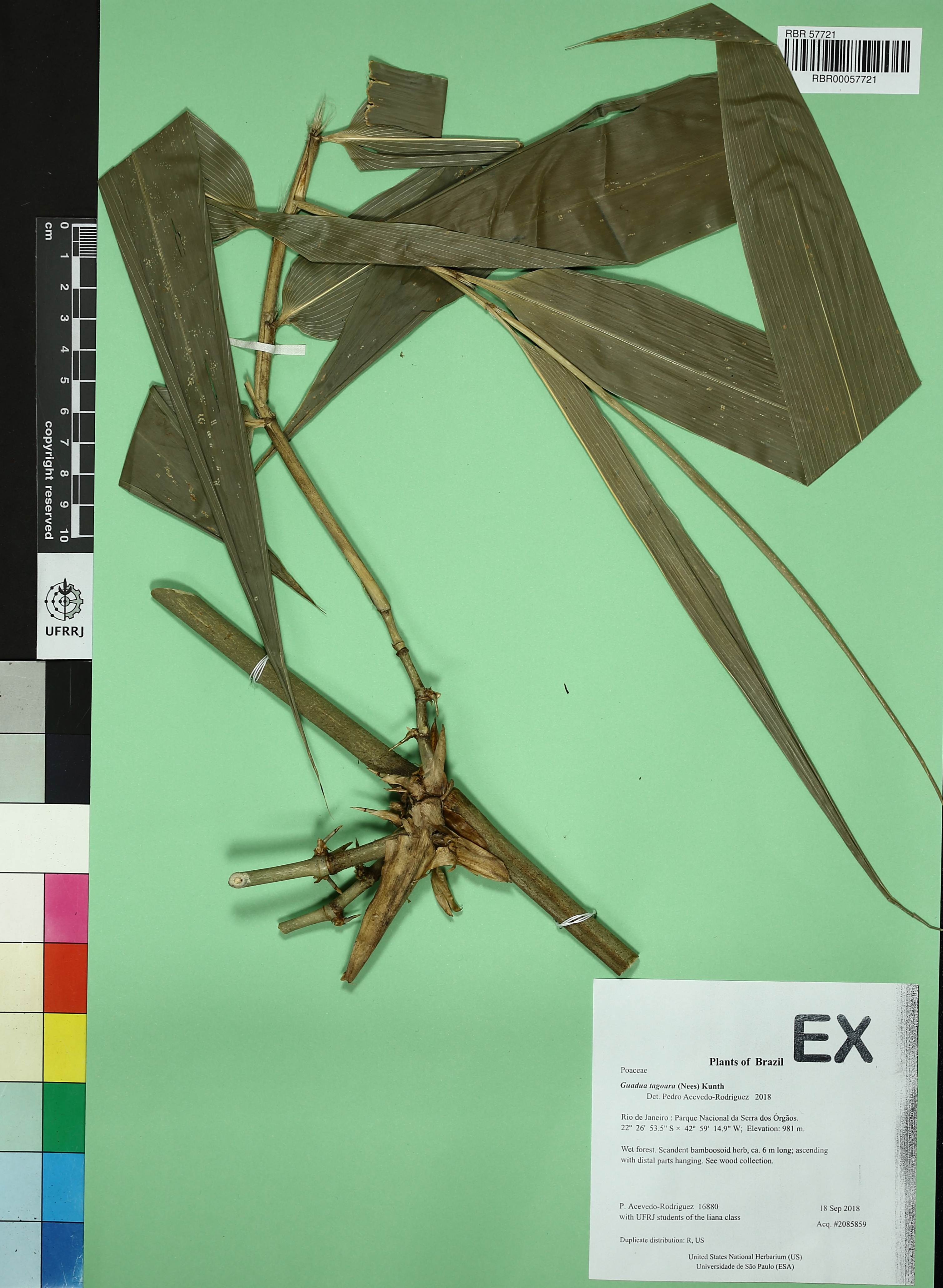
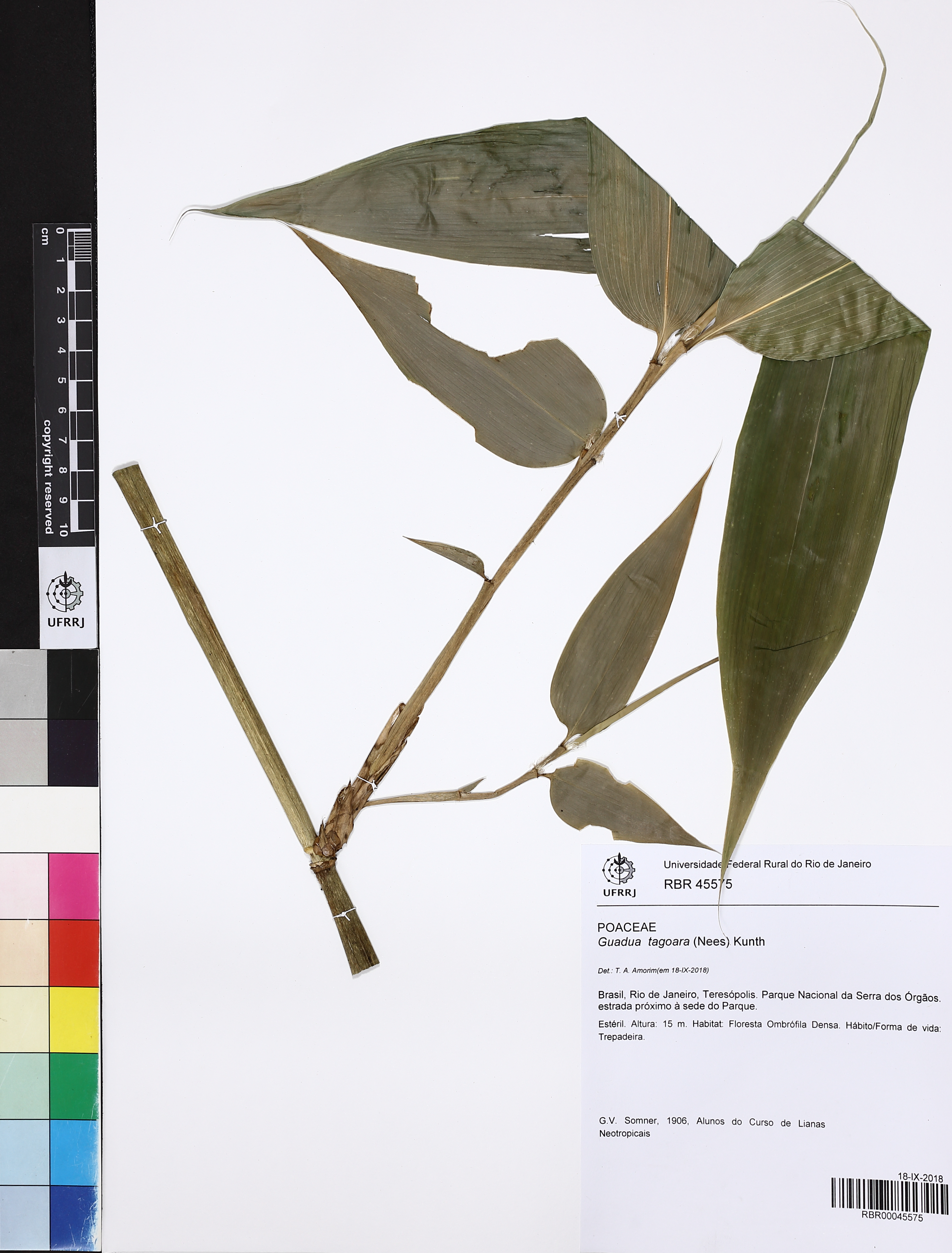
A bamboo native to the Atlantic Forest, distributed from Santa Catarina to Bahia, where it forms the characteristic bamboo thickets. It can reach about 18 m tall and plays an important ecological role in forest gap dynamics. It is a woody bamboo with spiny culms, flowering on long cycles. It is part of Brazil's native bamboo flora.
📚 Synonyms
Scientific synonyms: Bambusa tagoara Nees, Guadua tagoara (Nees) Kunth
Götsch succession
- Götsch stage
- Secondary I
- Ecological role
- Early secondary
- Primary stratum
- High
- Strata
- Emergent, High
- Biomass class
- Mulch biomass
Environment
- Light requirement
- Full sun
- Water requirement
- High
- Drought tolerance
- Low
- Waterlogging tolerance
- Moderate
- Soil pH range
- 5–7
- Preferred soil texture
- Loamy, Clayey
- Hardiness zones
- 9–11
- Frost tolerance
- -4.0 °C
Morphology
- Mature height
- 10–18 m
- Recommended spacing
- 4–7 m
- Root system
- Fibrous
- Root depth
- Medium
- Growth rate
- Very fast
- Lifespan
- 25–40 years
- Time to first harvest
- 48 months
- Productive lifespan
- 30 years
Biomes & climate
- Atlantic Forest Native
Köppen classes
- Tropical rainforest (Af) Suitable
- Humid subtropical (Cfa) Suitable
- Oceanic (Cfb) Suitable
- Subtropical with dry winter (Cwa) Suitable
- Subtropical highland (Cwb) Suitable
Where it fits in a guild
Taquarucu bamboo takes the High stratum in the Secondary I phase of succession — in a guild it shares the line with species from the other strata, each harvesting light at its own height, in its own time.
Free account — and the catalog stays open, no sign-up needed.
🪴 Cultivation
A bamboo native to the Atlantic Forest, colonizing gaps and forest edges. It forms dense, spiny clumps. Propagated by clump division and cuttings; flowering is rare, on a long cycle, followed by die-off of the population.
✂️ Management & Pruning
A native bamboo managed by selective harvest of mature culms (from year 3–4), cut close to the ground, watching for spines. Being a clumper, it expands radially without a running rhizome; thinning the aerated center favors regeneration of surrounding gap species. Leaves and tips serve as silica-rich mulch. Note: flowering occurs on a long, gregarious cycle and is followed by die-off of the population — so harvests and propagation should plan for seed-based renewal at that event.
❓ Frequently asked questions
How long until the first harvest of taquarucu bamboo?
The first harvest of taquarucu bamboo comes around 48 months after planting.
What spacing is recommended for taquarucu bamboo?
The recommended spacing for taquarucu bamboo is 4–7 m.
How tall does taquarucu bamboo grow?
At maturity, taquarucu bamboo reaches 10–18 m tall.
What stage and stratum does taquarucu bamboo occupy in a syntropic system?
In a syntropic system, taquarucu bamboo belongs to the secondary i stage, occupying the high stratum.
Functions
Propagation
Division, Cutting
Citations
- Sociedade de Ecologia do Brasil — formações de bambu na Mata Atlântica (biomes, height_max_m, ecological_role, pruning_notes, lifespan_years_min, lifespan_years_max)
- GBIF (gbif_taxon_key, scientific_name)
External references
Continue exploring
Related plants
-
ice cream bean
Inga edulis
Secondary I High Fertilizer biomass 🌱 Nitrogen fixerEssential nitrogen fixer in syntropic systems. Coppices readily after drastic pruning and produces large volumes of fertilizer biomass.
-
gliricidia
Gliricidia sepium
Secondary I Medium Fertilizer biomass 🌱 Nitrogen fixerNitrogen-fixing legume that tolerates drastic pruning and produces fast-decomposing fertilizer biomass. Commonly used as shade for coffee and cocoa...
-
rose gum
Eucalyptus grandis
Secondary I Emergent Mulch biomassTypical accumulation species in syntropic systems: cover biomass, timber in 15 years. Non-native but widely used in Brazilian SAFs.
-
coffee
Coffea arabica
Secondary I Low No biomass productionShade-grown crop valuable in syntropic Atlantic Forest systems. Occupies the low stratum between bananas and ingás.
-
cocoa
Theobroma cacao
Secondary I Low No biomass productionLow-stratum fruit tree shaded by bananas, ingás and palms in the Bahia syntropic systems pioneered by Götsch.
-
cebil
Anadenanthera colubrina
Secondary I High Fertilizer biomass 🌱 Nitrogen fixerFast-growing pioneer legume, nitrogen fixer. Adapted to poor and degraded soils; widely used in restoration of degraded areas across Caatinga, Cerr...