Plants
brazilwood
Paubrasilia echinata (Lam.) Gagnon, H.C.Lima & G.P.Lewis
Family: Fabaceae · Genus: Paubrasilia
pernambuco wood, pau-brasil
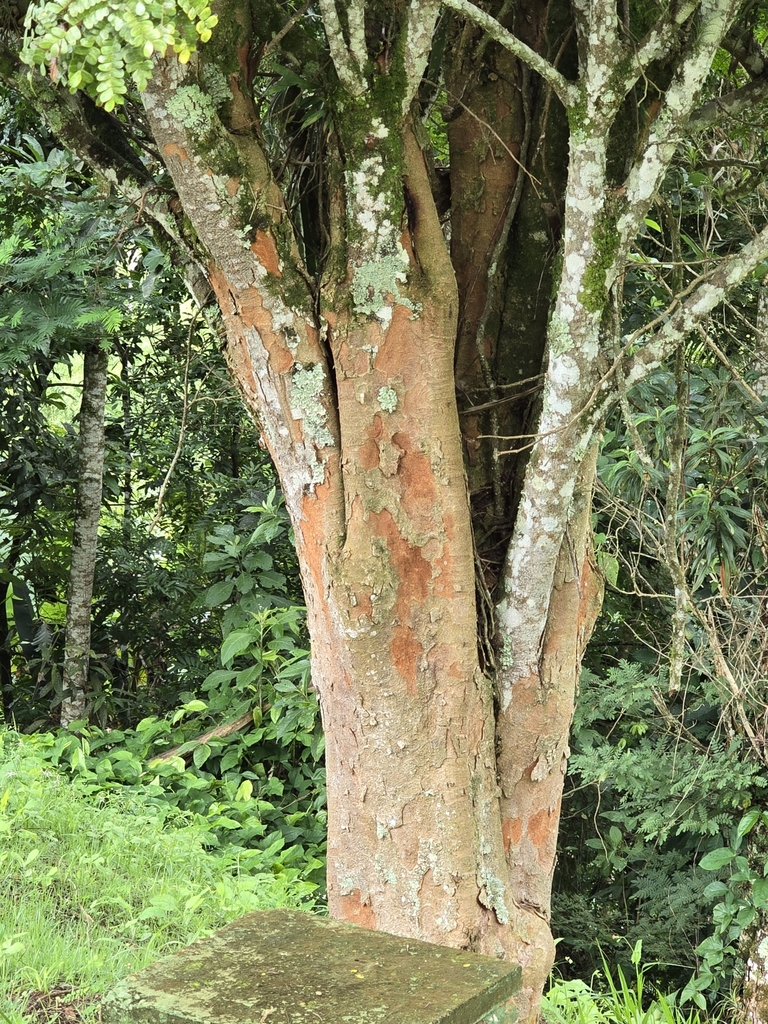
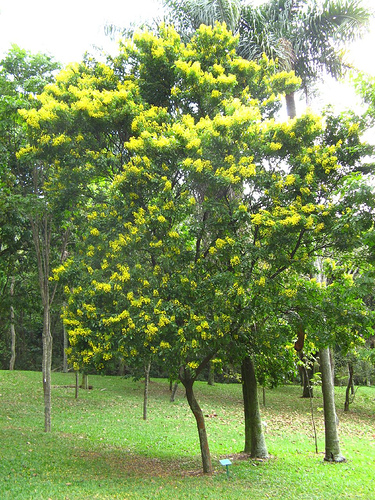
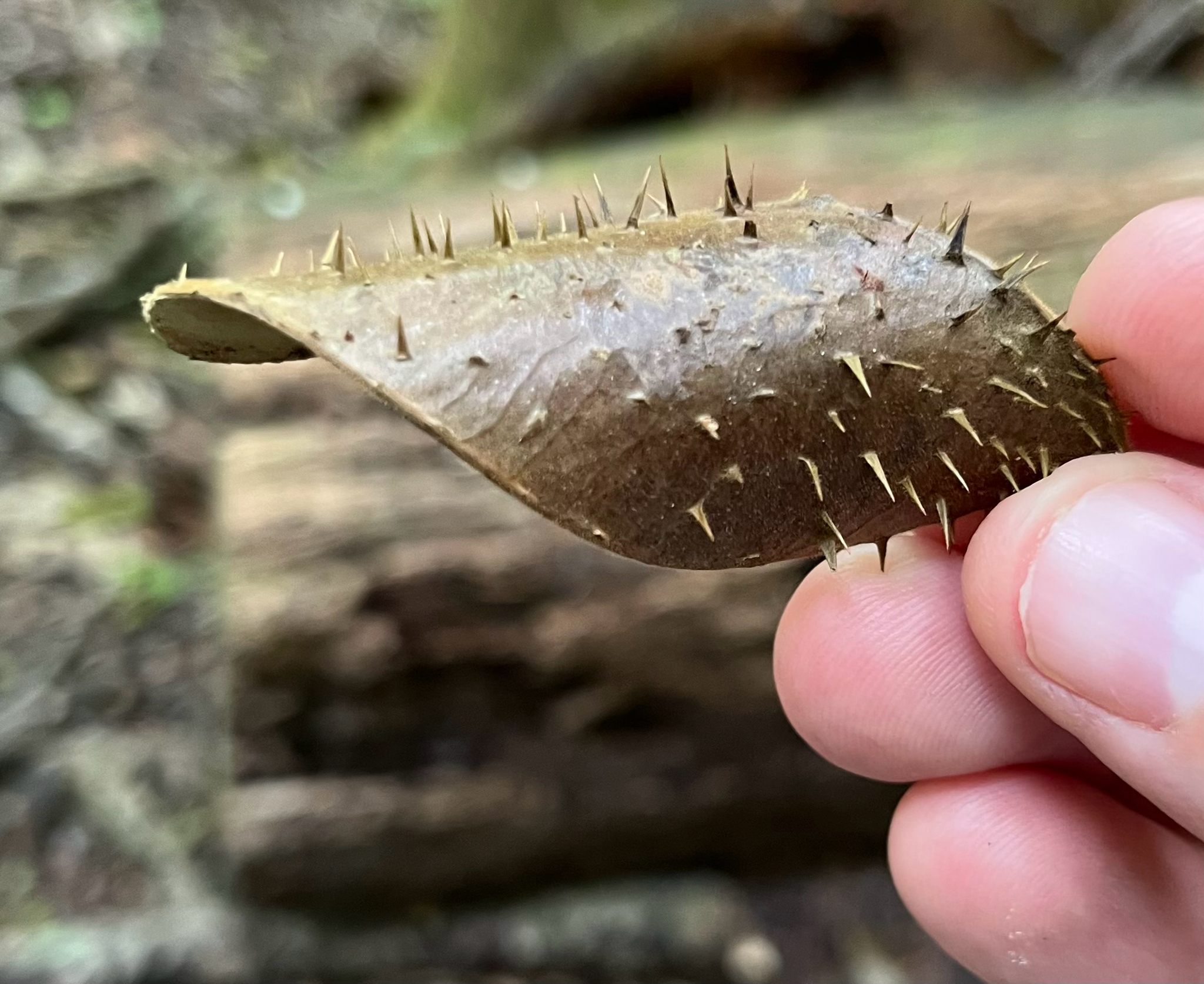
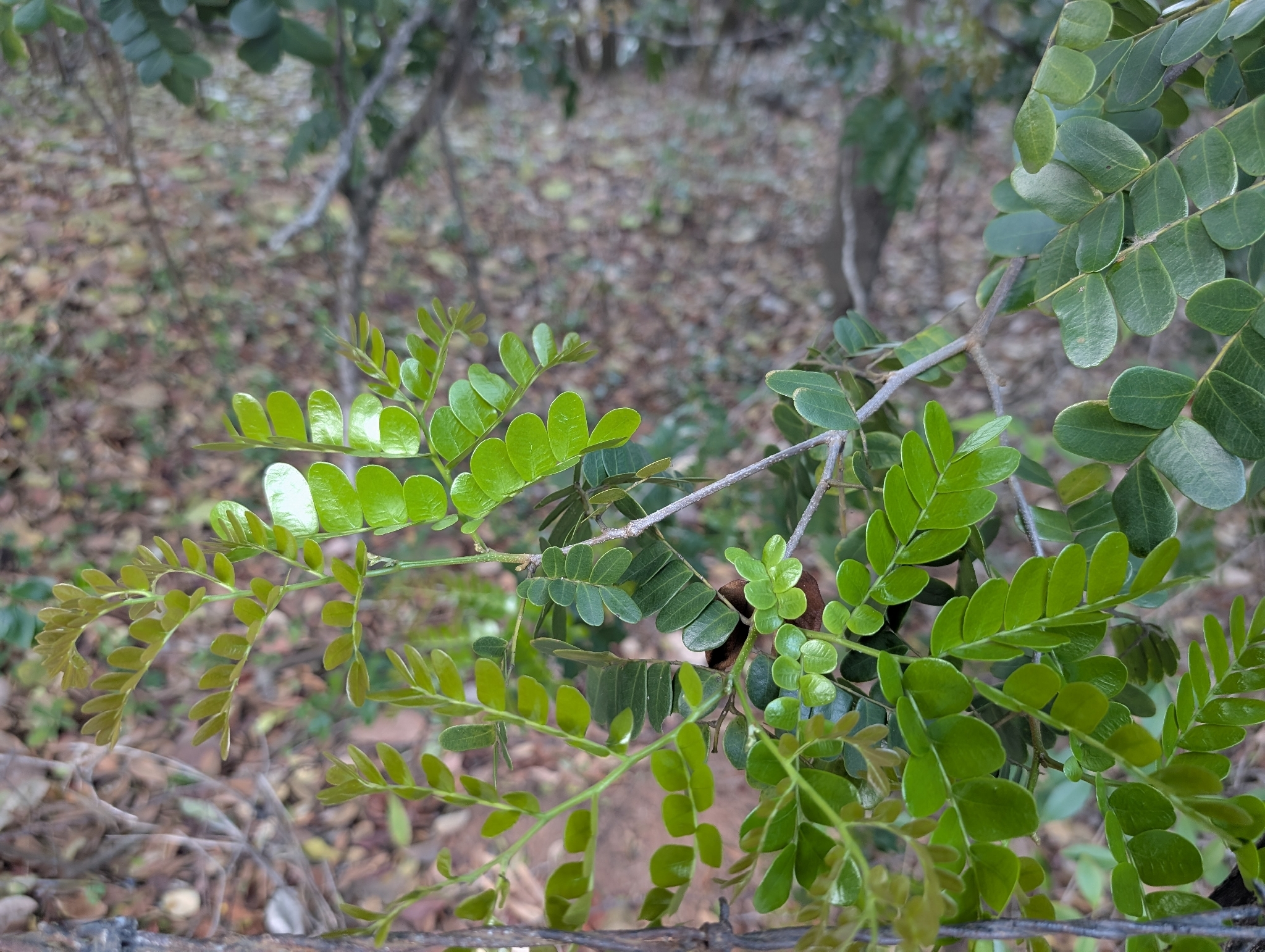
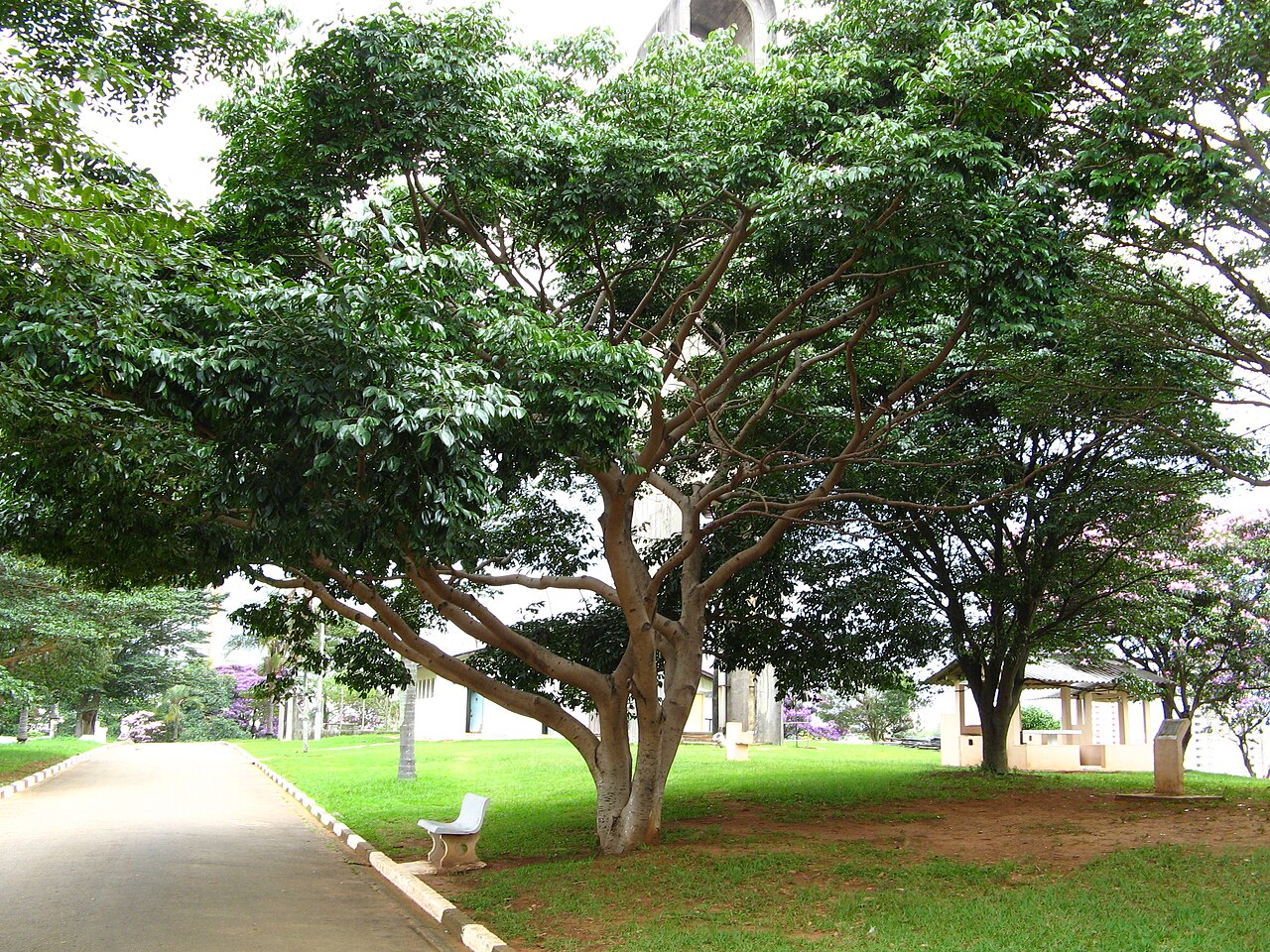
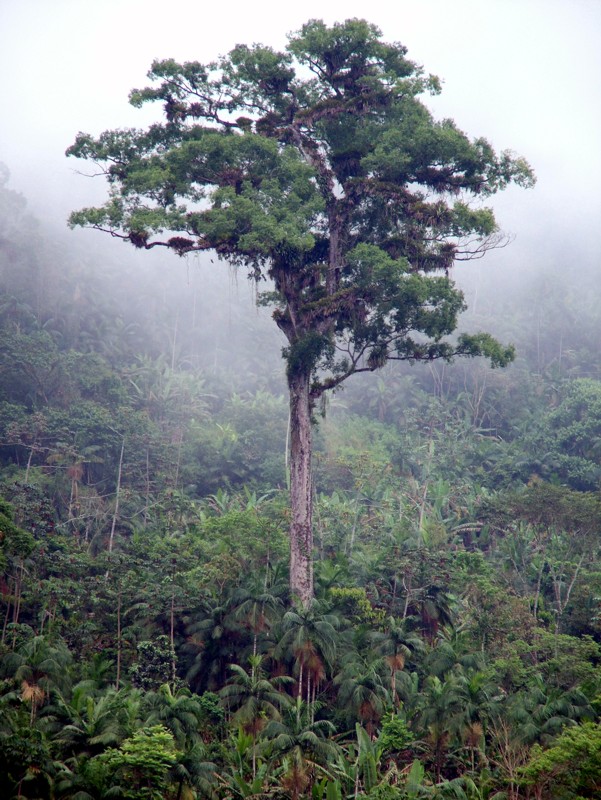
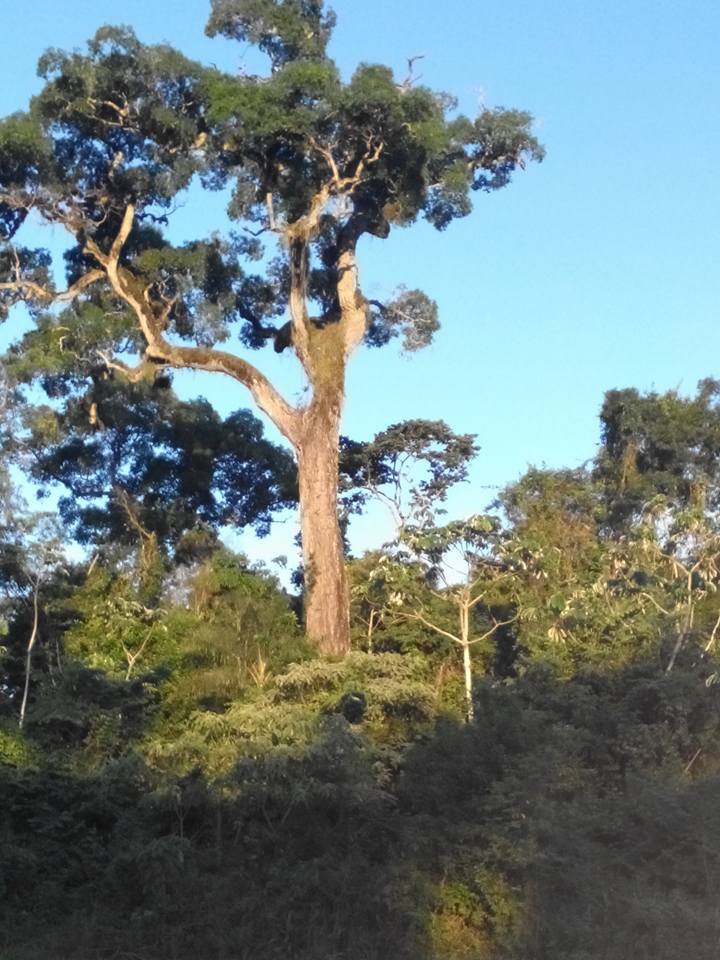
National tree of Brazil, endemic to the coastal Atlantic Forest. Slow-growing; climax-community species that develops best when planted under secondary forest. Wood historically used for red dye.
📚 Synonyms
Scientific synonyms: Caesalpinia echinata Lam., Guilandina echinata (Lam.) Spreng., Caesalpinia vesicaria Vell.
Götsch succession
- Götsch stage
- Climax
- Ecological role
- Climax
- Primary stratum
- Medium
- Strata
- Medium, High
Environment
- Light requirement
- Partial shade
- Water requirement
- Moderate
- Drought tolerance
- High
- Preferred soil texture
- Sandy, Loamy
Morphology
- Mature height
- 8–15 m
- Growth rate
- Slow
- Lifespan
- 100–300 years
Biomes & climate
- Atlantic Forest Native
Köppen classes
- Tropical rainforest (Af) Suitable
- Tropical monsoon (Am) Suitable
- Tropical savanna with dry winter (Aw) Suitable
Where it fits in a guild
Brazilwood takes the Medium stratum in the Climax phase of succession — in a guild it shares the line with species from the other strata, each harvesting light at its own height, in its own time.
Free account — and the catalog stays open, no sign-up needed.
🪴 Cultivation
Slow-growing, long-lived (~300 yr) endangered Atlantic Forest tree; propagate from fresh seed (recalcitrant — no storage or scarification, germinates in 8–15 days) and shade seedlings in year one. Prefers well-drained sandy soil, tolerates drought and salt-laden winds once established. Does NOT fix nitrogen (non-nodulating Caesalpinioideae).
📅 Phenology
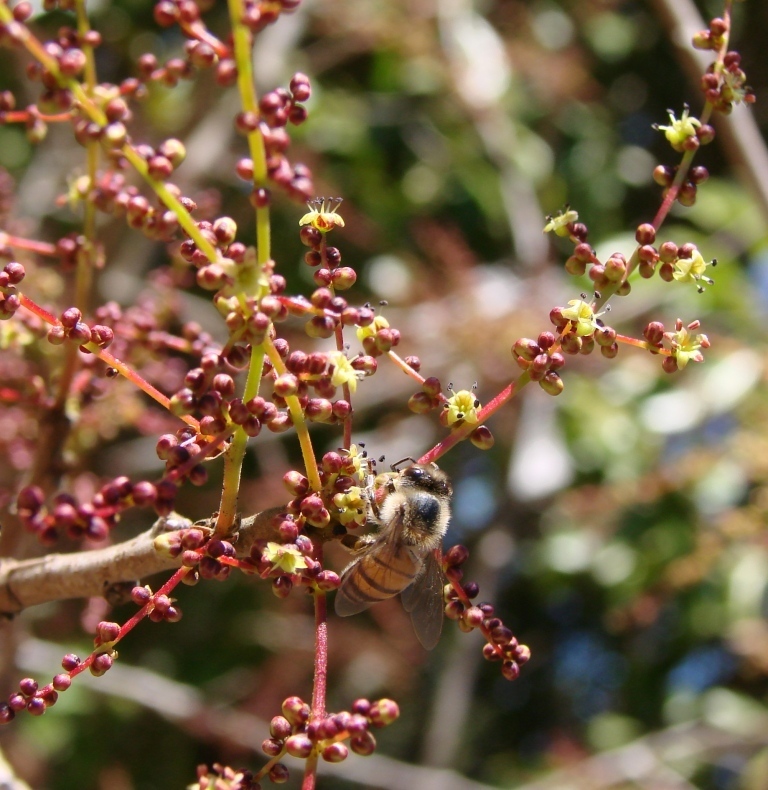
Flowering months: September, October
Fruiting months: October, November, December, January, February
❓ Frequently asked questions
How tall does brazilwood grow?
At maturity, brazilwood reaches 8–15 m tall.
When does brazilwood fruit?
Fruiting of brazilwood occurs in October, November, December, January, February.
When does brazilwood flower?
Flowering of brazilwood occurs in September, October.
What stage and stratum does brazilwood occupy in a syntropic system?
In a syntropic system, brazilwood belongs to the climax stage, occupying the medium stratum.
Functions
Propagation
Seed, Cutting
Citations
- Paubrasilia — Wikipedia
- Paubrasilia echinata — Useful Tropical Plants
- Paubrasilia echinata — Useful Tropical Plants (height_min_m, height_max_m, growth_rate, drought_tolerance, soil_texture_preference, propagation, cultivation_notes, synonyms)
- de Faria et al. 1989, New Phytologist 111:607 — Caesalpinia non-nodulating (nitrogen_fixer)
- EMBRAPA/Carvalho — Pau-brasil, fenologia e longevidade (phenology, lifespan_years_min, lifespan_years_max)
- IPNI / Flora do Brasil — Paubrasilia echinata (Lam.) Gagnon, H.C.Lima & G.P.Lewis (external_ids, synonyms)
External references
Continue exploring
Related plants
-
yellow trumpet tree
Handroanthus albus
Climax Emergent Mulch biomassLong-cycle climax with premium timber. Characteristic of Cerrado and Atlantic Forest. Spectacular winter bloom.
-
jatoba
Hymenaea courbaril
Climax Emergent Mulch biomassTropical climax with extremely dense timber; fruit pulp is edible. Common in syntropic abundance systems.
-
juçara palm
Euterpe edulis
Climax High No biomass productionAtlantic Forest native palm with long-cycle climax behavior; high-quality palm heart. Endangered under extractivism, abundant in well-managed syntr...
-
urundeuva
Myracrodruon urundeuva
Climax HighTree with extremely dense, durable hardwood; once dominant in the Caatinga but now threatened by overexploitation. Occurs in Caatinga, Cerrado and ...
-
jequitibá
Cariniana legalis
Climax EmergentEmergent giant of the Atlantic Forest; climax species forming the uppermost canopy stratum of dense ombrophilous forest. Can exceed 60 m at maturit...
-
peroba rosa
Aspidosperma polyneuron
Climax HighAtlantic Forest climax tree with very slow growth and dense, prized timber. Reaches 20–30 m. IUCN-listed as threatened due to logging.