Plants
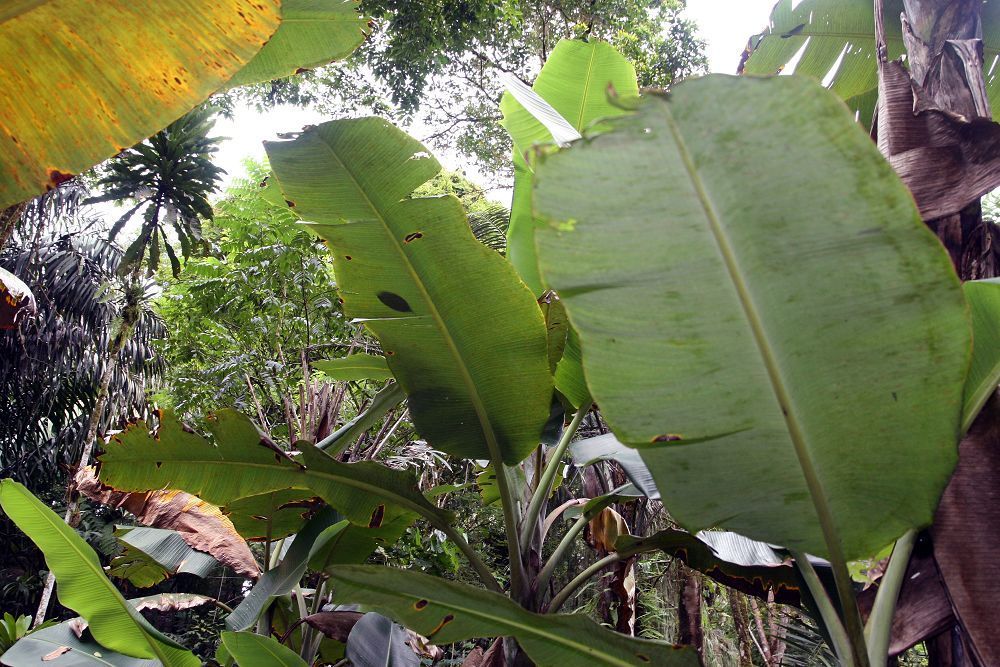
pome banana
Musa × paradisiaca L.
Family: Musaceae · Genus: Musa
silver banana
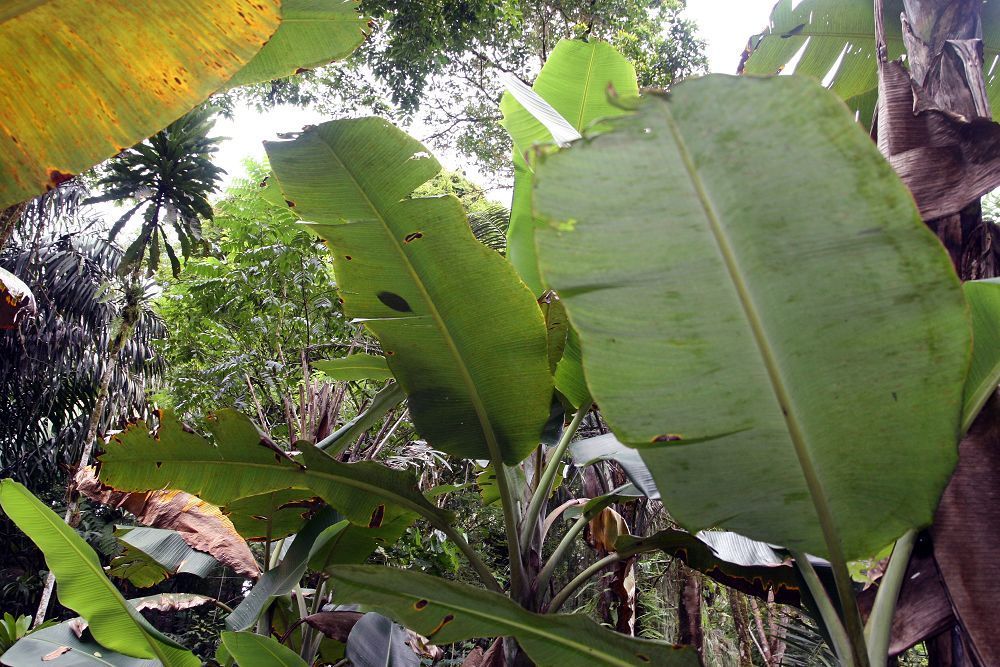
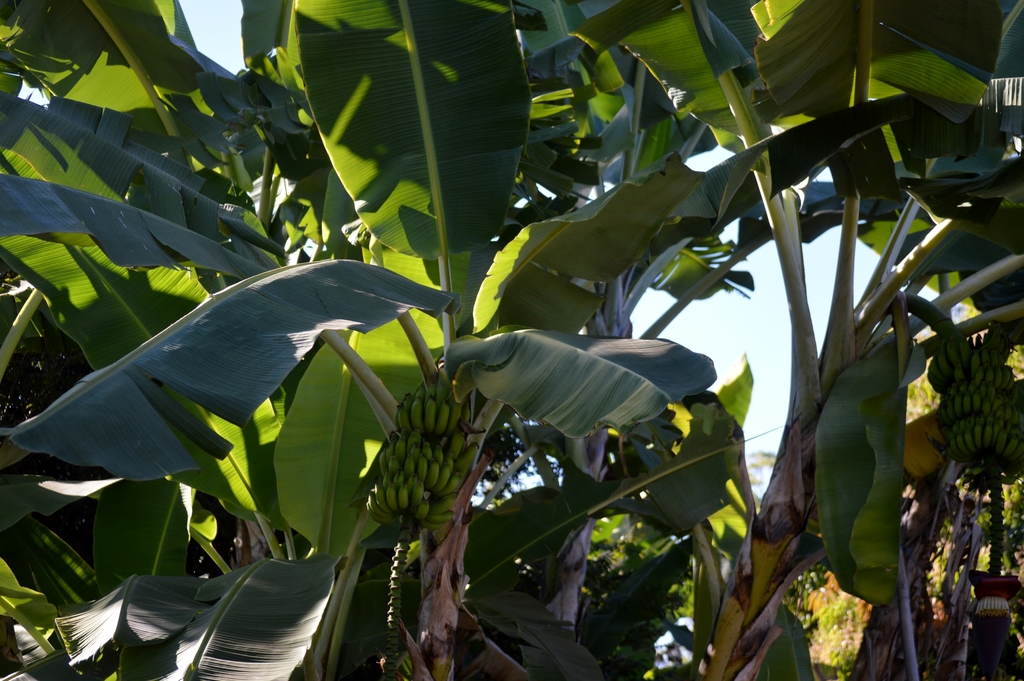
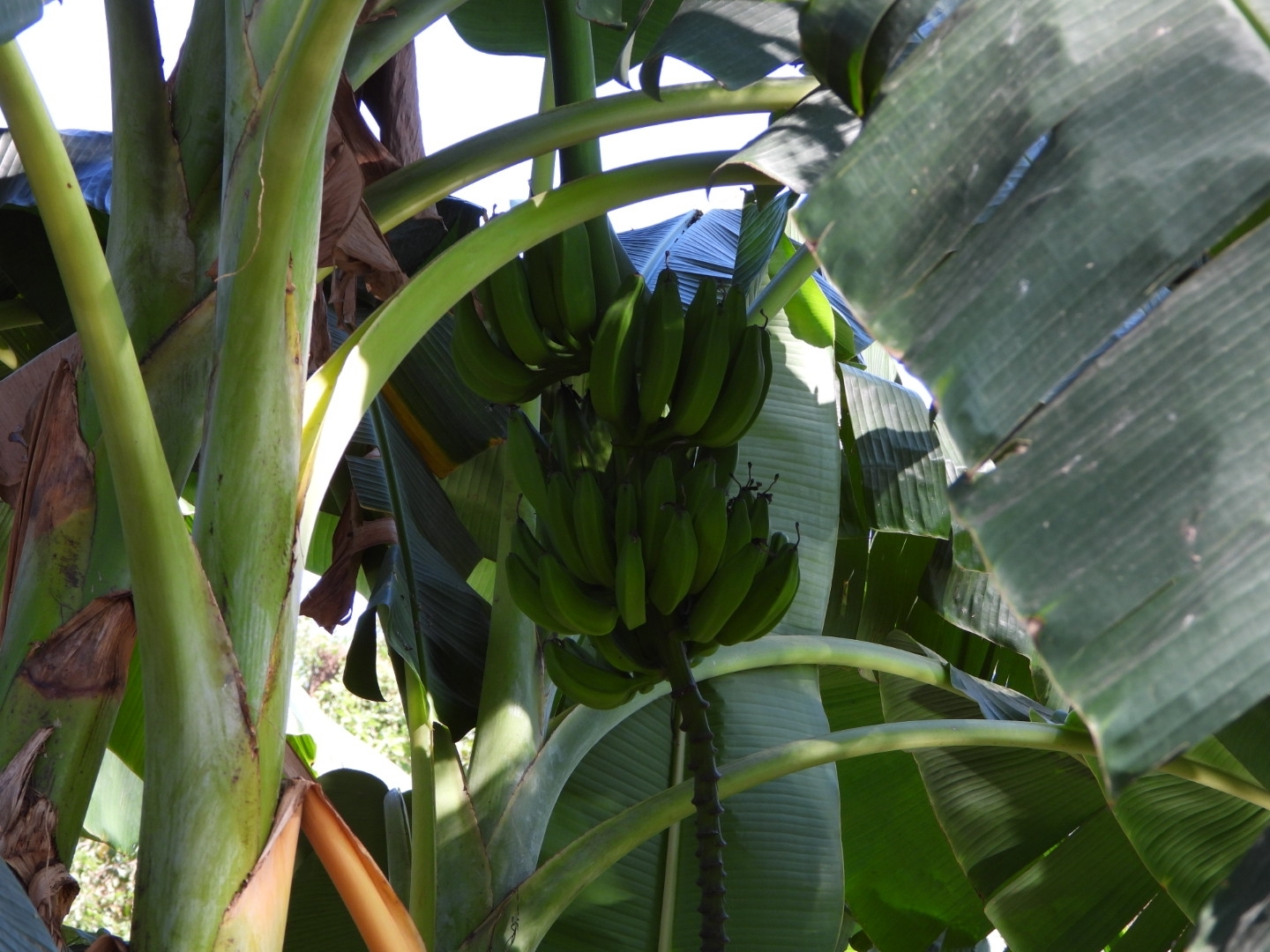
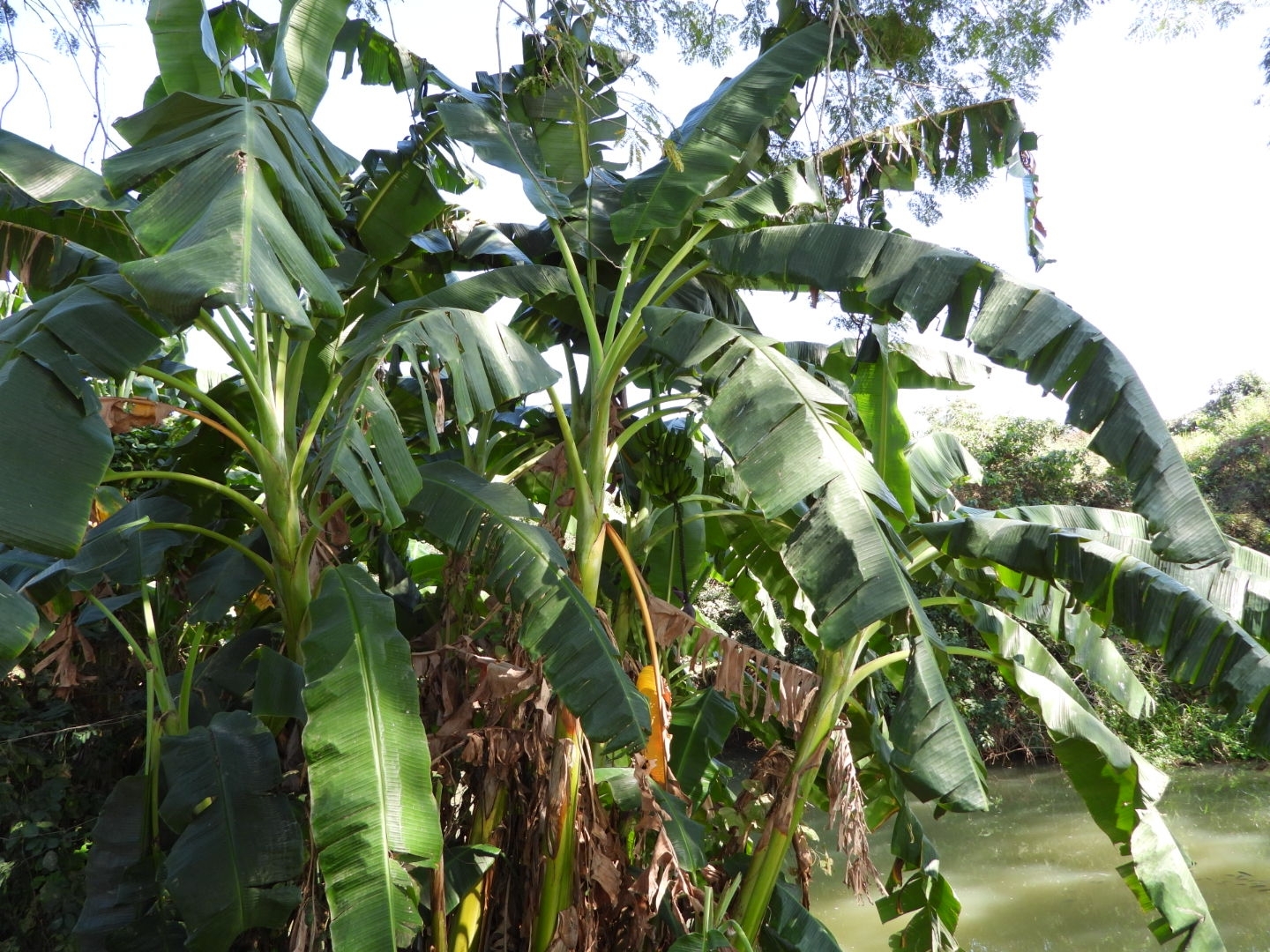
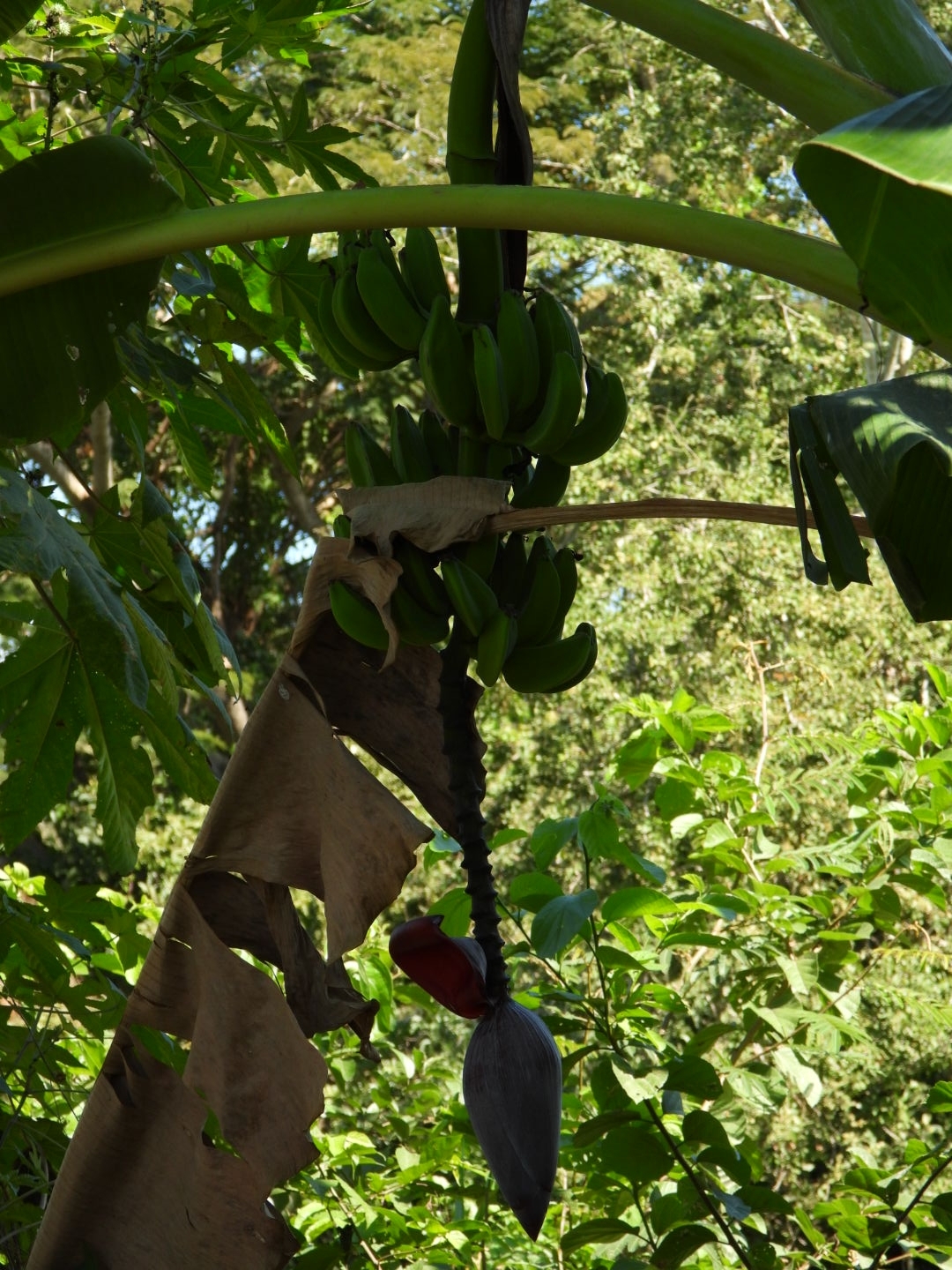
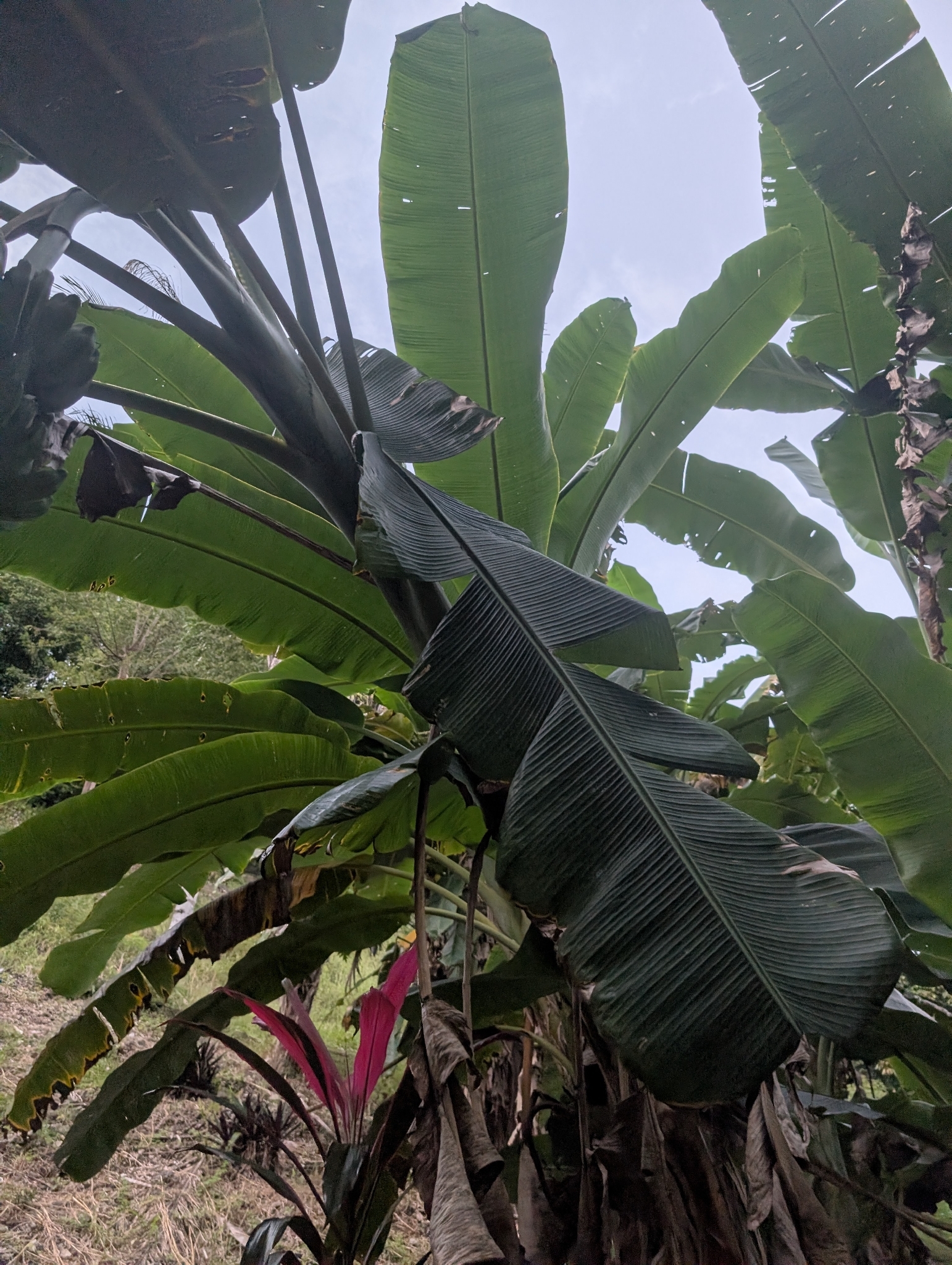
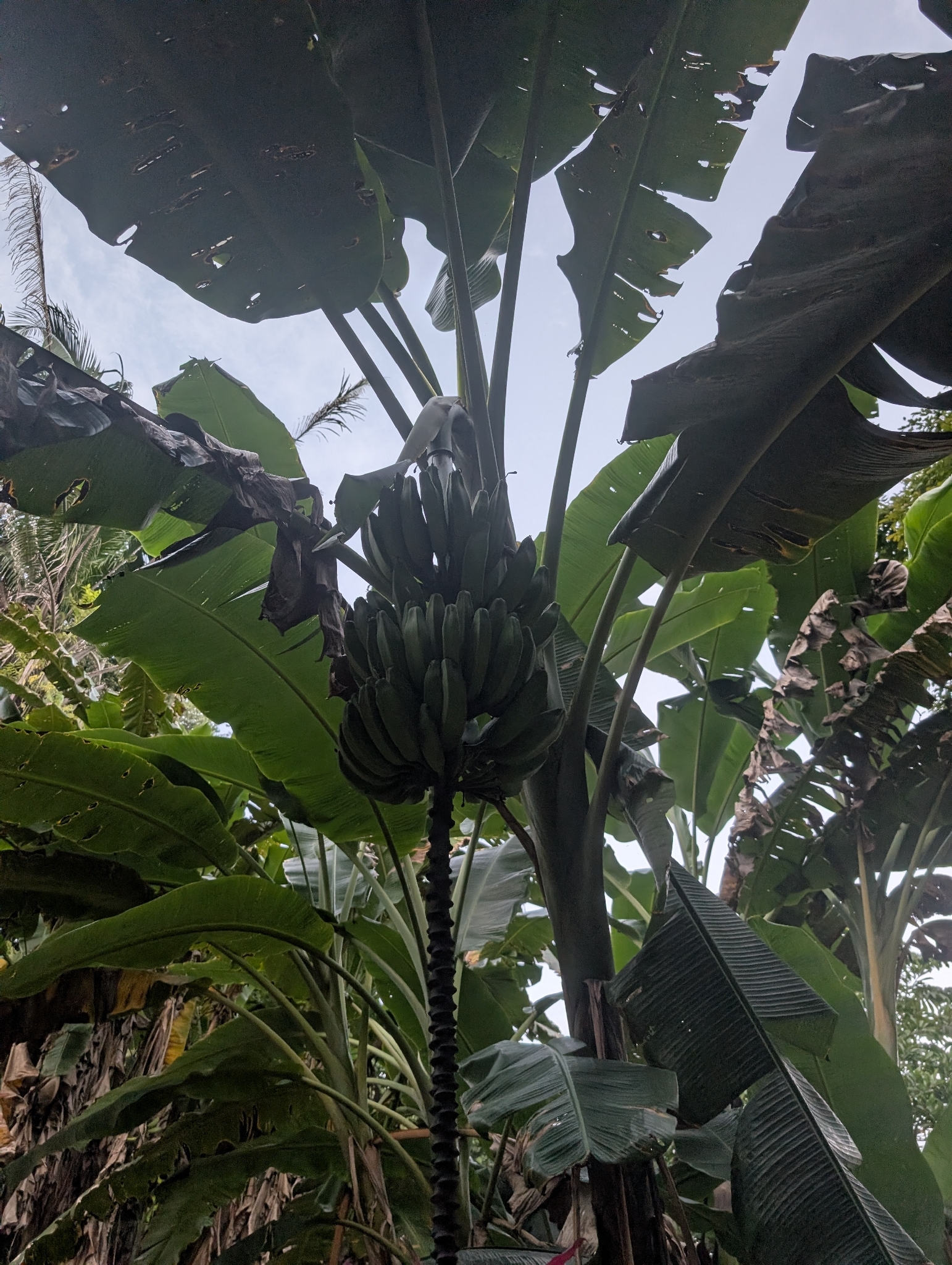
AAB Pome subgroup, tall (5–7 m), bunch 12–18 kg. Slightly tart flavor prized in the Brazilian domestic market. Before Prata-Anã it dominated the southeast and northeast. Occupies the high/emergent stratum in syntropic systems.
📚 Synonyms
Scientific synonyms: Musa AAB 'Pome', Musa AAB 'Prata'
Götsch succession
- Götsch stage
- Placenta II
- Ecological role
- Pioneer
- Primary stratum
- High
- Strata
- Emergent, High
- Biomass class
- Mulch biomass
Environment
- Light requirement
- Full sun
- Water requirement
- High
- Drought tolerance
- Moderate
- Waterlogging tolerance
- None
- Soil pH range
- 5–7
- Preferred soil texture
- Loamy, Clayey, Sandy
- Hardiness zones
- 9–13
- Frost tolerance
- 0.0 °C
Morphology
- Mature height
- 5–7 m
- Recommended spacing
- 3–4 m
- Root system
- Fibrous
- Root depth
- Shallow
- Growth rate
- Very fast
- Lifespan
- 2–4 years
- Time to first harvest
- 14 months
- Productive lifespan
- 4 years
Biomes & climate
- Atlantic Forest Naturalized
- Amazon Naturalized
- Cerrado Suitable
- Caatinga Suitable
Köppen classes
- Tropical rainforest (Af) Suitable
- Tropical monsoon (Am) Suitable
- Tropical savanna with dry winter (Aw) Suitable
- Humid subtropical (Cfa) Suitable
- Subtropical with dry winter (Cwa) Suitable
Where it fits in a guild
Pome banana takes the High stratum in the Placenta II phase of succession — in a guild it shares the line with species from the other strata, each harvesting light at its own height, in its own time.
Free account — and the catalog stays open, no sign-up needed.
🪴 Cultivation
Spacing 3×3 m to 4×4 m in intercrop. More tolerant of poor soils than Nanica. Better cold tolerance.
✂️ Management & Pruning
Cut the pseudostem after the bunch is harvested — biomass returns to the soil as mulch. Thin suckers, keeping 1–2 followers per mat to stagger production.
📅 Phenology
Flowering months: January, February, March, April, May, June, July, August, September, October, November, December
Fruiting months: January, February, March, April, May, June, July, August, September, October, November, December
❓ Frequently asked questions
How long until the first harvest of pome banana?
The first harvest of pome banana comes around 14 months after planting.
What spacing is recommended for pome banana?
The recommended spacing for pome banana is 3–4 m.
How tall does pome banana grow?
At maturity, pome banana reaches 5–7 m tall.
When does pome banana fruit?
Fruiting of pome banana occurs in January, February, March, April, May, June, July, August, September, October, November, December.
When does pome banana flower?
Flowering of pome banana occurs in January, February, March, April, May, June, July, August, September, October, November, December.
What stage and stratum does pome banana occupy in a syntropic system?
In a syntropic system, pome banana belongs to the placenta ii stage, occupying the high stratum.
Functions
Propagation
Division, Runners / suckers, Tissue culture
Citations
- Embrapa Mandioca e Fruticultura — Cultivares de banana (primary_stratum, drought_tolerance, time_to_first_harvest_months)
- POWO — Musa × paradisiaca L. (scientific_author, family, genus, external_ids)
- GBIF Backbone Taxonomy — Musa ×paradisiaca L. (2762752) (external_ids)
- ITFNet — Banana Agronomy (ph_min, ph_max, waterlogging_tolerance, root_system, root_depth, pruning_notes)
- Joshi et al. (2023) — A review on adaptation of banana (Musa spp.) to cold in subtropics, Plant Breeding (frost_tolerance_c, drought_tolerance)
External references
Continue exploring
Related plants
-
banana
Musa × paradisiaca
Placenta II High Mulch biomassBanana is a fast-growing pioneer species valued for cover biomass, edible fruit, and a structuring role in syntropic rows. Grows in any moist, well...
-
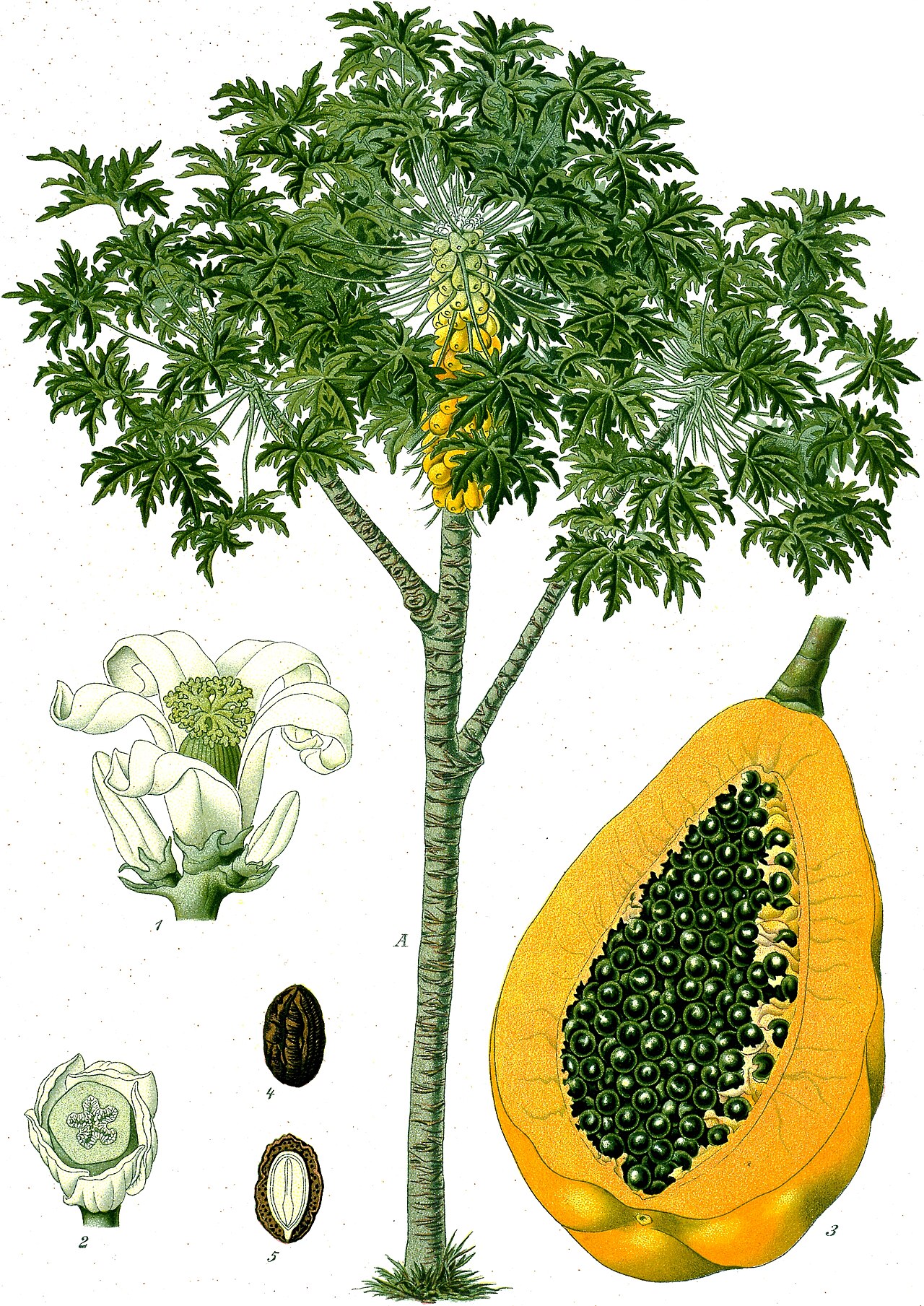
papaya
Carica papaya
Placenta II High Mulch biomassShort-cycle Placenta II species occupying the high stratum for 2–4 years. Fruits 9–12 months after planting.
-
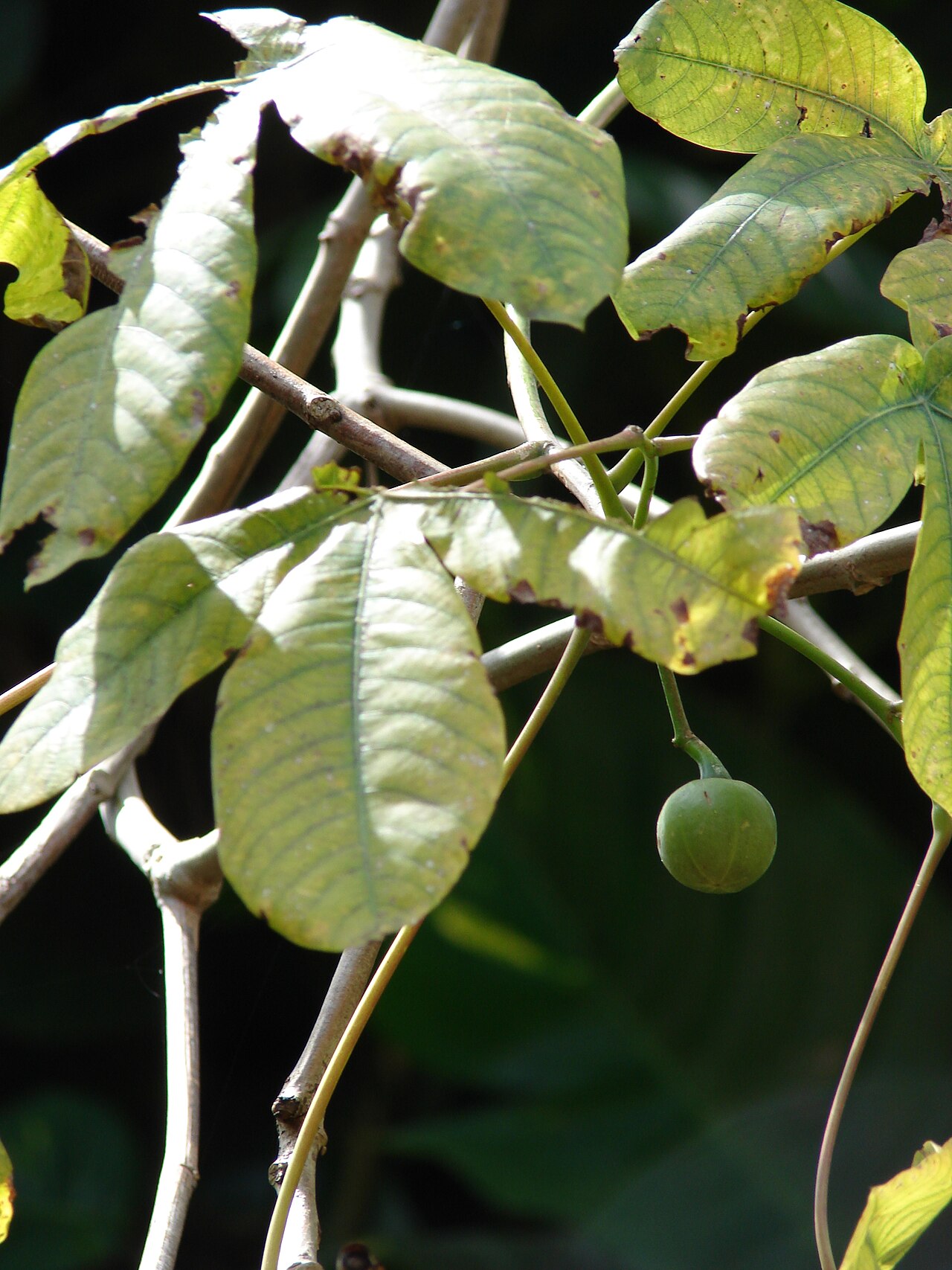
Ceará rubber tree
Manihot glaziovii
Placenta II MediumShrub/small tree native to the Caatinga; one of the first species to flush leaves at the start of the rainy season. Leaves and twigs are used as ru...
-
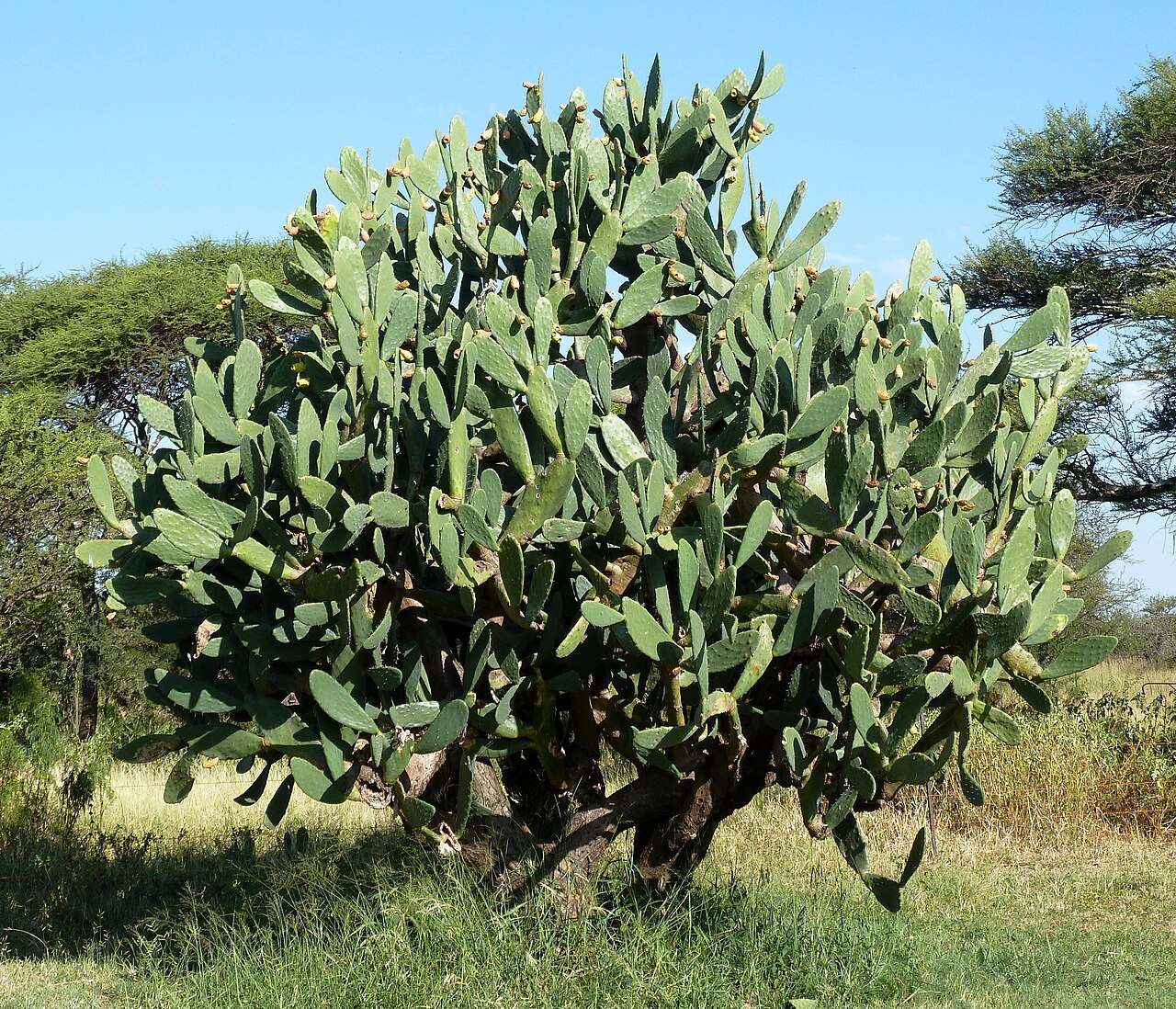
spineless cactus
Opuntia ficus-indica
Placenta II LowIntroduced cactus widely cultivated in the Brazilian semiarid as strategic fodder reserve. CAM metabolism gives extremely high water-use efficiency...
-
camaratuba
Cratylia mollis
Placenta II Low Fertilizer biomass 🌱 Nitrogen fixerNative shrubby legume of the Caatinga; one of the most important fodder species of the northeastern semiarid, with strong drought resistance and hi...
-
gabiroba
Campomanesia adamantium
Placenta II LowPioneer fruit shrub of the Cerrado that colonizes degraded areas. Deep roots stabilize soil and aid water retention. Edible fruits and medicinal le...