Plants
jelly palm
Butia odorata (Barb.Rodr.) Noblick
Family: Arecaceae · Genus: Butia
butia palm
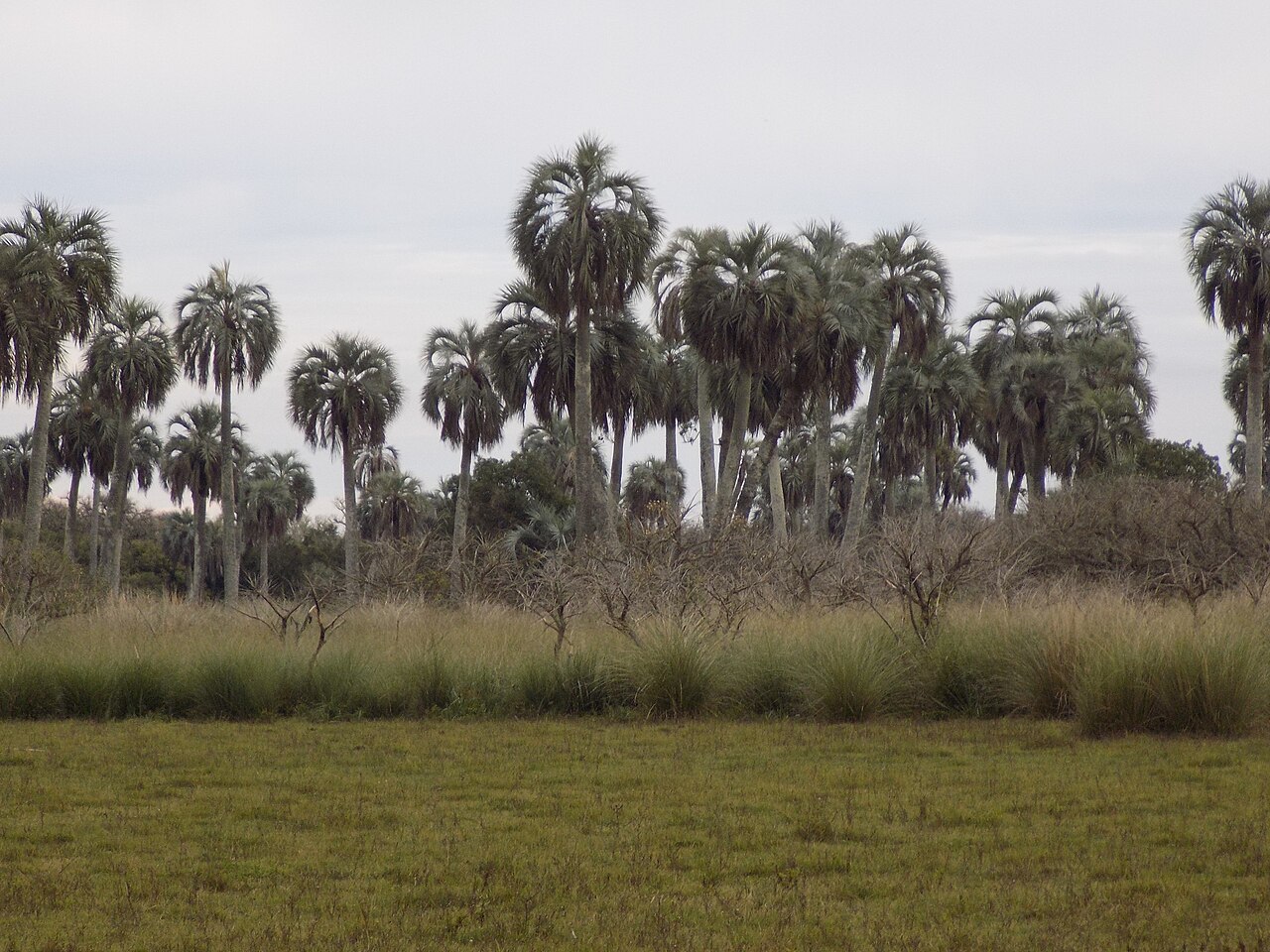
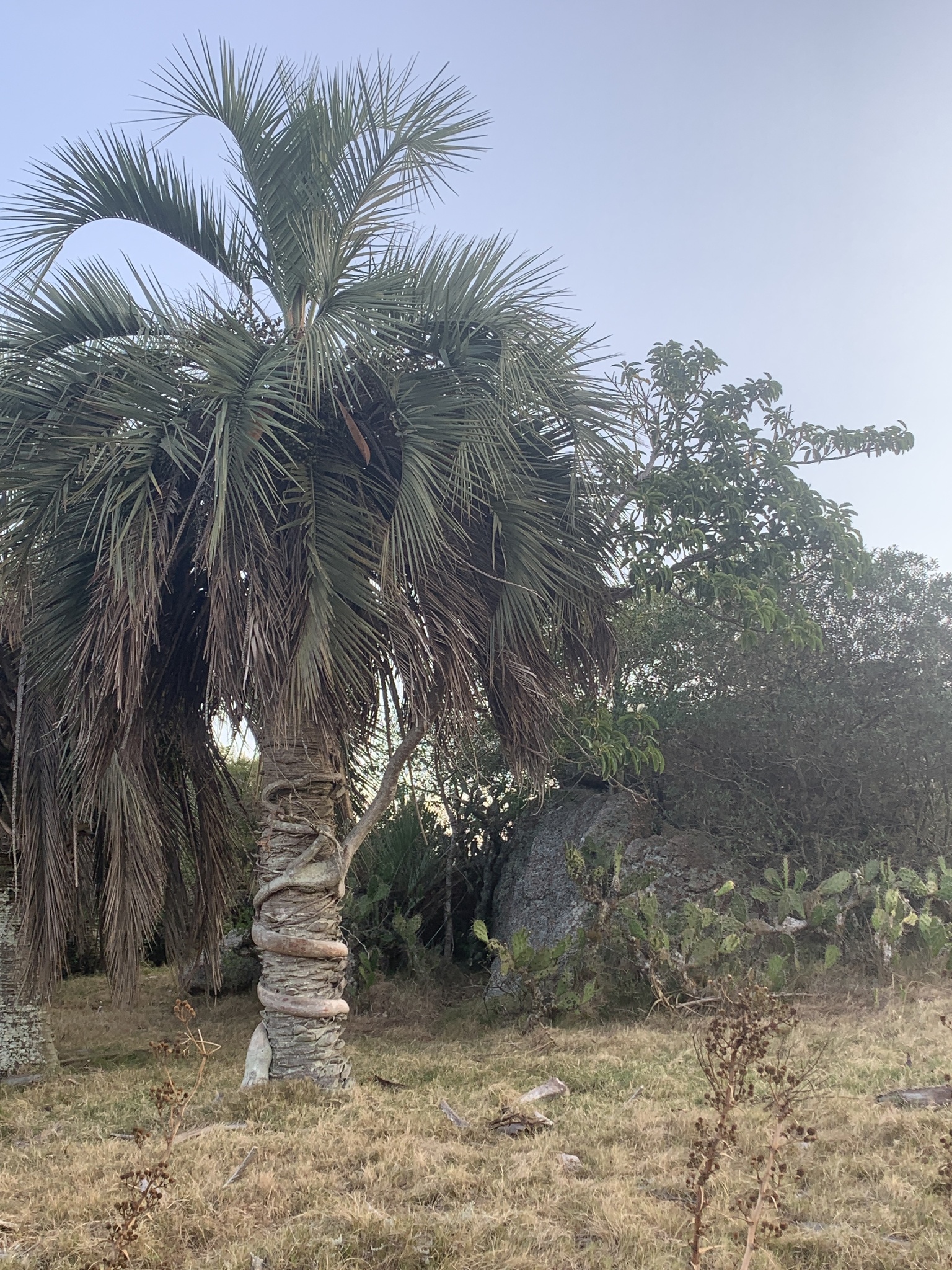
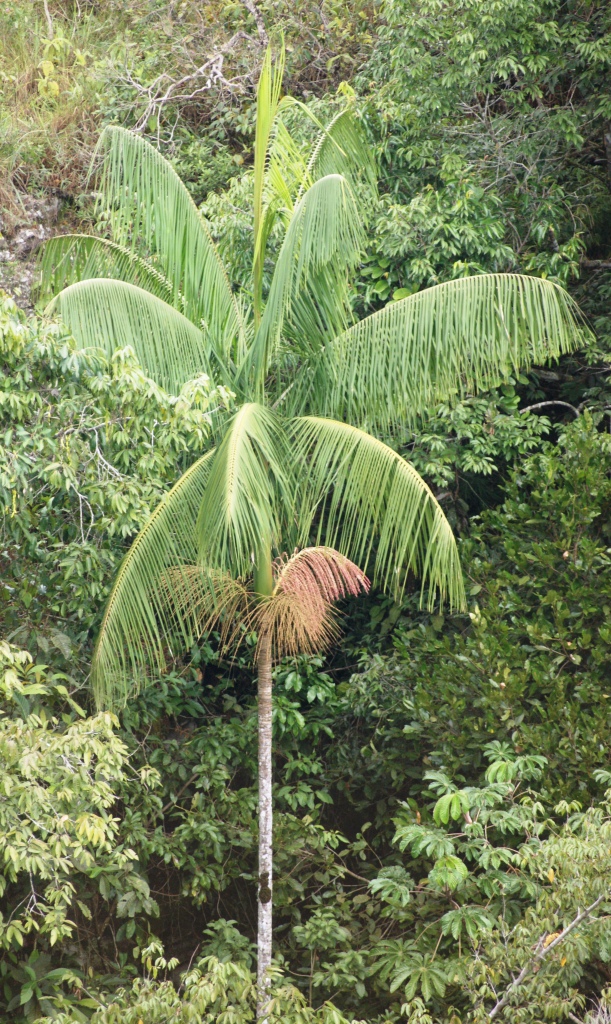
Native palm of the Pampa and southern grasslands. 4–8 m, leaf-base covered trunk. Orange-yellow fruits with fibrous sweet-tart flesh — basis of jellies, jams, and the traditional 'licor de butiá' in southern Brazil. Frost-hardy (-7°C). The 'butiazais' are conservation genetic heritage in RS and SC.
📚 Synonyms
Scientific synonyms: Butia capitata var. odorata
Götsch succession
- Götsch stage
- Climax
- Ecological role
- Climax
- Primary stratum
- Medium
- Strata
- Medium, High
- Biomass class
- No biomass production
Environment
- Light requirement
- Full sun
- Water requirement
- Moderate
- Drought tolerance
- High
- Waterlogging tolerance
- Low
- Soil pH range
- 5–7
- Preferred soil texture
- Sandy, Loamy
- Hardiness zones
- 8–11
- Frost tolerance
- -7.0 °C
Morphology
- Mature height
- 4–8 m
- Recommended spacing
- 5–7 m
- Root system
- Fibrous
- Root depth
- Deep
- Growth rate
- Slow
- Lifespan
- 50–150 years
- Time to first harvest
- 96 months
- Productive lifespan
- 80 years
Biomes & climate
- Pampa Native
- Atlantic Forest Native
Köppen classes
- Humid subtropical (Cfa) Suitable
- Oceanic (Cfb) Suitable
Where it fits in a guild
Jelly palm takes the Medium stratum in the Climax phase of succession — in a guild it shares the line with species from the other strata, each harvesting light at its own height, in its own time.
Free account — and the catalog stays open, no sign-up needed.
🪴 Cultivation
A warm-temperate/subtropical palm, very rustic; the hardiest species in the genus, tolerating frost (reports of -2 °C to -10 °C; ~-7 °C accepted for established specimens). Develops a deep taproot before shoot emergence. Tolerates maritime exposure and saline soils; survives on as little as ~250 mm/yr. Very slow-growing; unsuitable for the hot wet tropics. Fresh seed germinates in 3-4 months at 25 °C.
📅 Phenology
Flowering months: October, November, December
Fruiting months: January, February, March, April
❓ Frequently asked questions
How long until the first harvest of jelly palm?
The first harvest of jelly palm comes around 96 months after planting.
What spacing is recommended for jelly palm?
The recommended spacing for jelly palm is 5–7 m.
How tall does jelly palm grow?
At maturity, jelly palm reaches 4–8 m tall.
When does jelly palm fruit?
Fruiting of jelly palm occurs in January, February, March, April.
When does jelly palm flower?
Flowering of jelly palm occurs in October, November, December.
What stage and stratum does jelly palm occupy in a syntropic system?
In a syntropic system, jelly palm belongs to the climax stage, occupying the medium stratum.
Functions
Propagation
Seed
Citations
- Flora e Funga do Brasil — Butia odorata (Barb.Rodr.) Noblick (family, genus, scientific_author, biomes, flora_do_brasil)
- GBIF Backbone Taxonomy — Butia odorata (Barb.Rodr.) Noblick (external_ids, powo_id)
- Useful Tropical Plants — Butia odorata (root_depth, waterlogging_tolerance, cultivation_notes)
External references
Continue exploring
Related plants
-
yellow trumpet tree
Handroanthus albus
Climax Emergent Mulch biomassLong-cycle climax with premium timber. Characteristic of Cerrado and Atlantic Forest. Spectacular winter bloom.
-
jatoba
Hymenaea courbaril
Climax Emergent Mulch biomassTropical climax with extremely dense timber; fruit pulp is edible. Common in syntropic abundance systems.
-
juçara palm
Euterpe edulis
Climax High No biomass productionAtlantic Forest native palm with long-cycle climax behavior; high-quality palm heart. Endangered under extractivism, abundant in well-managed syntr...
-
urundeuva
Myracrodruon urundeuva
Climax HighTree with extremely dense, durable hardwood; once dominant in the Caatinga but now threatened by overexploitation. Occurs in Caatinga, Cerrado and ...
-
jequitibá
Cariniana legalis
Climax EmergentEmergent giant of the Atlantic Forest; climax species forming the uppermost canopy stratum of dense ombrophilous forest. Can exceed 60 m at maturit...
-
peroba rosa
Aspidosperma polyneuron
Climax HighAtlantic Forest climax tree with very slow growth and dense, prized timber. Reaches 20–30 m. IUCN-listed as threatened due to logging.