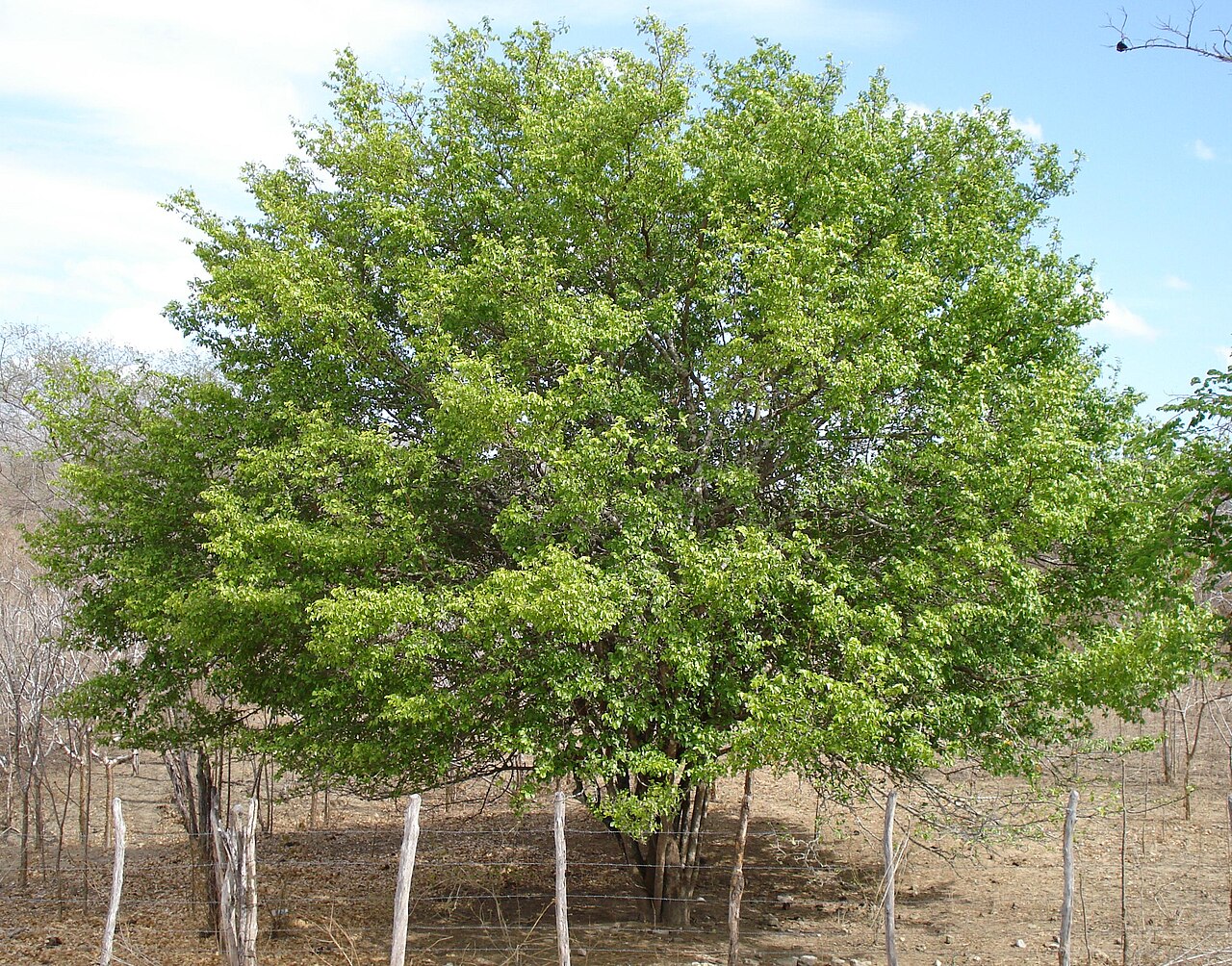
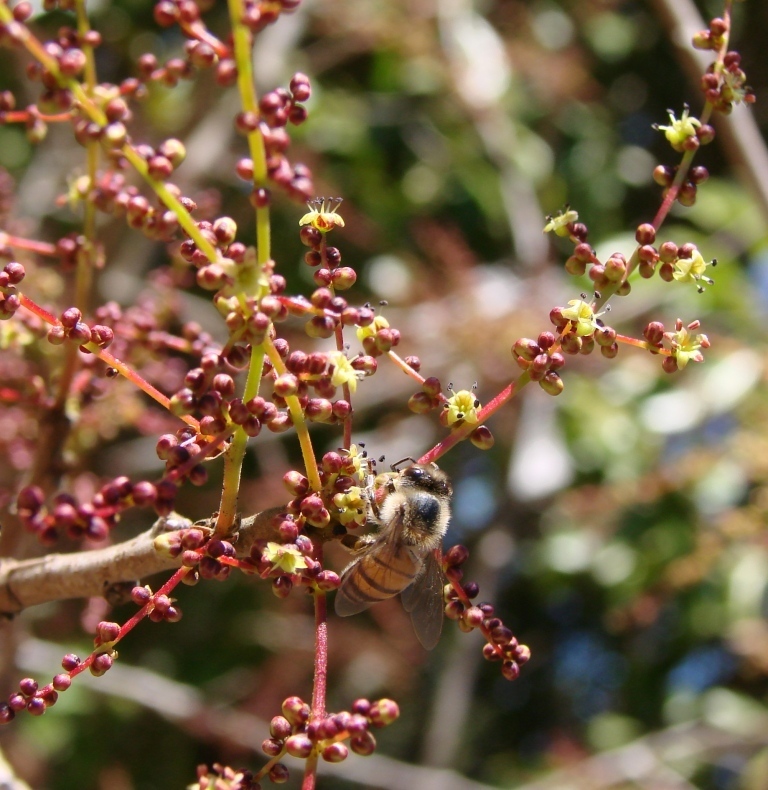
Plants
genipa
Genipa americana L.
Family: Rubiaceae · Genus: Genipa
genip, huito
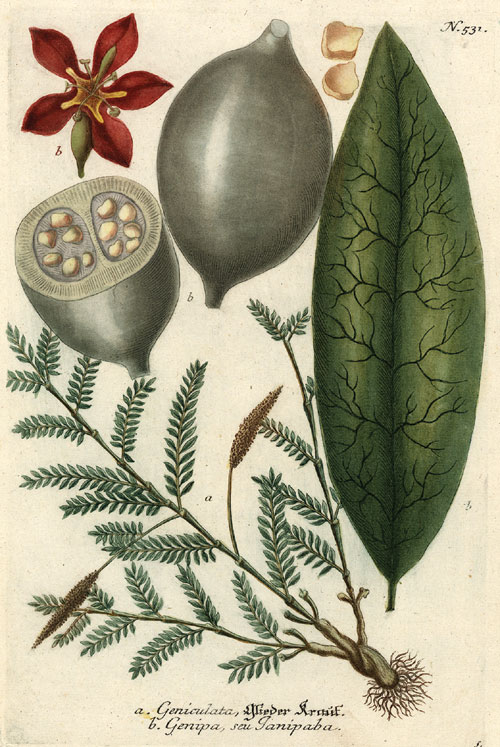
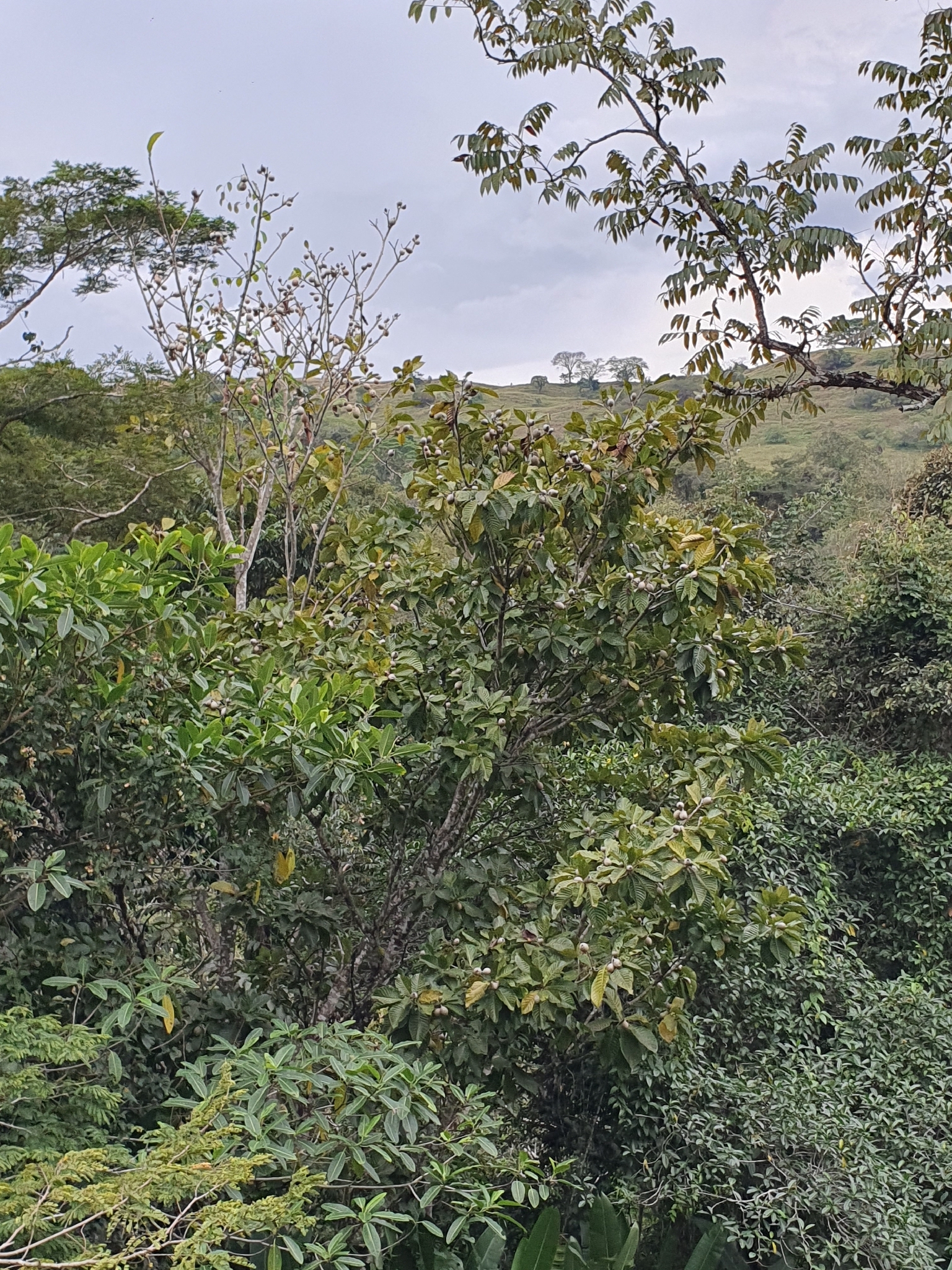
Pan-Brazilian native fruit (Cerrado, MA, Amazonia, Pantanal). EcoAgri lists it in the high stratum of the '> 50 years' bin. Edible fruit and source of dark blue natural dye used in Indigenous cosmetics. Tolerates flooding well.
📚 Synonyms
Scientific synonyms: Gardenia brasiliensis Spreng., Genipa caruto Kunth, Genipa barbata C.Presl, Genipa brasiliensis (Spreng.) Baill., Genipa excelsa K.Krause, Genipa grandifolia Pers., Genipa oblongifolia Ruiz & Pav., Genipa pubescens DC., Genipa spruceana Steyerm.
Götsch succession
- Götsch stage
- Climax
- Ecological role
- Late secondary
- Primary stratum
- High
- Strata
- High
- Biomass class
- No biomass production
Environment
- Light requirement
- Full sun
- Water requirement
- High
- Drought tolerance
- Moderate
- Waterlogging tolerance
- High
- Soil pH range
- 6–6.5
- Preferred soil texture
- Clayey, Loamy, Sandy
Morphology
- Mature height
- 10–25 m
- Recommended spacing
- 6–8 m
- Root system
- Taproot
- Root depth
- Deep
- Growth rate
- Moderate
- Lifespan
- ≥ 80 years
- Time to first harvest
- 72 months
- Productive lifespan
- 50 years
Biomes & climate
- Cerrado Native
- Atlantic Forest Native
- Amazon Native
- Pantanal Native
- Caatinga Native
Köppen classes
- Tropical savanna with dry winter (Aw) Native
- Tropical monsoon (Am) Native
- Tropical rainforest (Af) Native
Where it fits in a guild
Genipa takes the High stratum in the Climax phase of succession — in a guild it shares the line with species from the other strata, each harvesting light at its own height, in its own time.
Free account — and the catalog stays open, no sign-up needed.
🪴 Cultivation
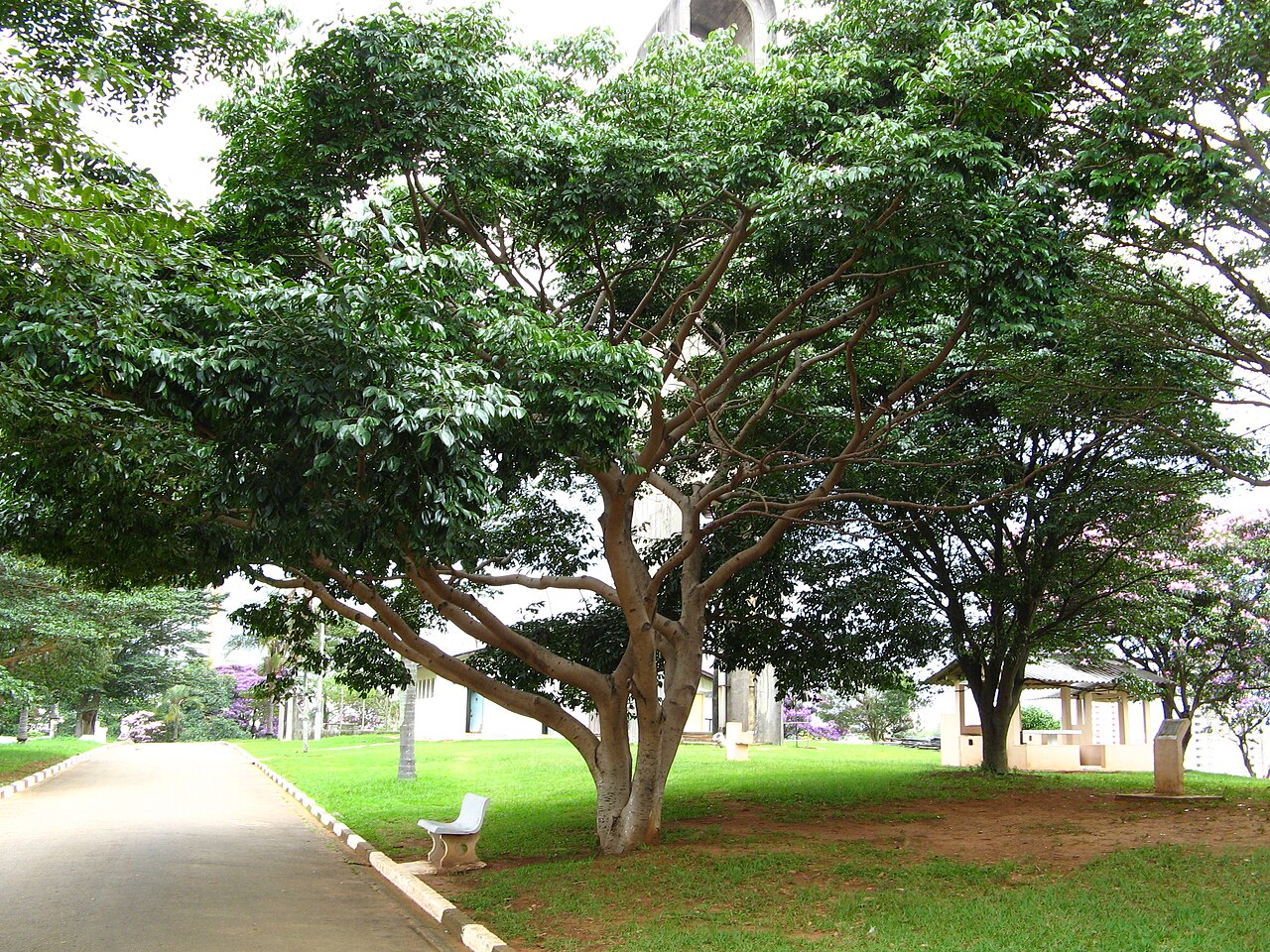
A rustic, heliophilous, semi-deciduous tree, drought-resistant and easily adapted. Prefers deep sandy-loam to silty-clay soils rich in organic matter, pH 6.0–6.5, rainfall 1,300–1,500 mm/yr and temperatures of 23–28 °C. In the Cerrado it stays smaller (6–8 m). Withstands long flooding periods, making it a promising species for riparian-forest restoration. Plant in 40×40×40 cm pits at 6×6 m spacing. Outcrossing — plant several individuals; pollinated by large bees (Bombus, Epicharis).
✂️ Management & Pruning
A moderate-growing, hard-wooded tree; trained to a single trunk for fruit and timber. No coppice/pruning regimes are documented — its naturally dense rounded canopy needs no hard pruning.
📅 Phenology
Flowering months: November, December
Fruiting months: September, October, November, December
❓ Frequently asked questions
How long until the first harvest of genipa?
The first harvest of genipa comes around 72 months after planting.
What spacing is recommended for genipa?
The recommended spacing for genipa is 6–8 m.
How tall does genipa grow?
At maturity, genipa reaches 10–25 m tall.
When does genipa fruit?
Fruiting of genipa occurs in September, October, November, December.
When does genipa flower?
Flowering of genipa occurs in November, December.
What stage and stratum does genipa occupy in a syntropic system?
In a syntropic system, genipa belongs to the climax stage, occupying the high stratum.
Functions
Propagation
Seed, Grafting
Citations
- EcoAgri — Organização de algumas espécies vegetais por tempo de vida (placentas) e estrato (Cartilha 'Liberdade e Vida com Agrofloresta') , p. 6 (primary_stratum, gotsch_stage)
- Macêdo (2007) — Cultivo de Fruteiras em Sistemas Agroflorestais (Embrapa Amazônia Ocidental), Quadro 5 , p. 19 (phenology)
- Silva et al. (2017) — Genipa americana (Jenipapo), in Plantas para o Futuro — Região Centro-Oeste (MMA/Embrapa) , p. 228 (height_min_m, height_max_m, ph_min, ph_max, spacing_min_m, spacing_max_m, cultivation_notes, waterlogging_tolerance, drought_tolerance, light_need, growth_rate, propagation, time_to_first_harvest_months, phenology, synonyms, common_names, pruning_notes)
- Flora e Funga do Brasil — Genipa americana L. (Reflora, JBRJ) (family, genus, biomes, external_ids)
- GBIF Backbone Taxonomy — Genipa americana L. (external_ids)
- Wikidata — Genipa americana (Q1353278) (external_ids)
External references
Continue exploring
Related plants
-
yellow trumpet tree
Handroanthus albus
Climax Emergent Mulch biomassLong-cycle climax with premium timber. Characteristic of Cerrado and Atlantic Forest. Spectacular winter bloom.
-
jatoba
Hymenaea courbaril
Climax Emergent Mulch biomassTropical climax with extremely dense timber; fruit pulp is edible. Common in syntropic abundance systems.
-
juçara palm
Euterpe edulis
Climax High No biomass productionAtlantic Forest native palm with long-cycle climax behavior; high-quality palm heart. Endangered under extractivism, abundant in well-managed syntr...
-
Brazil plum
Spondias tuberosa
Climax MediumEndemic fruit tree of the Caatinga semiarid biome, with underground tuberous roots (xylopodia) that store water and allow it to survive long drough...
-
Brazilian jujube
Sarcomphalus joazeiro
Climax HighEvergreen Caatinga tree known for remaining green throughout the dry season thanks to deep taproots that reach groundwater.
-
urundeuva
Myracrodruon urundeuva
Climax HighTree with extremely dense, durable hardwood; once dominant in the Caatinga but now threatened by overexploitation. Occurs in Caatinga, Cerrado and ...