Plants
wand riverhemp
Sesbania virgata
Family: Fabaceae · Genus: Sesbania
sesbania
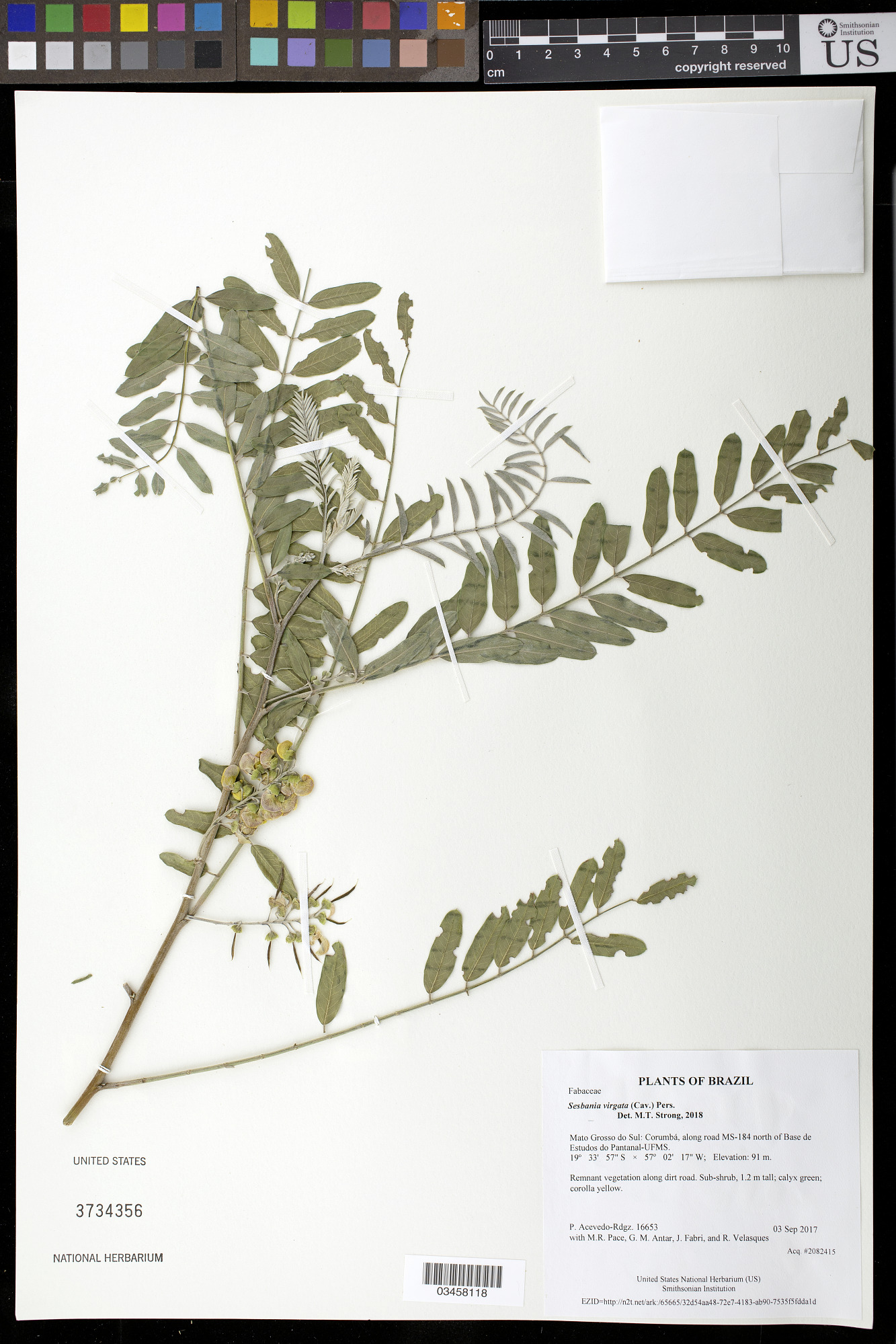
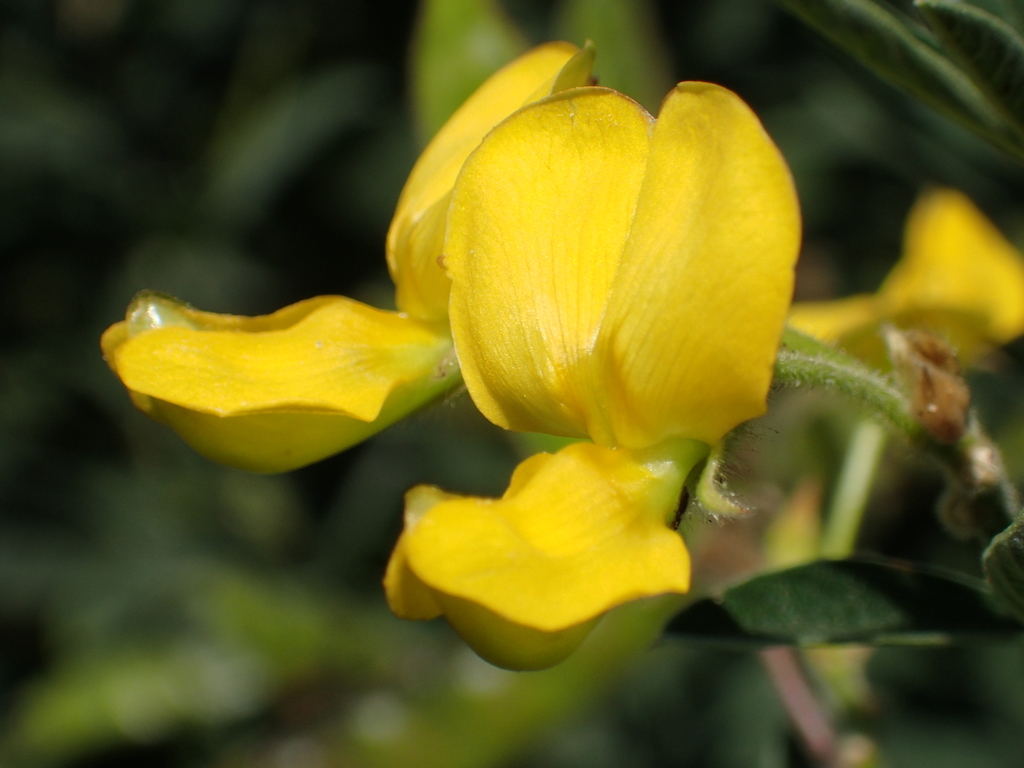
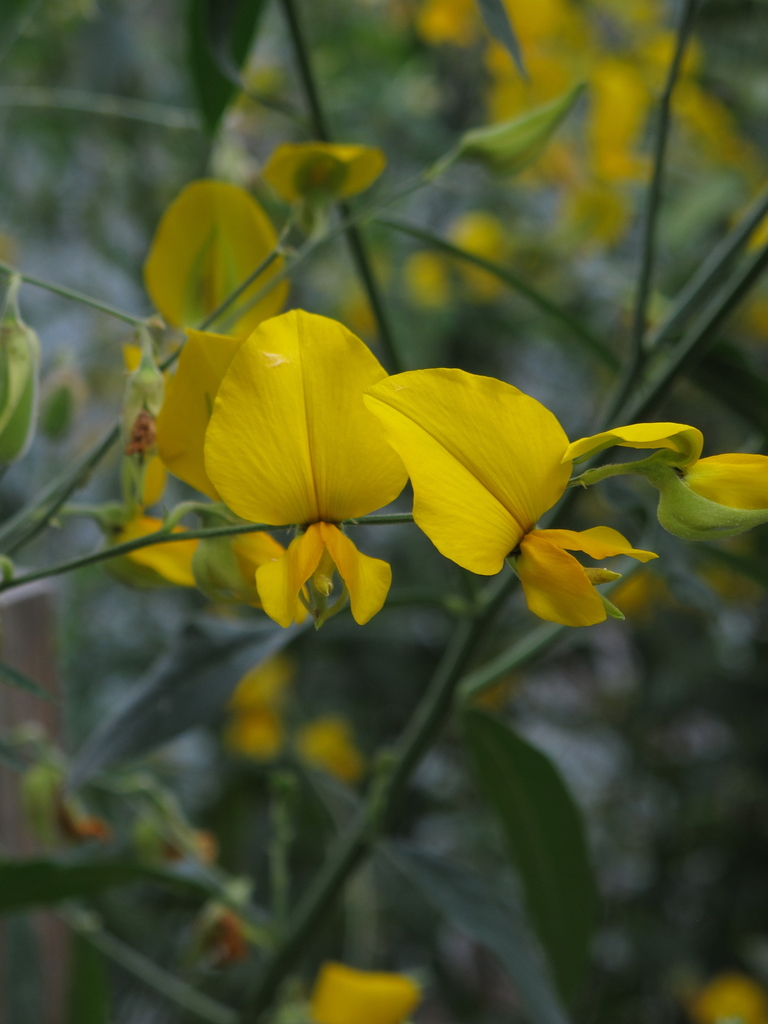
A pioneer leguminous shrub native to riparian environments of southern Brazil, Uruguay and northeastern Argentina. It fixes nitrogen by nodulating with Azorhizobium doebereinerae and grows in both well-drained and waterlogged soils, making it useful for restoring degraded land and riparian buffers. Short-lived and fast-growing, it is a good short-cycle green-manure shrub.
Götsch succession
- Götsch stage
- Placenta I
- Ecological role
- Pioneer
- Primary stratum
- Low
- Strata
- Low, Medium
- Biomass class
- Fertilizer biomass
Environment
- Light requirement
- Full sun
- Water requirement
- Moderate
- Drought tolerance
- Low
- Waterlogging tolerance
- High
- Preferred soil texture
- Clayey, Loamy, Silty
Morphology
- Mature height
- 2–4 m
- Recommended spacing
- 0.5–1.5 m
- Root system
- Fibrous
- Root depth
- Medium
- Growth rate
- Fast
- Lifespan
- 5–10 years
- Time to first harvest
- 4 months
- Productive lifespan
- 5 years
Biomes & climate
- Atlantic Forest Native
- Pampa Native
Köppen classes
- Humid subtropical (Cfa) Native
- Oceanic (Cfb) Suitable
- Subtropical with dry winter (Cwa) Suitable
Where it fits in a guild
Wand riverhemp takes the Low stratum in the Placenta I phase of succession — in a guild it shares the line with species from the other strata, each harvesting light at its own height, in its own time. It also fixes nitrogen, feeding the soil for its line neighbors.
Free account — and the catalog stays open, no sign-up needed.
🪴 Cultivation
Tolerates waterlogging and low-fertility soils; ideal for streambanks and floodplains. Short-lived, best used as an early-establishment species.
✂️ Management & Pruning
A short-cycle pioneer that resprouts from the stump after cutting or fire, allowing successive harvests of nitrogen-rich biomass. It grows ~3 m in 6 months and peaks in biomass (~60 t/ha green mass) around flowering (~110 days) — cut or slash for chop-and-drop from then on. Being winter-deciduous, time the hardest cuts to the warm wet season. Treat it as a placeholder: cut hard and replace as longer-lived strata close in, rather than maintaining it long-term. It produces allelopathic catechin that can suppress neighbours.
📅 Phenology
Flowering months: November, December, January
Fruiting months: December, January, February, March
❓ Frequently asked questions
How long until the first harvest of wand riverhemp?
The first harvest of wand riverhemp comes around 4 months after planting.
What spacing is recommended for wand riverhemp?
The recommended spacing for wand riverhemp is 0.5–1.5 m.
How tall does wand riverhemp grow?
At maturity, wand riverhemp reaches 2–4 m tall.
When does wand riverhemp fruit?
Fruiting of wand riverhemp occurs in December, January, February, March.
When does wand riverhemp flower?
Flowering of wand riverhemp occurs in November, December, January.
What stage and stratum does wand riverhemp occupy in a syntropic system?
In a syntropic system, wand riverhemp belongs to the placenta i stage, occupying the low stratum.
Does wand riverhemp fix nitrogen?
Yes — wand riverhemp is a nitrogen-fixing species that helps fertilize the system's soil.
Functions
Propagation
Seed
Citations
- Plants of the World Online (POWO), Kew (scientific_name, family, genus, biomes)
- Bomfeti et al. 2013, Plant Biology — Nodule development on Sesbania virgata under flooded and non-flooded conditions (nitrogen_fixer, waterlogging_tolerance, gotsch_stage, ecological_role)
- Floral biology of Sesbania virgata (DOAJ) (lifespan_years_min, lifespan_years_max, phenology)
- Embrapa Arroz e Feijão / Broto — leguminosa para recuperação do solo (time_to_first_harvest_months, spacing_min_m, pruning_notes)
- Secretaria de Infraestrutura e Meio Ambiente SP / IPA — Sesbania virgata (pruning_notes, waterlogging_tolerance)
- Pereira et al., Trees (Springer) — flooding and root anatomy of Sesbania virgata (waterlogging_tolerance, root_depth)
External references
Continue exploring
Related plants
-
pigeon pea
Cajanus cajan
Placenta I Low Fertilizer biomass 🌱 Nitrogen fixerShort-cycle shrubby legume that fixes nitrogen, widely used in Brazilian agroforestry as green manure, early shade and food. Vigorous on poor soils.
-
sunn hemp
Crotalaria juncea
Placenta I High Fertilizer biomass 🌱 Nitrogen fixerAnnual green-manure legume, fixes up to ~450 kg N/ha, ideal for the Placenta I phase. Breaks nematode cycles and contributes large amounts of ferti...
-
velvet bean
Mucuna pruriens
Placenta I Low Fertilizer biomass 🌱 Nitrogen fixerAnnual climbing legume that fixes nitrogen (~180–220 kg N/ha) and produces dense cover biomass. Suppresses weeds, decompacts the soil, and is one o...
-
jack bean
Canavalia ensiformis
Placenta I Low Fertilizer biomass 🌱 Nitrogen fixerAnnual nitrogen-fixing legume with strong soil-decompacting and weed-suppressing ability. Explicitly cited by Pasini among Accumulation-system spec...
-
maize
Zea mays
Placenta I Emergent Mulch biomassAnnual C4 cereal — placed by Pasini in the emergent stratum of Tabela 3 and recommended for the 'up to 6 months' phase of Tabela 4. Short-cycle cov...
-
sweet potato
Ipomoea batatas
Placenta I Ground cover No biomass productionShort-cycle creeping tuber crop. Pasini lists it in the low stratum of Tabela 3. Excellent living ground cover early in the agroforestry cycle, edi...