
Climate
Plants for the Tropical savanna with dry winter (Aw) climate
Tropical with a dry winter — the climate of much of central Brazil. The working rule: plant at the onset of the rains, cover the soil before the dry season, and pick species that cross winter without irrigation. Drought tolerance is on each profile.
240 species in the catalog · Refine this list in the catalog
-
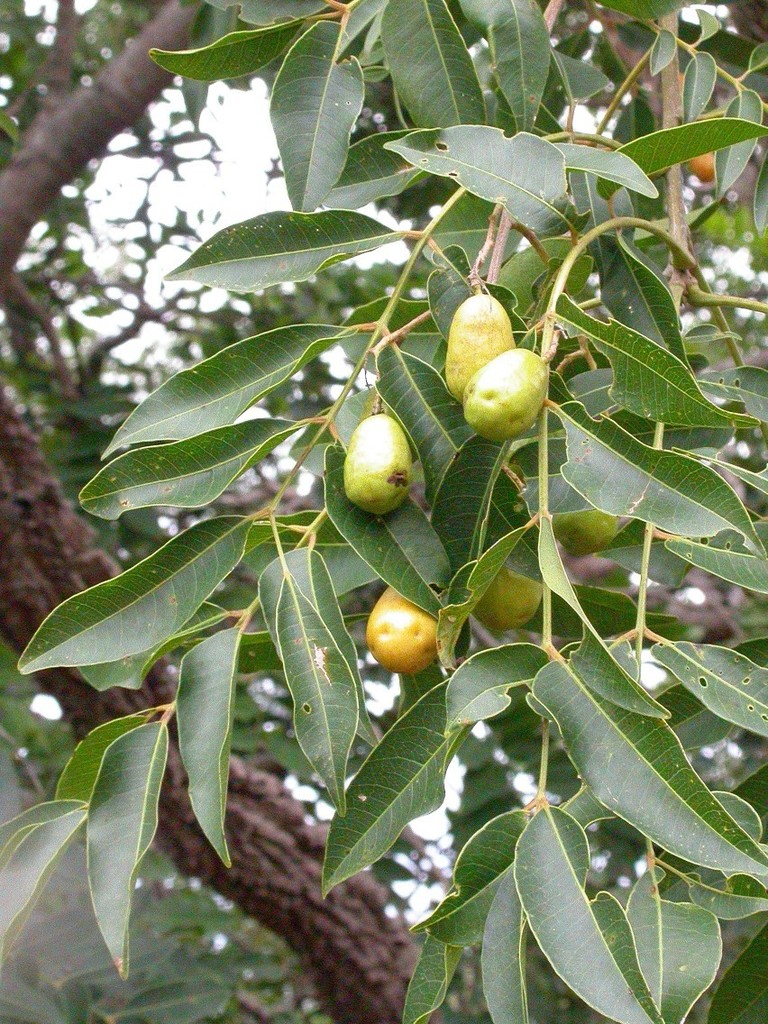
yellow mombin
Spondias mombin
Secondary II High Mulch biomassAmazonian and neotropical tree of high-to-emergent stratum, cited by Embrapa among key fruit species for Amazonian SAFs. Productive lifespan 40 yea...
-
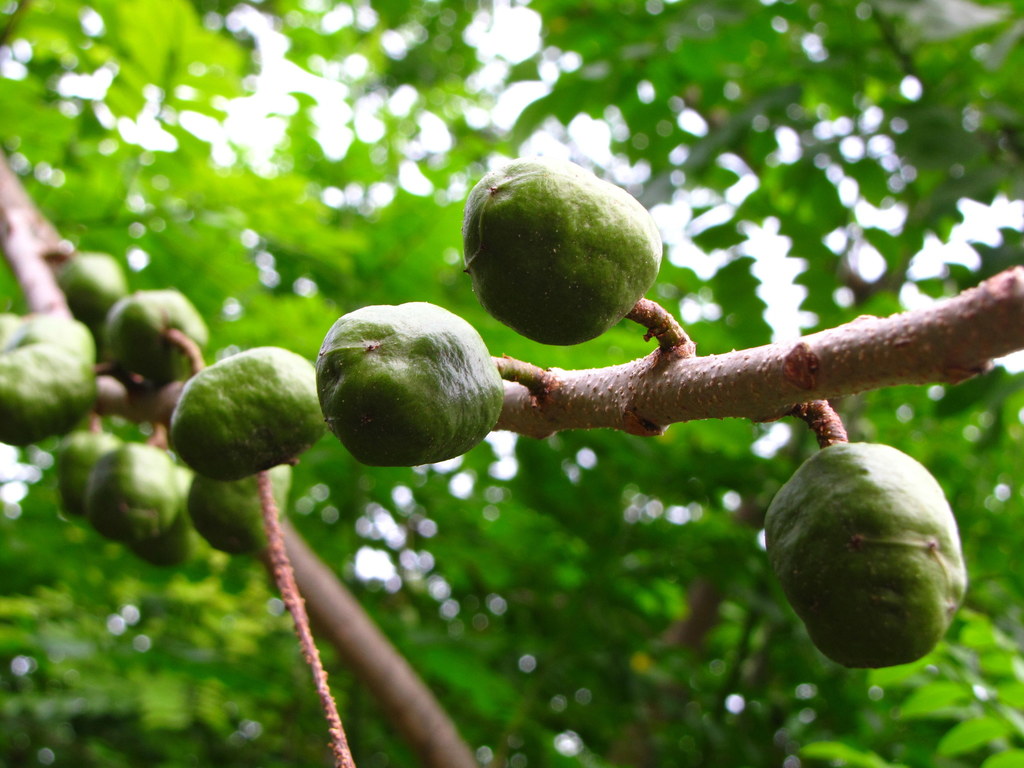
red mombin
Spondias purpurea
Secondary I High No biomass productionNortheastern Brazilian native fruit tree; propagated by cuttings. Pasini lists it in the high stratum of Tabela 3. Drought-tolerant, short cycle to...
-
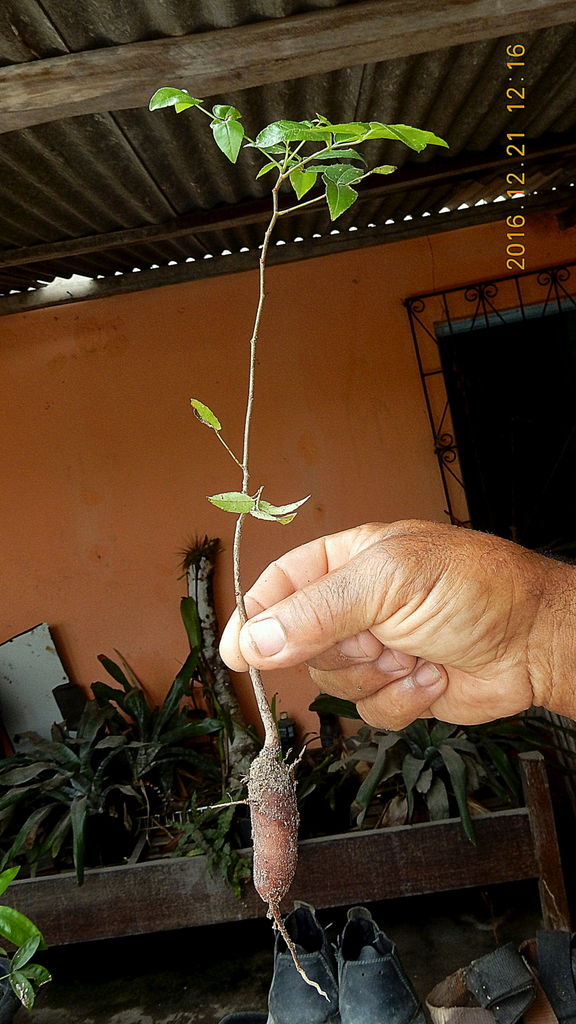
Brazil plum
Spondias tuberosa
Climax MediumEndemic fruit tree of the Caatinga semiarid biome, with underground tuberous roots (xylopodia) that store water and allow it to survive long drough...
-
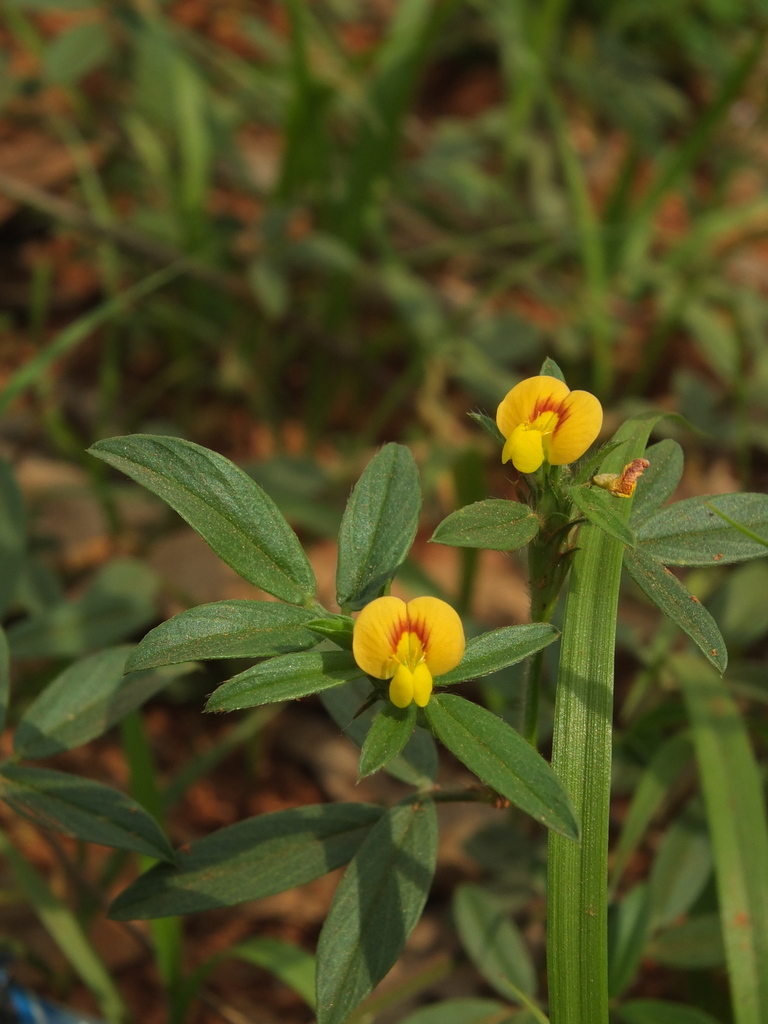
stylo
Stylosanthes guianensis
Placenta I Ground cover Fertilizer biomass 🌱 Nitrogen fixerHerbaceous forage legume, nitrogen-fixer. Rebello includes stylosanthes among key accumulation-phase species in Cerrado and Caatinga, alongside pig...
-
big-leaf mahogany
Swietenia macrophylla
Climax Emergent Mulch biomassClimax Amazonian premium timber, CITES Appendix II. Pasini lists it in the emergent/high stratum of Tabela 3 and cites it explicitly as a premium t...
-
licuri palm
Syagrus coronata
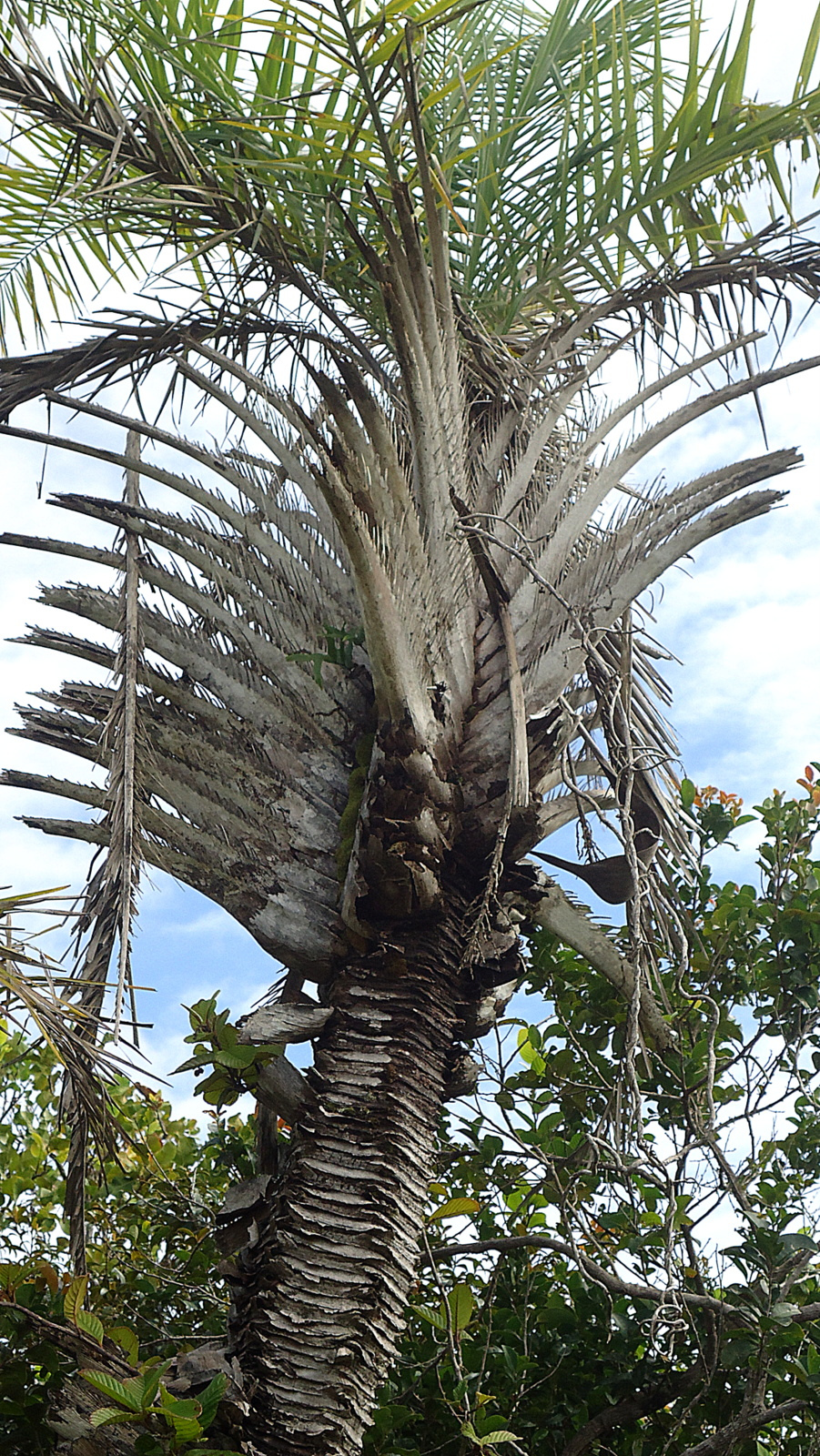
Climax High Mulch biomassNative palm of the Caatinga and Northeastern Atlantic Forest, from northern Minas Gerais to Maranhão. Medium height (8–12 m), trunk covered by pers...
-
java plum
Syzygium cumini
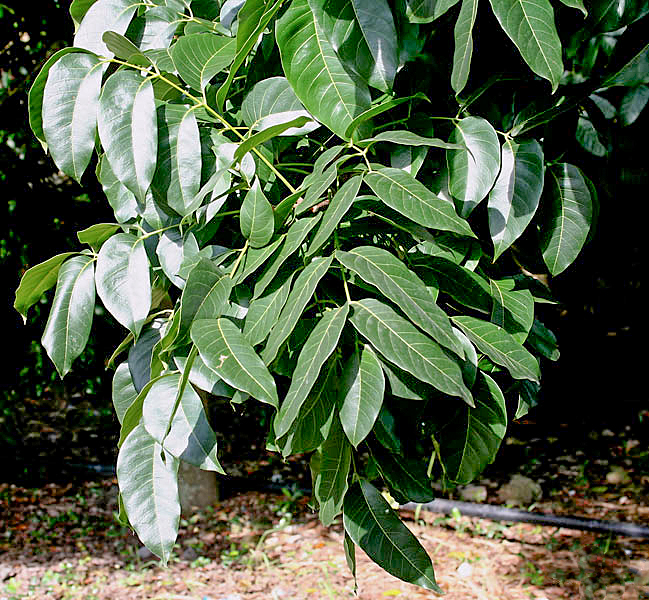
Secondary II High No biomass productionAsian fruit tree naturalized in Brazil, listed by Pasini in the high stratum of Tabela 3. Edible purple fruit (jam, wine); leaves and bark are medi...
-
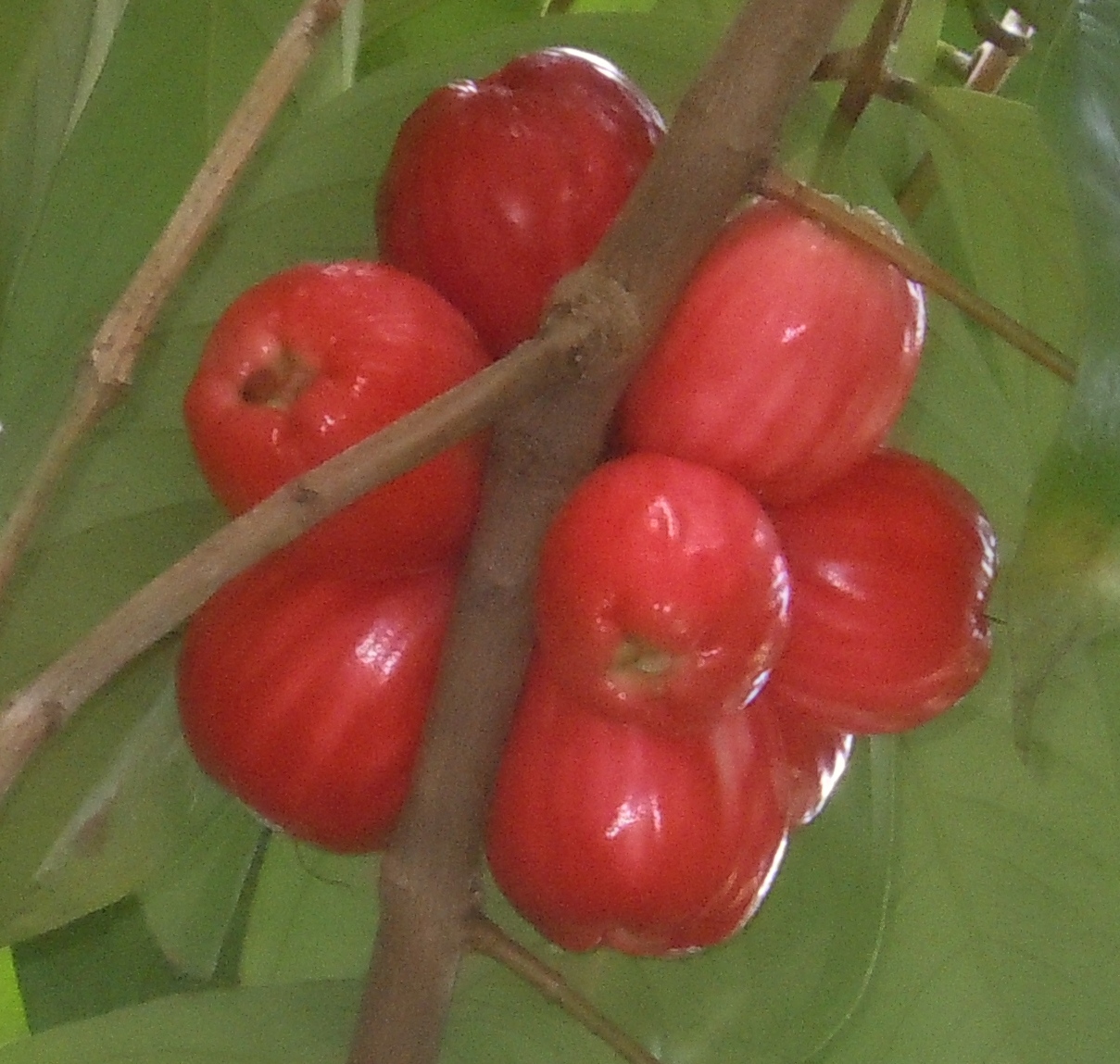
rose apple
Syzygium jambos
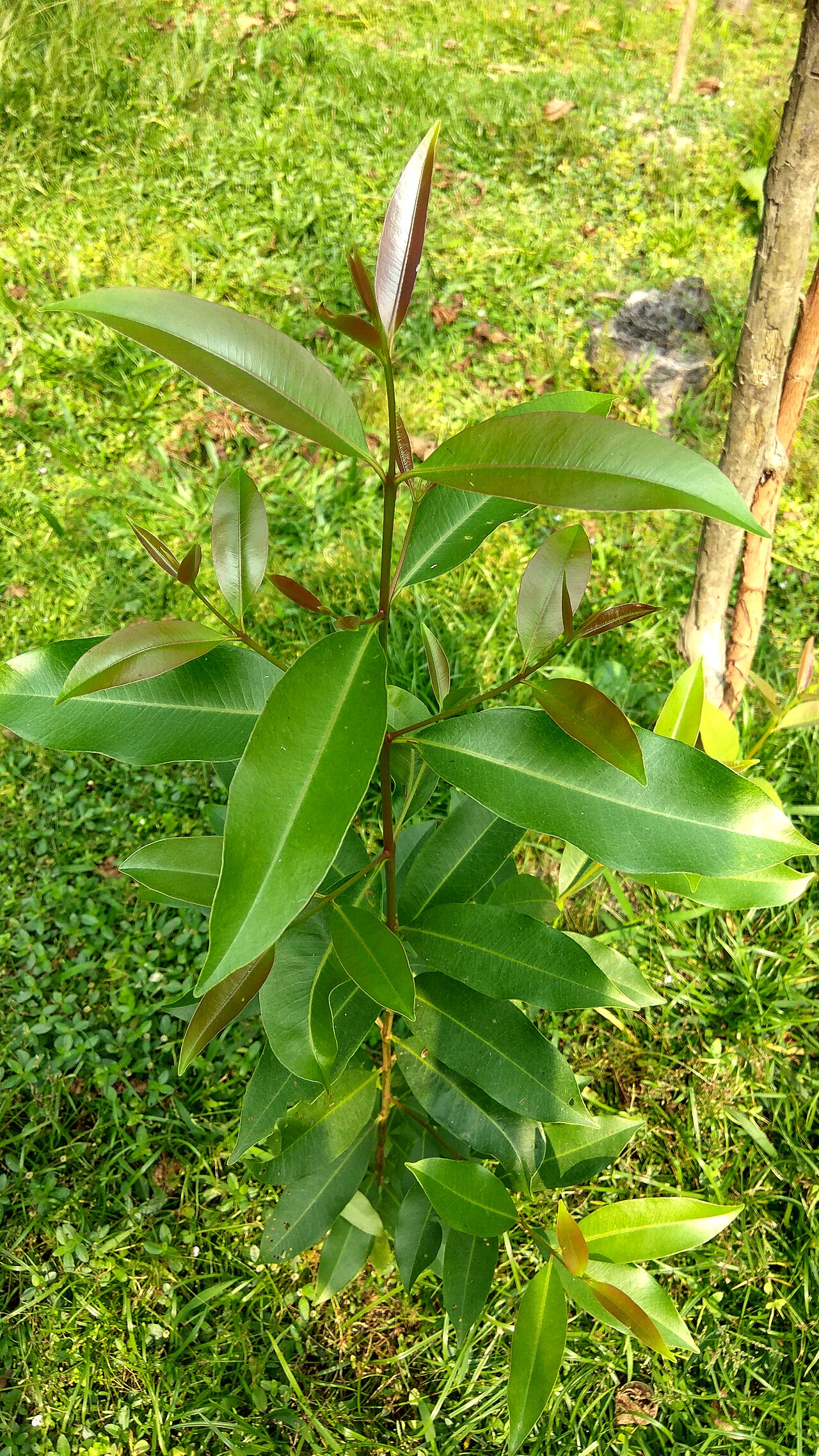
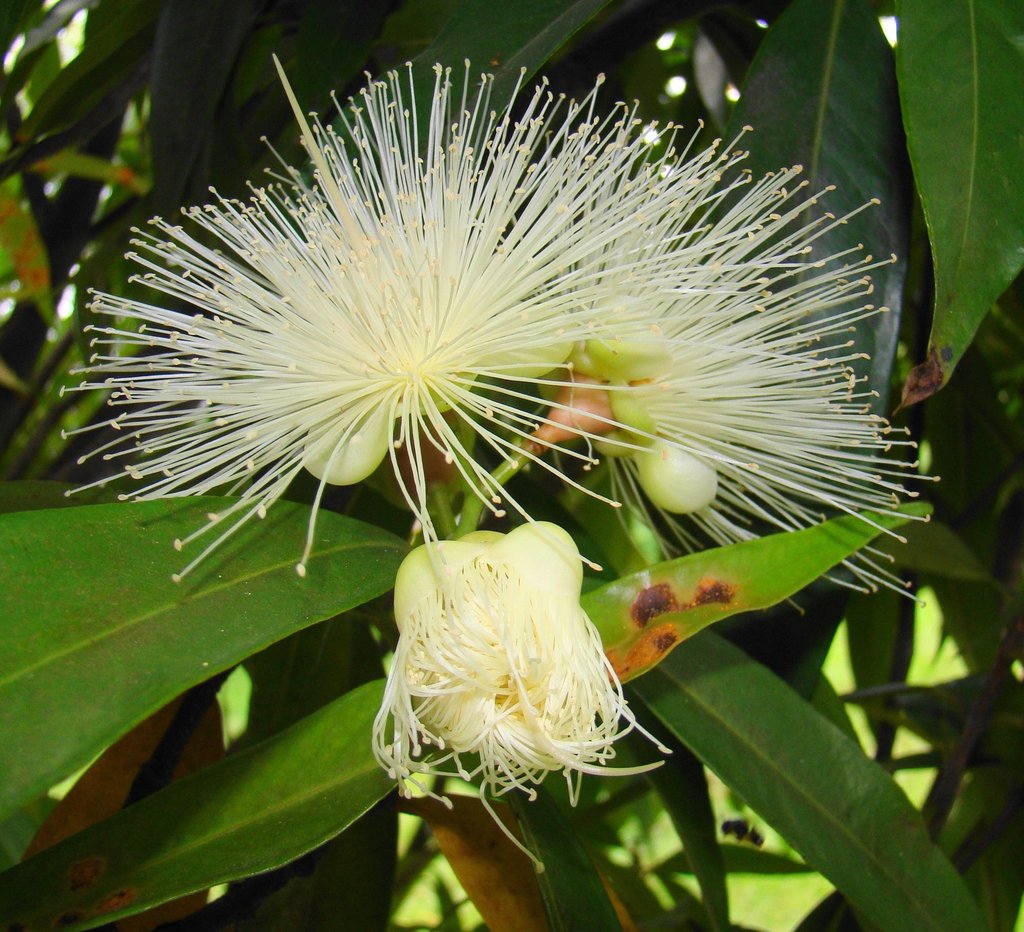
Climax High No biomass productionAsian fruit tree naturalized in Brazil, distinct from the Malay apple (S. malaccense). EcoAgri lists it in the high stratum of the '> 50 years' bin...
-
Malay apple
Syzygium malaccense
Secondary II High No biomass productionAsian tropical fruit listed by Pasini in the high stratum of Tabela 3. Pink-red mildly sweet fruit with crisp pulp. Tolerates wet soils; grows well...
-
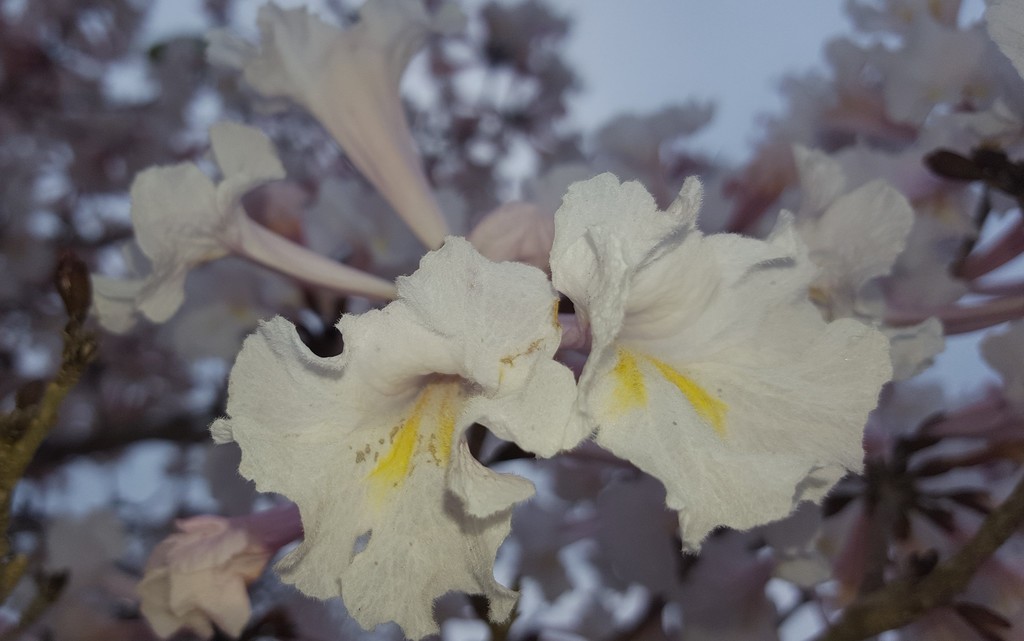
white ipê
Tabebuia roseoalba
Climax High No biomass productionMedium tree of the Cerrado, Atlantic Forest, and Caatinga (10–18 m). White-to-pale-pink flowering in July–August. Drought-tolerant. Medium-density ...
-
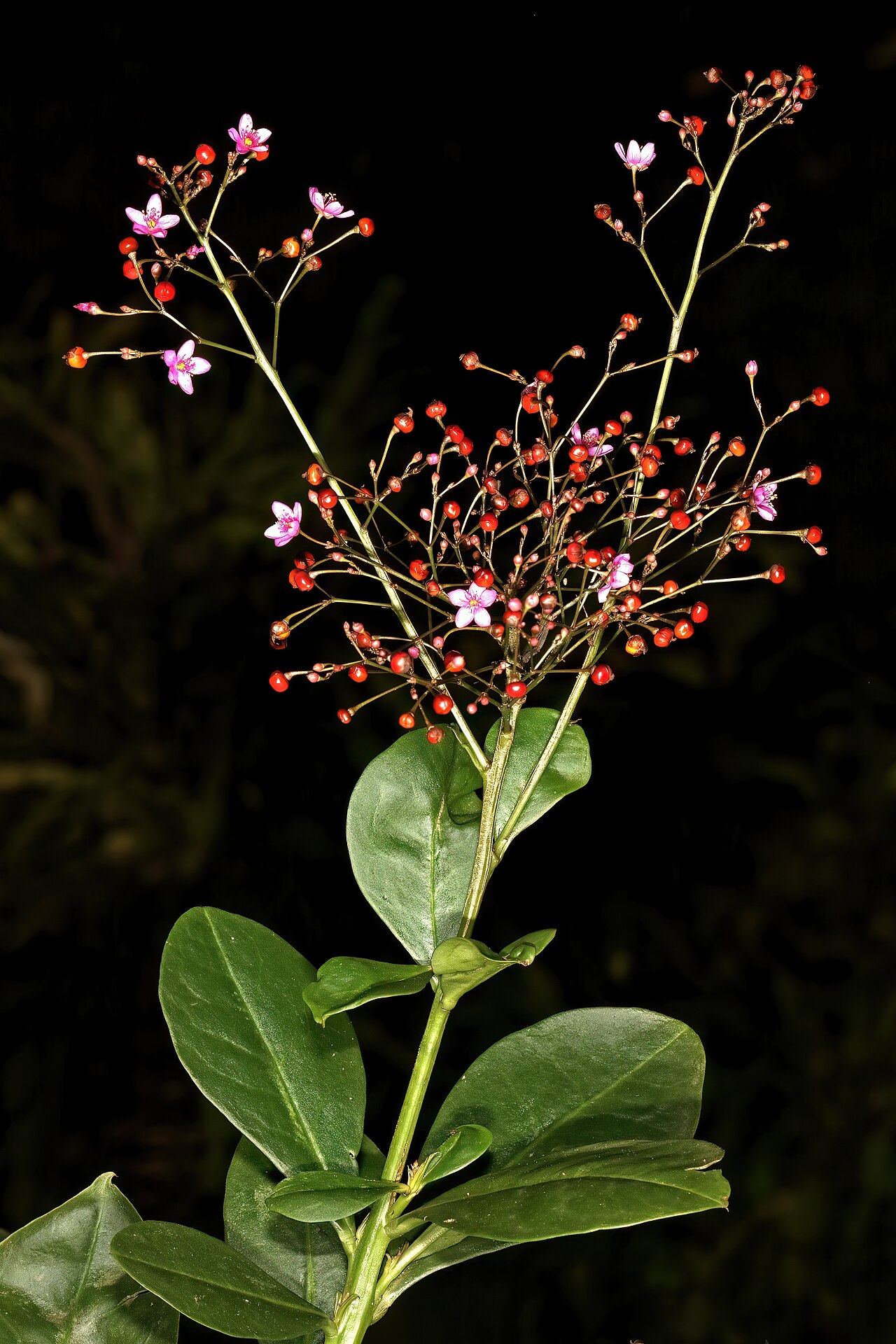
fameflower
Talinum paniculatum
Placenta I Low No biomass productionA perennial succulent herb in the Talinaceae, native to the Americas and common as an unconventional food plant (PANC) and a volunteer in gardens. ...
-
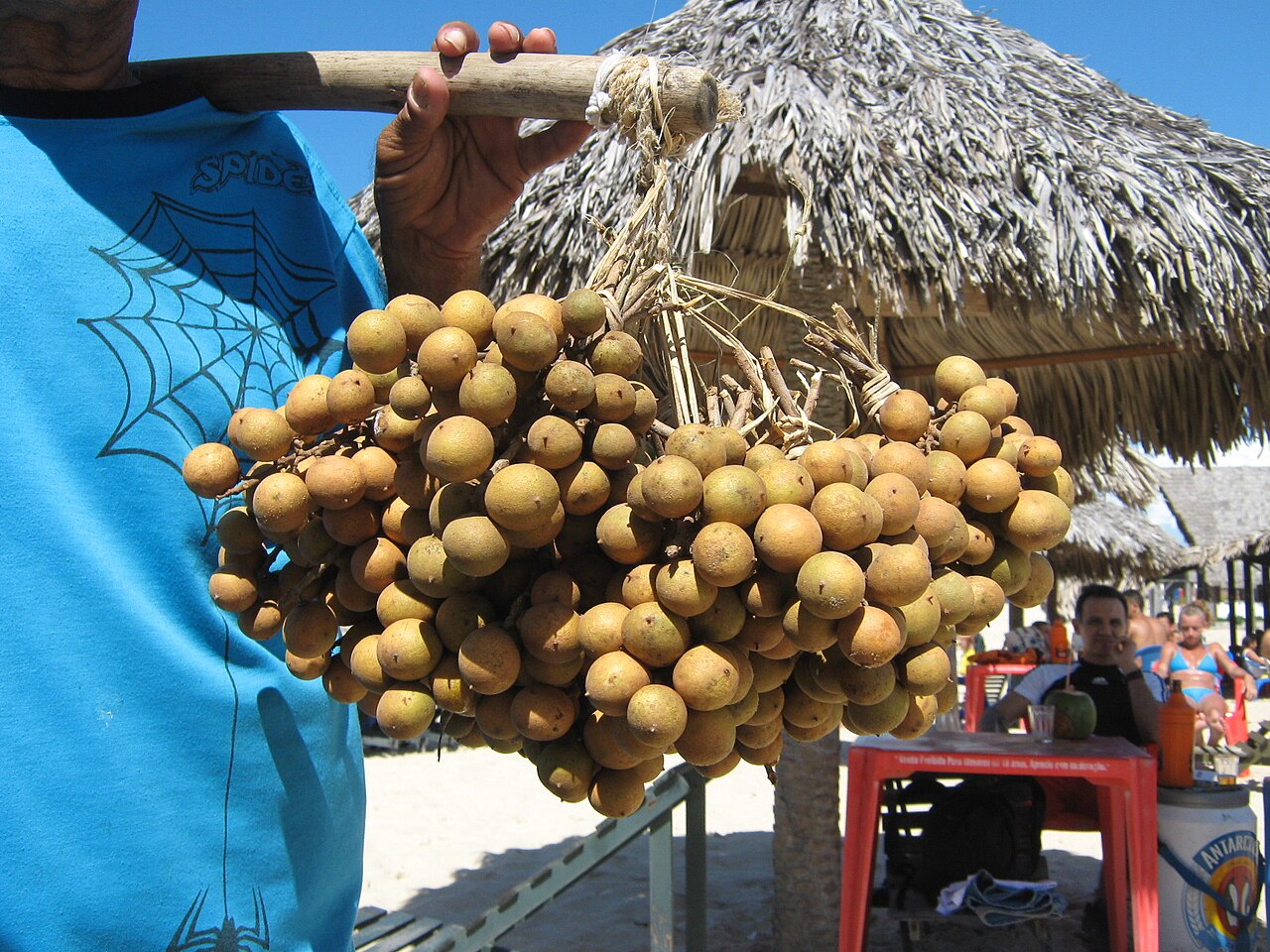
pitomba
Talisia esculenta
Secondary II Medium No biomass productionNative tree of the Amazon and Atlantic Forest, from Northeastern Brazil to Rio de Janeiro. 6–12 m tall, evergreen leafy canopy, trunk 30–40 cm. Ova...
-
tamarind
Tamarindus indica
Climax High No biomass production 🌱 Nitrogen fixerAfrican leguminous fruit tree naturalized in the Brazilian semi-arid. EcoAgri lists it in the high stratum of the '> 50 years' bin. Tolerates sandy...
-
white tephrosia
Tephrosia candida
Placenta II Low Mulch biomass 🌱 Nitrogen fixerA short-lived (3-4 years) perennial leguminous shrub of 1-3 m, native to India and widely introduced across the tropics. It fixes nitrogen and is g...
-
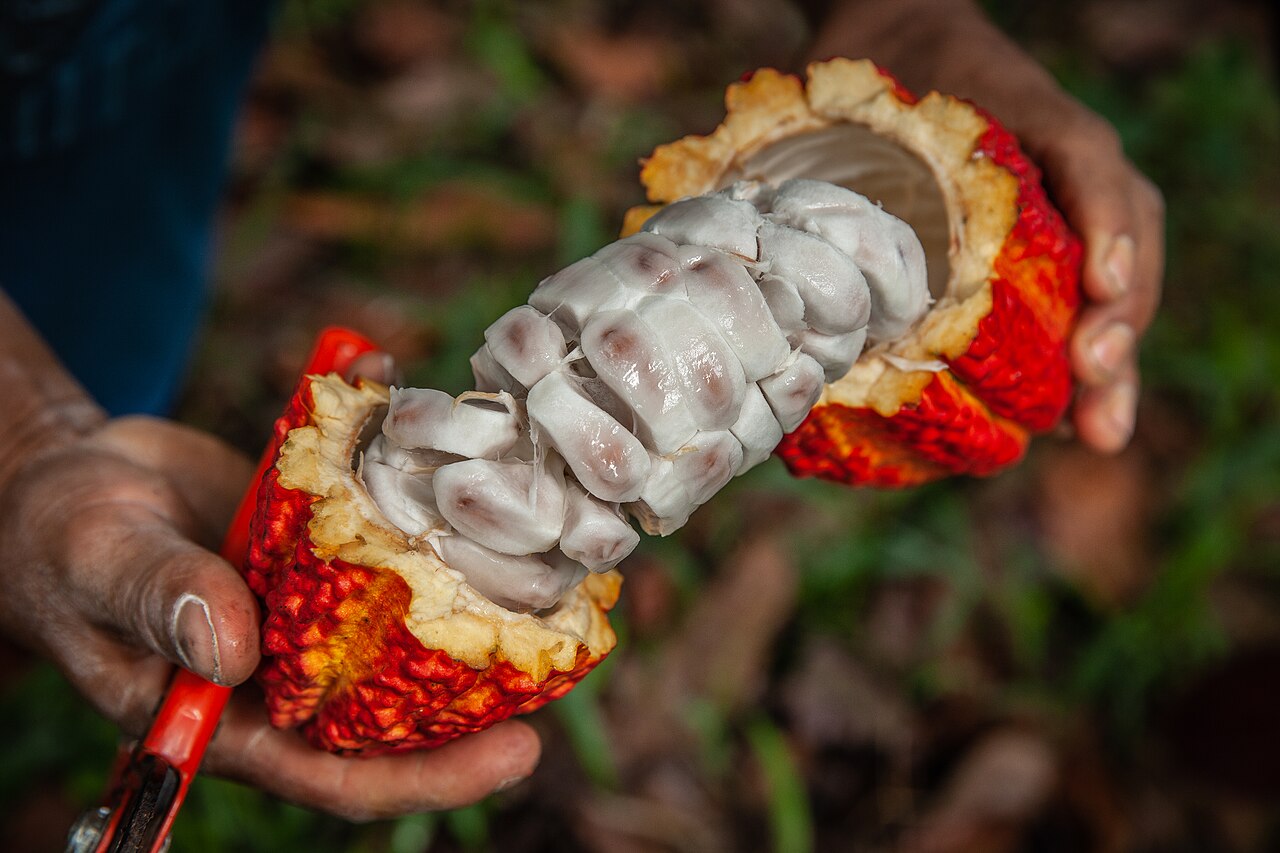
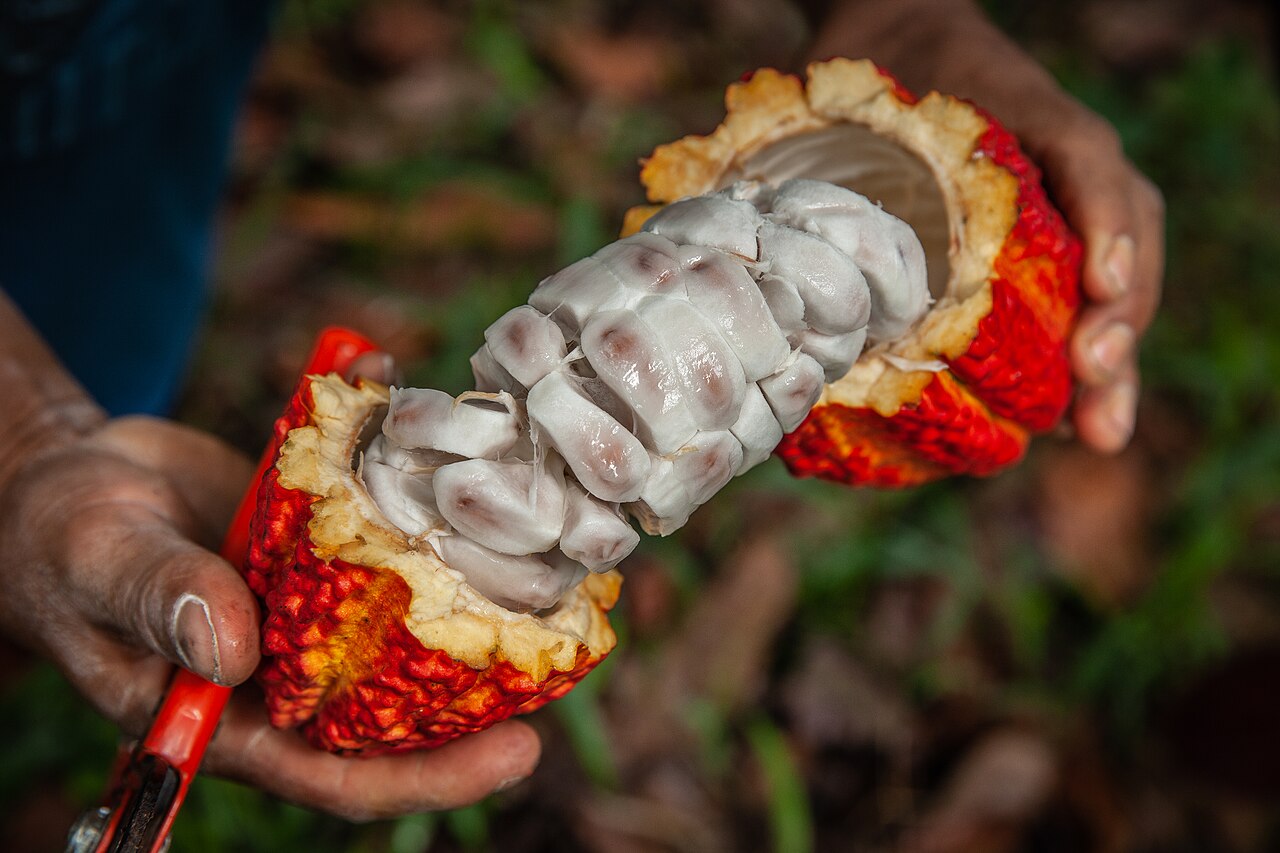
trinitario cacao
Theobroma cacao
Secondary II Medium No biomass productionHybrid group (Forastero × Criollo) originating in Trinidad. Combines Forastero's vigor with Criollo's cup quality. Medium height (5–8 m), intermedi...
-
forastero cacao
Theobroma cacao
Secondary II Medium No biomass productionBrazil's dominant cacao varietal group — yellow-green pods, purple-cotyledon seeds, robust but less aromatic flavor. Tall (6–12 m unpruned), vigoro...
-
ccn-51 cacao
Theobroma cacao
Secondary II Medium No biomass productionEcuadorian hybrid clone (IMC-67 × ICS-95) selected by Homero Castro in the 1960s. Compact (4–5 m), self-compatible, high yield (up to 4 t/ha), and ...
-
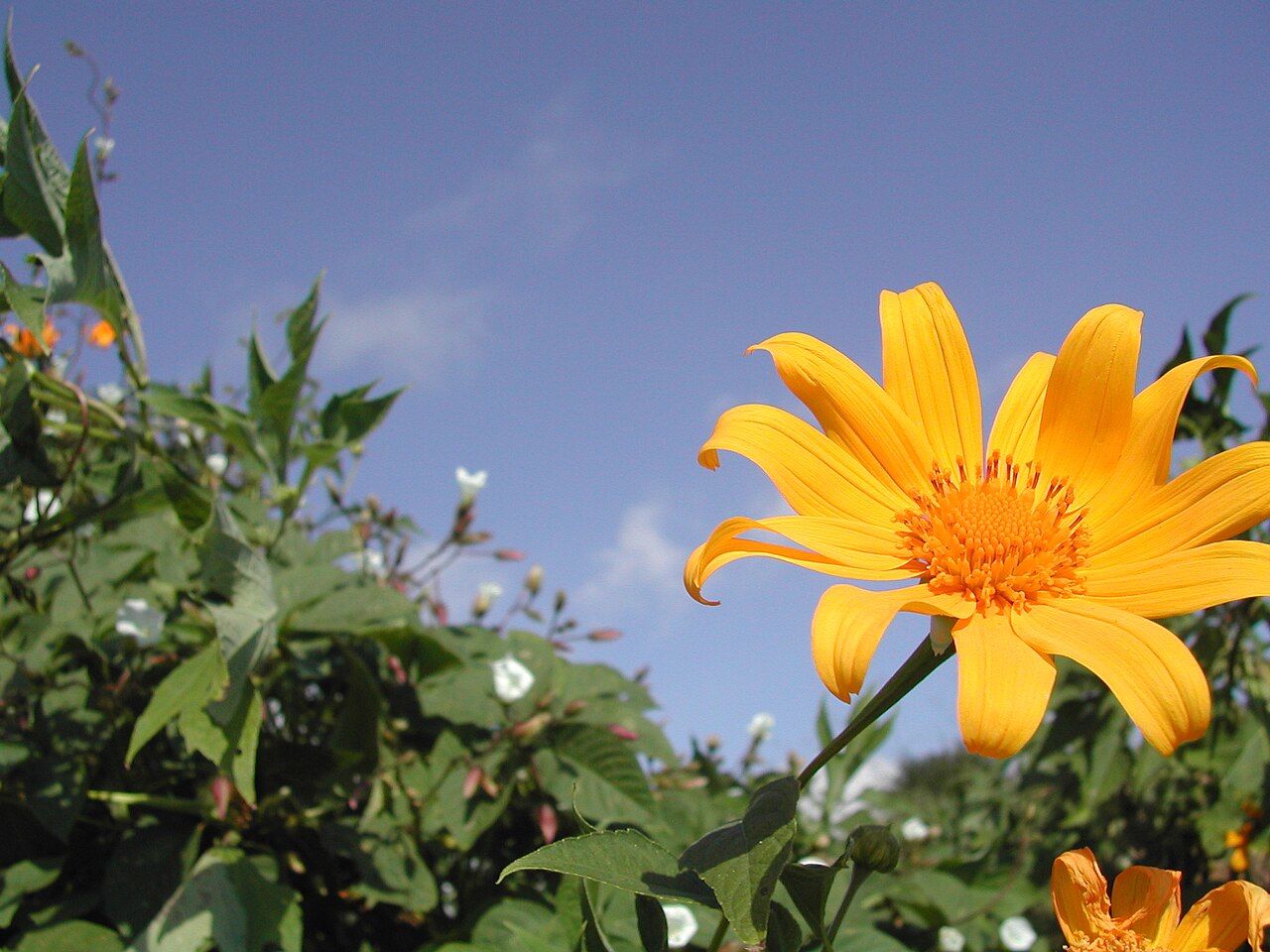
Mexican sunflower
Tithonia diversifolia
Placenta II High Fertilizer biomassFast-growing perennial shrub; propagated by stem cuttings; high biomass production rich in nitrogen, phosphorus, and potassium. Explicitly cited by...
-
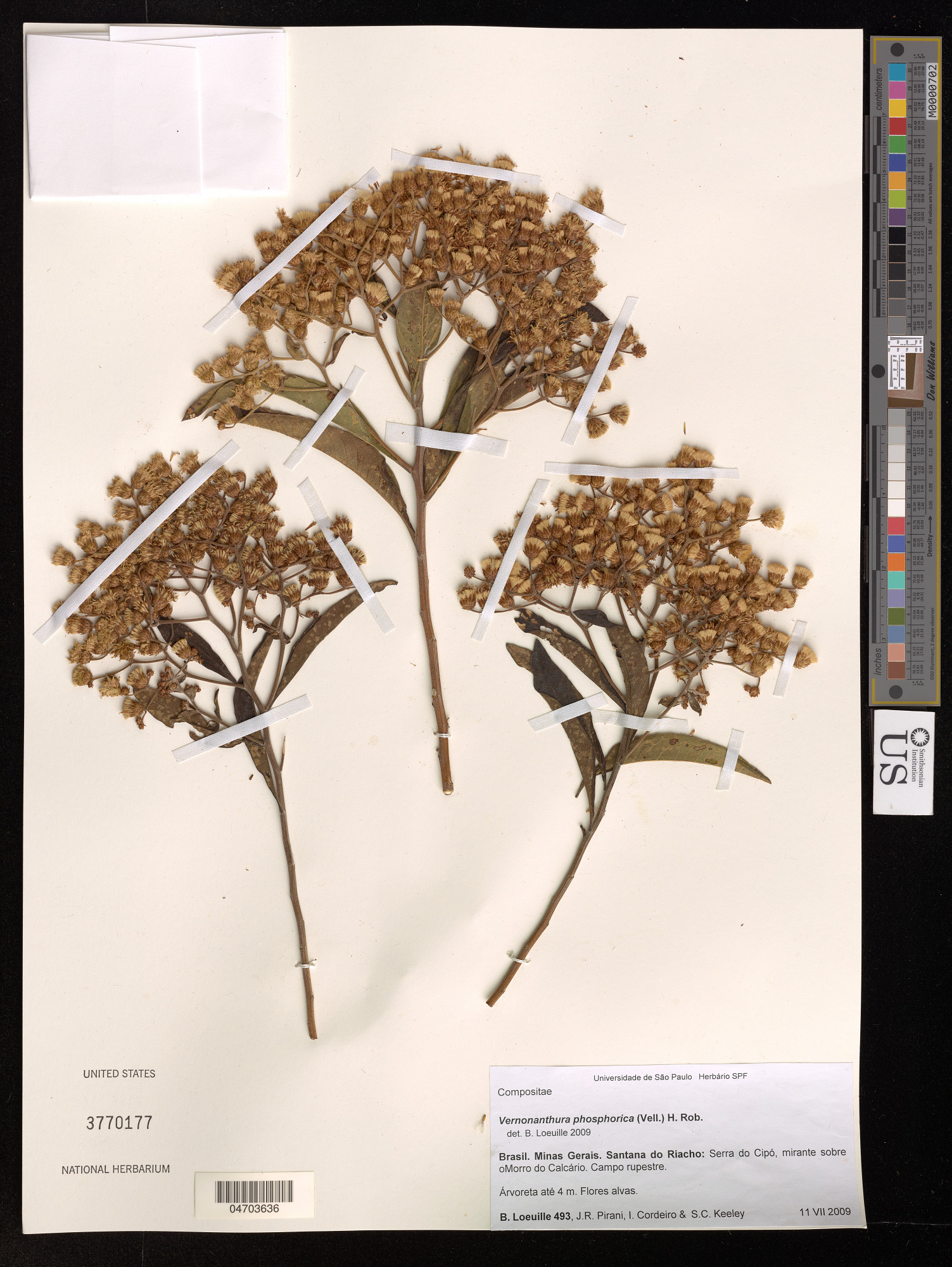
assa-peixe
Vernonanthura phosphorica
Placenta II Low Mulch biomassPioneer shrub-tree of Cerrado and Atlantic Forest, listed by Rebello among anchor species of the accumulation system. Indicator of shallow, dry soi...
-
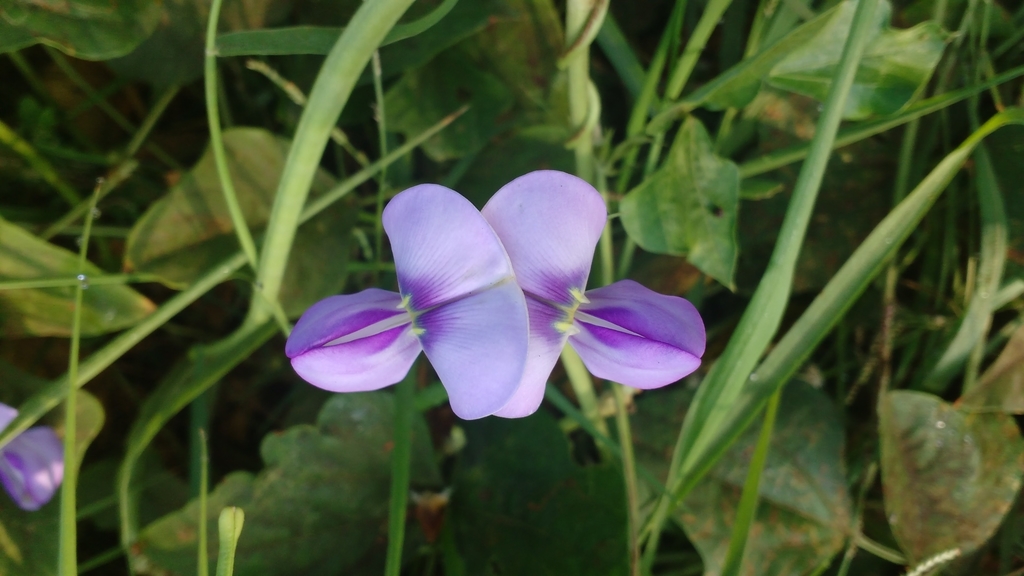
cowpea
Vigna unguiculata
Placenta I Ground cover Fertilizer biomass 🌱 Nitrogen fixerAnnual nitrogen-fixing legume, prostrate or semi-climbing. Adapted to NE Brazil — protein staple of regional cuisine. Short cycle (60–90 days). Mor...
-
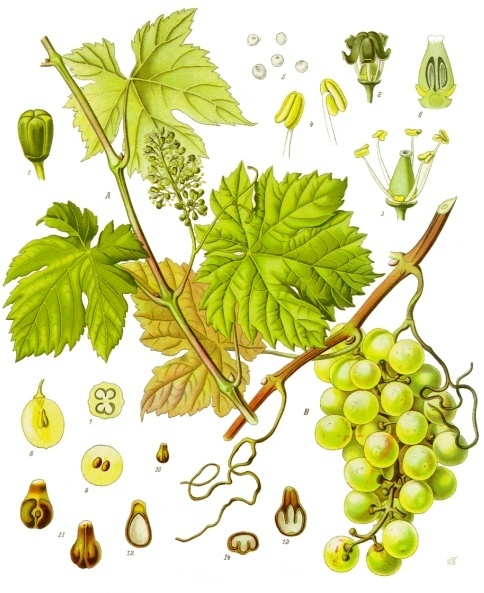
grape
Vitis vinifera
Secondary II Medium No biomass productionWoody perennial vine. Cultivated throughout Brazil — European grapevines (Vitis vinifera) in the South (table and wine grapes); American (V. labrus...
-
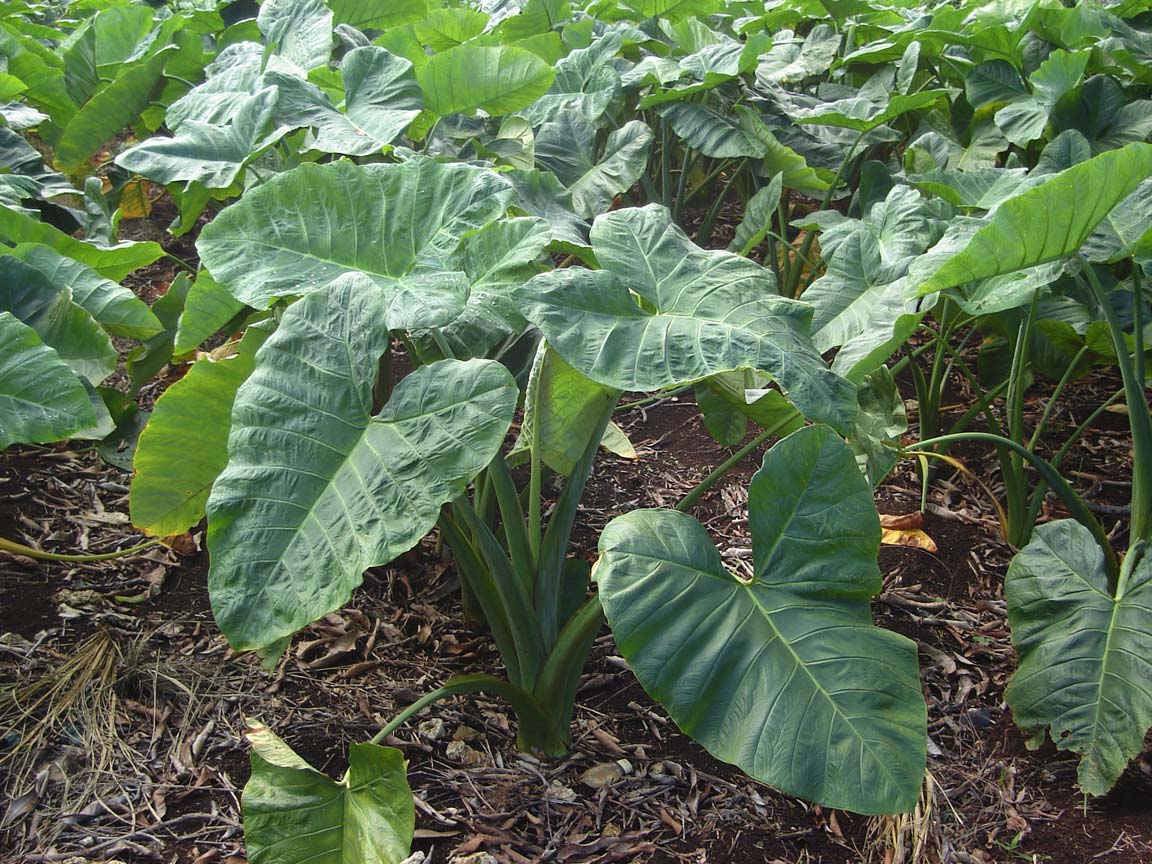
tannia
Xanthosoma sagittifolium
Secondary I Low No biomass productionPANC perennial leafy vegetable widely used in Brazilian syntropic systems. Pasini lists it in the low stratum of Tabela 3 and in the '3 to 10 years...
-
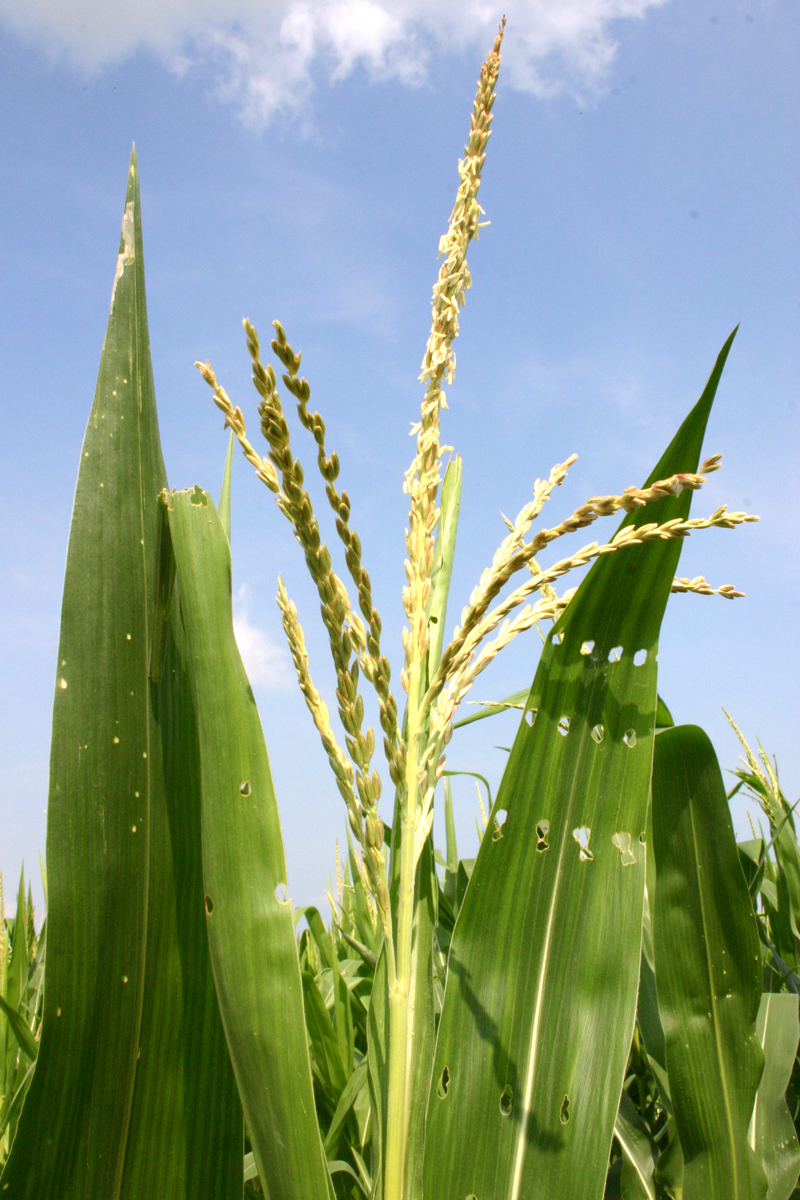
maize
Zea mays
Placenta I Emergent Mulch biomassAnnual C4 cereal — placed by Pasini in the emergent stratum of Tabela 3 and recommended for the 'up to 6 months' phase of Tabela 4. Short-cycle cov...
-
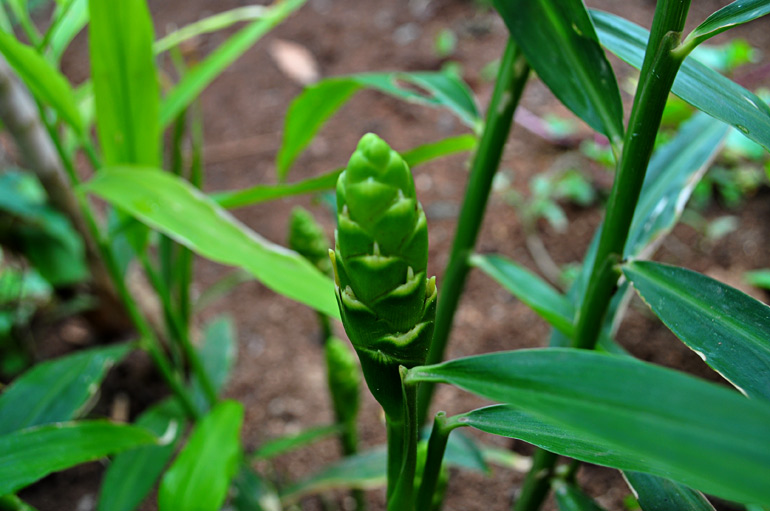
ginger
Zingiber officinale
Placenta I Low No biomass productionPerennial tropical aromatic rhizome. Pasini lists it in the low stratum of Tabela 3 and in the '1 to 3 years' phase of Tabela 4. Adapts well to the...
❓ Frequently asked questions
What is the Tropical savanna with dry winter (Aw) climate?
Wet summers and a marked dry winter (4–6 months). The dominant climate of the Cerrado, central-west, and sub-humid northeast. Calls for deep-rooted species and a deliberate water-management plan.
Which plants does the catalog suggest for the Tropical savanna with dry winter (Aw) climate?
The catalog holds 240 species, among them yellow mombin, red mombin, Brazil plum. Each profile shows stratum, succession stage, and the management data, with sources cited.